

Affordable Single Origin Coffee Beans for Pour Over 2026
Table of Contents
- Why Single Origin Coffee Beans Belong in Your Pour Over Setup
- Quick Comparison: Affordable Single Origin Coffee Beans for Pour Over
- Best Coffee Beans for Home Brewing: 6 Single Origin Picks Under $25
- How to Choose Single Origin Coffee for Pour Over
- Pour Over Coffee Brewing Tips for Single Origin Beans
- Subscription vs. One-Time Purchase: Flexibility and Shipping Costs
- Frequently Asked Questions
Last Updated: September 10, 2026
Why Single Origin Coffee Beans Belong in Your Pour Over Setup
Single origin coffee is coffee sourced from one growing region, one farm, or one cooperative rather than blended from multiple countries. That traceability is why single origin coffee beans for pour over 2026 drinkers keep choosing them: a pour over extracts with more clarity than immersion methods, so the cup shows you exactly what one region tastes like. At Gospel and Grind, we roast every origin to order, which matters because University of California research on coffee freshness and staling shows ground and roasted coffee loses aroma compounds within weeks of roasting. A washed Ethiopian and a natural Ethiopian taste nothing alike. A blend hides that. A single origin celebrates it.
Quick Comparison: Affordable Single Origin Coffee Beans for Pour Over
Six origins under $25, all roasted to order and shipped direct. Here is how they stack up before we break down each one.
| Origin | Price | Roast Level | Tasting Profile | Best For |
|---|---|---|---|---|
| Colombia | $23.99 | Medium | Dried orange, berry, chocolate | Balanced daily cup |
| Ethiopia Natural | $23.99 | Med-light | Milk chocolate, fruity, caramel | Fruit-forward pour over |
| Peru | $19.99 | Medium | Salted caramel, sweet citrus | Budget-friendly sweetness |
| Kenya | $19.99 | Medium-light | Bright acidity, floral | Acidity seekers |
| Guatemala | $23.99 | Medium | Dark chocolate, butterscotch | Chocolate lovers |
| Tanzania | $19.99 | Medium-light | Pear, jasmine, strawberry | Delicate, floral cups |
Price-Per-Ounce and Cost-Per-Cup Breakdown
Cost per cup tells the real story, and most buying guides skip it. Here is the full math for every bag on the list, using a standard 18-gram pour over dose (roughly 0.63 ounces) and a 12-ounce bag.

| Origin | Bag Price | Cost Per Ounce | Cups Per Bag (18 g dose) | Cost Per Cup |
|---|---|---|---|---|
| Colombia | $23.99 | $2.00 | ~18 | $1.33 |
| Ethiopia Natural | $23.99 | $2.00 | ~18 | $1.33 |
| Peru | $19.99 | $1.67 | ~18 | $1.11 |
| Kenya | $19.99 | $1.67 | ~18 | $1.11 |
| Guatemala | $23.99 | $2.00 | ~18 | $1.33 |
| Tanzania | $19.99 | $1.67 | ~18 | $1.11 |
A 12-ounce bag yields about 18 pour over cups at an 18-gram dose. The $19.99 bags land near $1.11 per cup; the $23.99 bags land near $1.33. Compare that to a $5 to $6 cafe pour over and the math favors home brewing fast, even before you factor in the second and third cups you get from the same bag.
How Shipping Changes the Math
Shipping is the variable competitors gloss over. A flat fee spread across a two- or three-bag order adds only a few cents per cup; a single-bag order can push cost per cup up noticeably.
| Order Scenario | Shipping Fee | Effective Cost Per Cup (Peru, $19.99) | Effective Cost Per Cup (Colombia, $23.99) |
|---|---|---|---|
| 1 bag, paid shipping | $6.00 | ~$1.44 | ~$1.66 |
| 2 bags, paid shipping | $6.00 | ~$1.28 | ~$1.50 |
| 3 bags, paid shipping | $6.00 | ~$1.22 | ~$1.44 |
| 3 bags, free shipping | $0.00 | ~$1.11 | ~$1.33 |
Most roasters set a free-shipping threshold. Three $19.99 bags land at $59.97 and clear it; two $23.99 bags land at $47.98 and clear most of them. One bag almost never does. The practical takeaway: order in threes, not ones, and the per-cup cost stays close to the sticker price.
What "Affordable" Actually Means Here
Affordable does not mean cheap beans. It means the cost per cup stays under roughly $1.50 while the roast date stays under three weeks old. Every bag on this list clears that bar when you order in threes. If a bag costs less but carries no roast date, you are not saving money, you are buying stale coffee at a discount.
Best Coffee Beans for Home Brewing: 6 Single Origin Picks Under $25
Every pick below is roasted to order, so the roast date on the bag is days old, not weeks. Freshly roasted beans degas for a few days, then hit their peak between roughly day 4 and day 21. That window is when pour over shows the most clarity and complexity.
Colombia: Dried Orange, Berry, and Chocolate
Our top pick for most kitchens. This medium roast from smallholder farmers in Medellin, Antioquia brings dried orange, berry, and chocolate into a cup that works with almost any pour over recipe. Grown at 1,300 to 1,500 meters on volcanic loam and fully washed, it's the safest starting point if you're new to single origin coffee. Specialty Coffee Association brewing standards recommends a 1:15 to 1:17 brew ratio, and Colombia holds up across that whole range. $23.99.
Ethiopia Natural: Milk Chocolate, Fruity, and Caramel
If you want to taste what "natural process" means, start here. Indigenous heirloom cultivars from the Sidama zone, dried on raised beds, produce a med-light roast with milk chocolate, fruity notes, and caramel. Naturals can taste fermented or boozy when rushed. This one stays clean. $23.99.
Peru: Salted Caramel and Silky Sweet Citrus
The value pick. At $19.99, Peru delivers salted caramel, silky sweetness, and citrus from the Norandino cooperative in Piura. Medium roast, clay mineral soil, fully washed. If budget is your main concern, this is the bag to start with. The tradeoff: it's less complex than Kenya or Ethiopia, which is exactly why it's so easy to drink daily.

Kenya: Bright Acidity and Effervescent Floral Notes
Kenya is not for everyone, and that's the point. SL28 and SL34 varietals from Othaya, Nyeri County, fully washed and dried on raised beds, produce bright acidity with orange, lemon, floral, and effervescent notes. If you drink your pour over black and chase acidity, this is the pick. If you take milk, skip it. $19.99.
Guatemala: Dark Chocolate and Butterscotch
Antigua's volcanic loam and a fully washed, sun-dried process give Guatemala its dark chocolate, bright fruit, and butterscotch profile. Bourbon, Catuai, Caturra, and Typica varietals, medium roast. This is the bag for anyone who wants single origin depth without the fruit-forward intensity of a natural. $23.99.
Tanzania: Pear, Jasmine, and Strawberry
The most delicate cup on the list. Bourbon and Kent varietals from small cooperative farmers in Mbeya, medium-light roast, fully washed and dried on raised beds. Pear, floral, jasmine, strawberry. Brew it hotter and slower than you think you should, because delicate beans punish rushed extraction. $19.99.
How to Choose Single Origin Coffee for Pour Over
Start with roast date, then work backward. A bag with no roast date printed on it is a red flag regardless of origin or price. Beyond that, three things decide whether a bag suits your pour over:
- Roast level: Light and medium-light roasts suit pour over best because they preserve acidity and origin character. Dark roasts mute the very notes you're paying for.
- Processing method: Washed process gives clean, bright cups. Natural process gives fruit-forward, heavier body. Honey process sits between them.
- Tasting notes match your preference: If you like tea-like clarity, choose Kenya or Tanzania. If you want chocolate and body, choose Guatemala or Colombia.
Pour Over Coffee Brewing Tips for Single Origin Beans
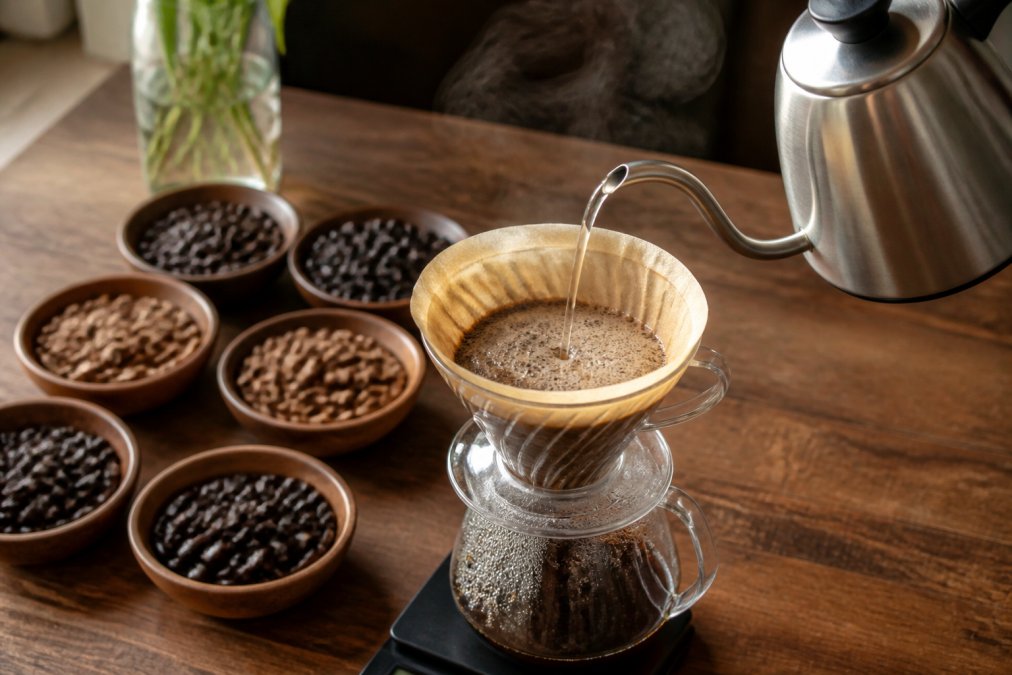
Grind size, water temperature, and the bloom do most of the work. For a standard V60 or similar cone, start with a medium-fine grind, water at 200 to 205°F, and a 1:16 ratio by weight.

- Rinse the paper filter with hot water, then discard the rinse water.
- Add your ground coffee and level the bed.
- Pour roughly twice the coffee's weight in water for the bloom, then wait 30 to 45 seconds.
- Pour in slow spirals, keeping the water level steady.
- Total brew time should land between 2:30 and 3:30.
National Coffee Association brewing guidance confirms water temperature is one of the biggest variables in extraction. If your cup tastes sour and thin, grind finer or raise the temperature. If it tastes bitter and dry, grind coarser or lower the temperature.
Subscription vs. One-Time Purchase: Flexibility and Shipping Costs
Subscriptions save money per bag but lock you into a schedule. One-time purchases cost more per order but give you full flexibility, which matters if you travel or your consumption varies week to week. The gap most buying guides leave open is the fine print: how hard is it to pause, skip, or cancel, and what does shipping actually add to your cost per cup?
The Real Cost of Shipping Per Cup
Shipping is the single biggest variable that turns an "affordable" bag into an expensive one. A flat fee spread across a multi-bag order barely moves the needle; the same fee on a single bag can erase the savings of buying direct. Run the math before you check out:
| Order Size | Example Shipping Fee | Shipping Cost Per 12 oz Bag | Effect on Cost Per Cup |
|---|---|---|---|
| 1 bag | $6 flat | $6.00 | Adds roughly $0.32 per 18 g cup |
| 2 bags | $6 flat | $3.00 | Adds roughly $0.16 per cup |
| 3 bags | $6 flat | $2.00 | Adds roughly $0.11 per cup |
| 3 bags, free-shipping threshold met | $0 | $0.00 | Adds nothing |
Most roasters set a free-shipping threshold. Three $19.99 bags land at $59.97, which clears nearly every threshold in that range. Two $23.99 bags land at $47.98, which clears most of them. One $19.99 bag almost never does. That is the practical rule: order in threes, not ones.
Pause, Skip, and Cancel: What to Confirm Before You Commit
A subscription is only "affordable" if you can get out of it. Before you enter a card number, confirm four things:
- Can you pause instead of cancel? Pausing preserves your grandfathered price if the roaster raises rates later. Canceling and re-subscribing usually resets you to the current price.
- How many clicks to skip a delivery? A skip option buried behind an email request is not real flexibility. Look for a self-serve account dashboard.
- What is the cancellation window? Many roasters bill and roast on a fixed day each month. If you cancel the day before the charge, you may still receive that shipment.
- Does the discount survive a pause? Some programs drop your subscriber discount the moment you pause, then require a new signup at full price.
If a roaster cannot tell you the cancellation window in one sentence, treat that as your answer.
When One-Time Beats Subscription
| Option | Cost Per Bag | Flexibility | Best For |
|---|---|---|---|
| Subscription | Lower per bag | Set schedule, can pause | Steady daily drinkers who brew 2+ cups a day |
| One-time | Full price | Order anytime | Travelers, variable use, anyone testing a new origin |
If you drink one cup a day, a 12-ounce bag lasts roughly 19 days at an 18-gram dose, which is close enough to a monthly cadence that a subscription makes sense. If you brew two or three cups a day, you will burn through a bag in under a week and a monthly subscription will leave you short. In that case, a larger one-time order every two weeks beats a subscription you have to constantly skip.
Frequently Asked Questions
Which coffee beans are best for pour over coffee?
Medium and medium-light roasts work best for pour over because they preserve the bean's natural acidity and complex flavor notes without the smokiness of dark roasts. Single origin beans from Ethiopia, Kenya, and Colombia are popular choices. Look for whole bean coffee with a roast date within two weeks, and grind it fresh to a medium-fine consistency right before brewing.
What are the best single origin coffee beans for value?
Peru, Kenya, Tanzania, and Uganda single origins typically offer the best value at around $19.99 per bag, while Colombia, Ethiopia, Guatemala, and Costa Rica sit slightly higher at $23.99. Buying whole bean and grinding at home keeps costs down further.
How does roast level affect pour over flavor profiles?
Light and medium-light roasts highlight bright acidity, floral notes, and fruit-forward flavors, which pour over brewing amplifies through its clean extraction. Medium roasts balance sweetness with body, bringing out chocolate and caramel tones. Darker roasts taste heavier and less acidic, but they can mask the origin-specific character that makes single origin coffee worth buying.
How do I keep single origin coffee beans fresh after they arrive?
Store whole beans in an airtight container away from light, heat, and moisture. A pantry shelf works better than a refrigerator because condensation damages beans each time you open the bag. Buy in quantities you will finish within two to three weeks of the roast date. Grinding right before brewing preserves the aromatic compounds that give single origin coffee its distinct flavor profile.
Do I need special equipment to brew pour over coffee at home?
A basic pour over setup needs a dripper, paper filters, a gooseneck kettle, and a burr grinder. A kitchen scale helps you hit a consistent brew ratio of about 1:16 coffee to water. You can start with a $25 dripper and upgrade the grinder later. Freshly roasted whole bean coffee matters more than expensive equipment for flavor.
Choosing affordable single origin coffee beans for pour over 2026 comes down to matching roast level and processing method to the cup you actually want, then buying from a roaster who prints a roast date. Gospel and Grind roasts every order to ship, offers single origins from $19.99, and delivers direct to your door, all while supporting the fight against homelessness with every bag. Get started with Gospel and Grind and find your perfect roast.