

Benefits of Buying Roasted to Order Coffee
Table of Contents
- Why Freshness Matters in Roasted to Order Coffee
- The Coffee Degassing Process and Flavor Development
- Fresh Roasted vs Grocery Store Coffee: The Real Difference
- Peak Flavor Coffee Window: Timing Your Brew
- How to Store Fresh Roasted Coffee for Maximum Shelf Life
- The Cost-Benefit of Roasted to Order vs. Retail Coffee
- Conclusion
Last Updated: August 10, 2026
Why Freshness Matters in Roasted to Order Coffee
The moment coffee beans are roasted, volatile compounds that create aroma and complexity begin to degrade. Roasted to order coffee captures beans at their peak sensory window, delivering the actual origin characteristics instead of stale, muted versions. Gospel and Grind understands this principle deeply, by roasting beans to your specific order and shipping within days, they ensure what arrives hasn't spent weeks losing its essential qualities.
Coffee beans contain hundreds of volatile aromatic compounds responsible for the notes you taste: floral hints, chocolate undertones, subtle fruit characteristics. Once roasted, these compounds are unstable. They oxidize, break down, and escape into the air. A bean roasted three weeks ago has lost a significant portion; a bean roasted five days ago still has most of them intact.
The Coffee Degassing Process and Flavor Development
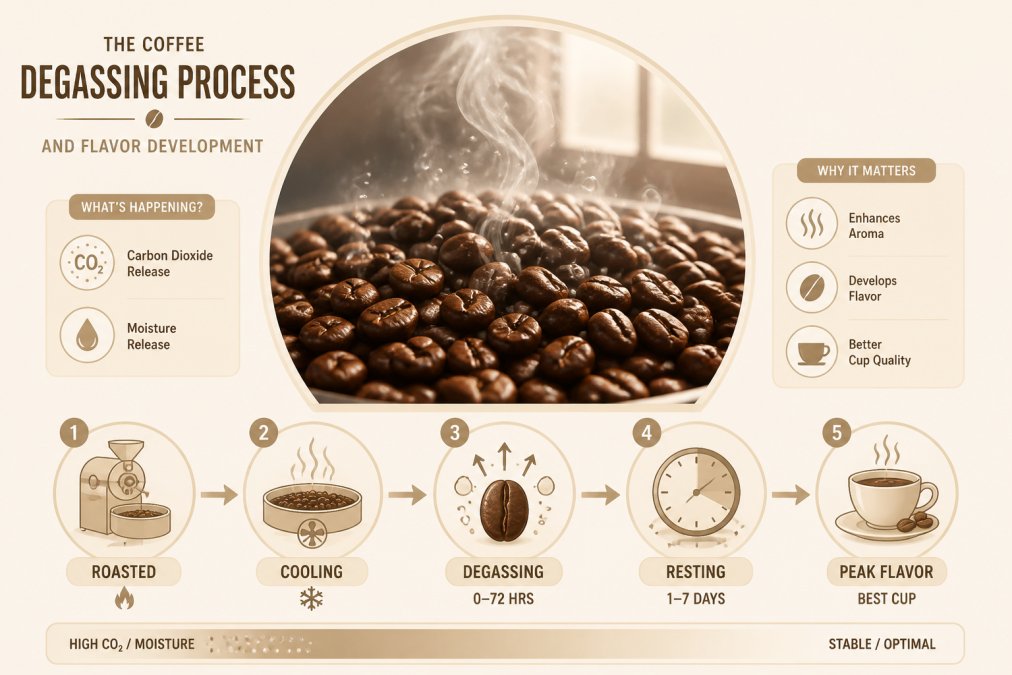
The coffee degassing process begins the moment roasting stops. Carbon dioxide and other gases built up under intense heat begin escaping as beans cool. This process typically takes two to three weeks for complete degassing.
During the first 24 hours, beans actively release CO2, which interferes with water extraction if brewed too early, creating excessive bloom and uneven extraction. After 24 hours, degassing slows but continues. Over the next 10-14 days, beans reach the "sweet spot", degassing has progressed enough for optimal brewing, but volatile flavor compounds haven't degraded significantly yet. This is the peak flavor window for most roasts.
Grocery store coffee has already spent significant time degassing on warehouse shelves or store displays by the time it reaches your kitchen. With roasted to order coffee, the degassing timeline aligns with your brewing schedule instead of working against it.
Understanding Oxidation and Volatile Compounds
Oxidation is the enemy of coffee freshness. Once roasted, oxygen reacts with volatile aromatic compounds, breaking them down into less flavorful molecules. The aldehydes, ketones, and esters that create bright, complex flavors are inherently unstable, they're literally escaping into the air.
A bean roasted five days ago still has most of its volatile compounds. A bean roasted five weeks ago has lost a substantial portion, leaving behind a flatter, more muted flavor profile. This is why fresh roasted coffee from Gospel and Grind tastes so different from mass-market alternatives.
The Role of Carbon Dioxide Release
During roasting, chemical reactions produce CO2 as a byproduct. When roasting stops, beans are saturated with this gas. As they cool, it escapes gradually and predictably, rapid for the first 12-24 hours, then considerably slower but continuing for weeks.
Timing matters because CO2 affects how water interacts with ground coffee during brewing. Too much CO2 (beans brewed too soon) creates excessive bloom and under-extraction. Too little (beans sitting for months) means volatile compounds have also disappeared, resulting in a flat cup. Roasted to order coffee arrives at the optimal point in this cycle, degassed enough for smooth brewing, but before flavor compounds have disappeared.
Fresh Roasted vs Grocery Store Coffee: The Real Difference
The difference between fresh roasted and grocery store coffee comes down to roast date transparency, antioxidant levels, and time elapsed since roasting. Grocery store coffee often lacks clear roast dates, and by the time you purchase it, weeks or months have passed. Fresh roasted coffee eliminates this uncertainty, when you order from Gospel and Grind, roasting happens after your order arrives.
Roast Date Transparency and Quality Control
Roast date transparency is the foundation of quality control in specialty coffee. When you know the exact roast date, you can adjust grind size, water temperature, and brewing time accordingly. Grocery store coffee often lacks this information or provides outdated dates.
Roasted to order operations roast smaller batches specifically for each customer's order, ensuring more consistent quality control. Retail coffee is roasted in large batches, stored, distributed through multiple warehouse stops, and sits on store shelves, each step introduces time and potential degradation.
Transparency also enables traceability. You can track the coffee's journey from roasting to your cup and identify if it sat in warm warehouses or was exposed to light during transport. This accountability is standard in specialty roasted to order operations but rare in mass-market retail.
Antioxidants and Nutritional Integrity
Coffee contains significant chlorogenic acid and other antioxidants that survive roasting but degrade over time. Fresh roasted coffee retains higher antioxidant levels than aged coffee. By the time grocery store coffee reaches your cup, a meaningful portion of these beneficial compounds have degraded through oxidation.
Antioxidants contribute to the sensory experience of coffee, creating body and complexity. Fresh roasted coffee, with higher antioxidant levels, tastes richer and more complex.
Peak Flavor Coffee Window: Timing Your Brew
The peak flavor window for coffee is typically 5-15 days after roasting. During this period, degassing has progressed enough for optimal brewing, but volatile flavor compounds are still present in meaningful quantities.
The 15-15-15 Rule Explained
A useful framework for roasted to order coffee is the timing from roast date. The first 15 days after roasting represent the peak flavor window, when degassing has progressed enough for even, clean extraction and volatile compounds remain in high concentrations. After 15 days, the coffee is still good but beginning to decline, volatile compounds degrade more noticeably.
When Gospel and Grind roasts your order and ships immediately, you receive beans right at the beginning of this peak window. You're working with the coffee's natural aging curve instead of fighting against it.
Adjusting Your Brewing Method for Fresh Beans
Fresh beans require slightly different brewing adjustments than older beans. A slightly coarser grind often works better with very fresh beans, as it gives CO2 room to escape without creating excessive bloom. Water temperature of 195-200°F (instead of 200-205°F) often produces better results, preventing over-extraction and bitter notes.
Fresh beans often require slightly longer brew times to achieve optimal extraction, since higher CO2 content initially resists water penetration. This is particularly noticeable in pour-over brewing, where the bloom phase may last longer.
Take notes on your brewing parameters and adjust based on cup quality. Within a few brews, you'll find the settings that work best for your fresh roasted coffee.
How to Store Fresh Roasted Coffee for Maximum Shelf Life
Proper storage preserves freshness by slowing oxidation and volatile compound loss. Focus on four factors: container type, oxygen exposure, temperature, and light.
Container Selection and Oxygen Exposure
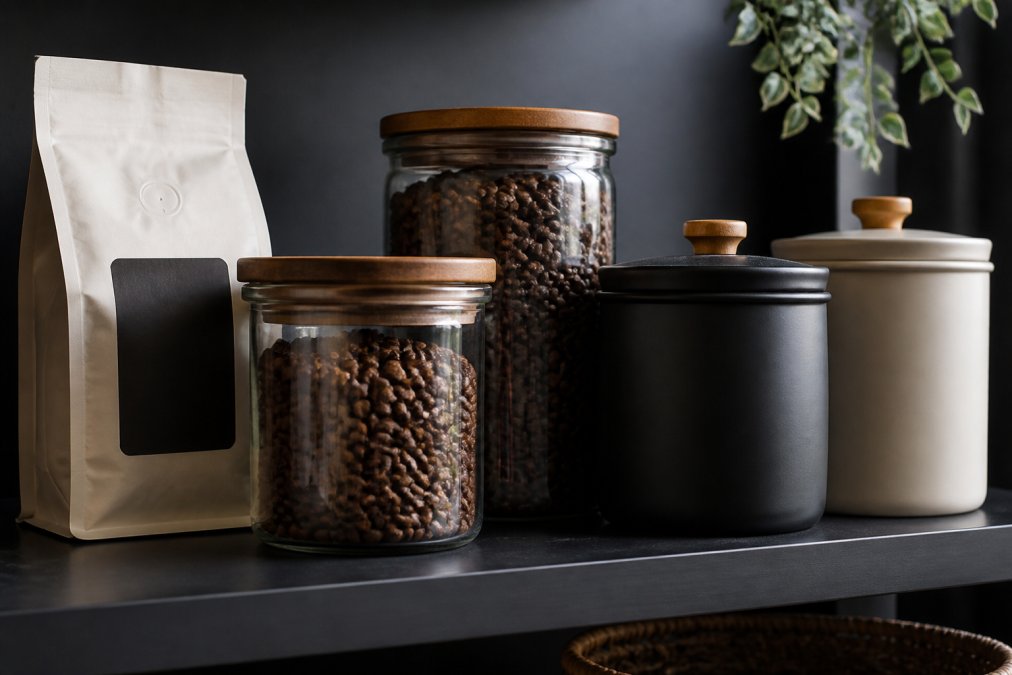
Airtight, opaque containers are ideal for coffee storage. Containers with one-way valves allow CO2 to escape during the first few weeks after roasting while preventing oxygen from entering. This is why specialty roasters package coffee in bags with one-way valves.
If transferring coffee, choose glass or ceramic with airtight seals. Avoid clear containers, which allow light to degrade coffee, and containers with loose-fitting lids that allow oxygen exchange. The original roasted to order packaging from Gospel and Grind is typically optimized for storage, with materials and valve types chosen specifically to preserve freshness.
Temperature, Light, and Humidity Control
Ideal storage temperature is between 50-70°F. Room temperature is acceptable; warm kitchens or areas near heat sources cause faster degradation. Store coffee in a dark cabinet or cupboard, away from windows and direct light, as ultraviolet light accelerates oxidation.
Humidity between 50-65% is ideal. Most home kitchens naturally fall within this range. Avoid refrigerator or freezer storage, while cold temperatures slow oxidation, condensation becomes a problem when cold coffee reaches room temperature, accelerating degradation and potentially promoting mold growth.
The Cost-Benefit of Roasted to Order vs. Retail Coffee
Roasted to order specialty coffee typically costs more than mass-market retail coffee. Understanding what you're paying for clarifies the decision.
What You're Paying For: Quality and Traceability
When you buy roasted to order coffee, you're paying for quality sourced from farms meeting specific standards, freshness from roasting after your order, traceability showing where beans came from and when they were roasted, and convenience of delivery to your door.
Gospel and Grind adds mission alignment, your purchase supports their commitment to fighting homelessness. For conscious consumers, this alignment between personal values and purchasing decisions has real value.
Direct Trade and Small-Batch Roasting
Direct trade relationships ensure farmers receive fair prices rather than minimal compensation through middlemen. Small-batch roasting allows careful monitoring of each batch, adjusted for optimal development and roasted specifically to bean characteristics. This contrasts with mass-market coffee roasted in huge batches where individual quality attention is impossible.
Small-batch roasting enables customization, roasters can offer different roast profiles for the same bean origin. Gospel and Grind's roasted to order model makes this customization practical, allowing you to choose based on your preferences rather than accepting mass-market standardization.
The cost premium reflects real differences in sourcing, roasting, delivery, and impact.
The difference between roasted to order coffee and grocery store alternatives is significant, the difference between tasting coffee at its peak and tasting a degraded shadow of what it could be. Gospel and Grind's commitment to roasting to order means your beans arrive at the beginning of their flavor window, not at the end of their shelf life. Combined with their focus on quality sourcing, direct trade relationships, and mission-driven impact, you get coffee that tastes better and aligns with your values. Experience the difference with Gospel and Grind's roasted to order selections, find your perfect roast today.
Frequently Asked Questions
How long should you wait to drink freshly roasted coffee?
Most specialty roasters recommend waiting 12 to 24 hours after roasting before brewing. This allows the coffee degassing process to release excess carbon dioxide, which can cause uneven extraction and sour flavors. However, peak flavor typically arrives between day 4 and day 14 after roasting, depending on your roast profile and brewing method. Espresso may peak faster (around 5 to 10 days), while pour-over coffee often benefits from the full 2-week window.
Does roasted-to-order coffee actually taste better than grocery store coffee?
Yes. Fresh roasted vs grocery store coffee differs significantly in flavor profile and aroma preservation. Grocery store beans are typically roasted weeks or months before purchase, allowing oxidation to degrade volatile compounds and antioxidants. Roasted-to-order coffee arrives at peak freshness with vibrant acidity, complex notes, and full sensory experience. The roast date transparency ensures you know exactly when your beans were roasted, whereas retail coffee often lacks this traceability.
What is the 15-15-15 coffee rule?
The 15-15-15 rule is a brewing guideline for fresh roasted beans: wait 15 days after roasting, use 15 grams of coffee per 250 milliliters of water, and brew for 15 minutes (or adjust to your brewing method). This framework helps you hit the peak flavor coffee window and extract the optimal amount of stimulating compounds and flavor notes. The timing accounts for the degassing process and allows chlorogenic acid and other beneficial compounds to stabilize.
How long does roasted-to-order coffee stay fresh?
Properly stored roasted-to-order coffee maintains peak flavor and aroma for 2 to 4 weeks after roasting. Shelf stability depends on storage conditions, an airtight, opaque container kept in a cool, dark place extends freshness significantly. After 4 weeks, the coffee remains drinkable but begins losing volatile compounds and nutritional integrity. Whole beans last longer than ground coffee, which oxidizes faster due to increased surface area exposure.
This article was written using GrandRanker