

Best Coffee Beans for Home Brewing: 2026 Guide
Table of Contents
- Understanding Roast Profiles: Light vs. Dark Roast for Home Brewing
- Single-Origin vs. Blended Coffee Beans
- Coffee Bean Roast Dates Explained: Why Freshness Matters
- How to Store Coffee Beans for Freshness
- Best Coffee Bean Grinder for Home and Grind Consistency
-
Top Coffee Beans for Home Brewing: Detailed Recommendations
- Gospel and Grind: Roasted to Order for Maximum Freshness
- Counter Culture Coffee Big Trouble: Balanced Medium-Dark Blend
- Stumptown Hair Bender: Versatile Medium Roast
- Blue Bottle Bella Donovan: Fruity and Complex
- Intelligentsia Black Cat: Espresso-Focused Excellence
- La Colombe Nizza: Smooth and Well-Rounded
- Peet's Major Dickason's: Rich Dark Roast Classic
- Matching Beans to Your Brewing Method
- Troubleshooting Bitter or Sour Brews
Last Updated: August 7, 2026
According to recent surveys, the difference between mediocre and exceptional coffee often comes down to bean quality and freshness. Yet most grocery store shoppers have no idea when beans were roasted, where they came from, or whether they suit their brewing method. This guide from Gospel and Grind breaks down what makes the best coffee beans for home brewing and how to match them to your setup.
The best coffee beans share three core characteristics: they're roasted recently (ideally within 2-4 weeks), sourced with transparency, and matched to your brewing method. We'll walk you through roast profiles, storage, grinder selection, and specific recommendations.
Understanding Roast Profiles: Light vs. Dark Roast for Home Brewing
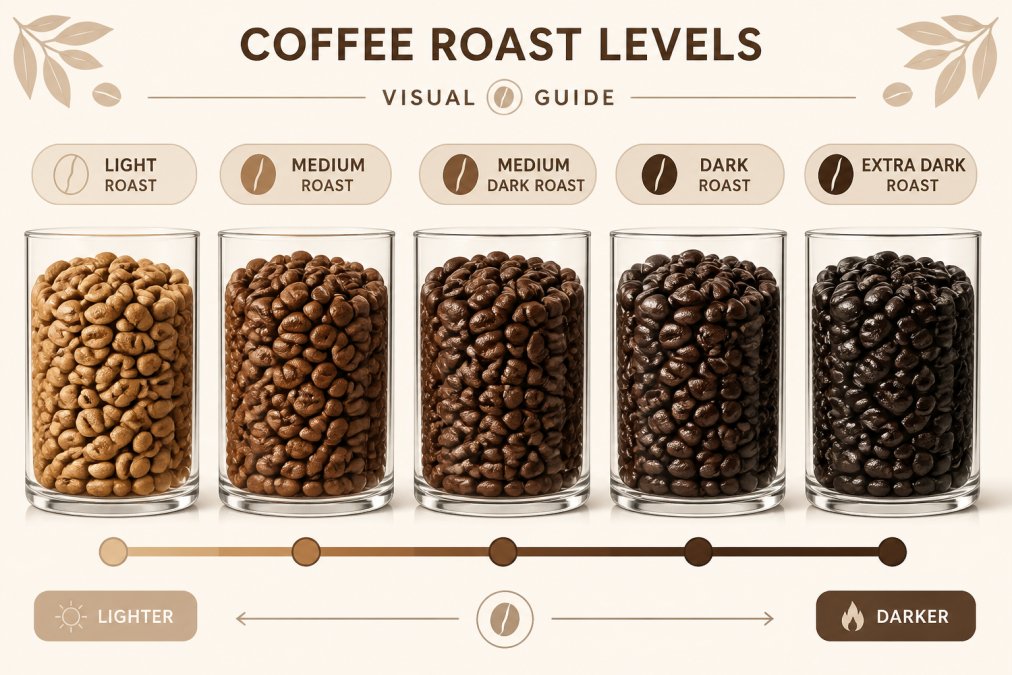
Roast profile determines the flavor in your cup. Light, medium, and dark roasts each highlight different bean characteristics.
Light Roasts: Bright Acidity and Origin Flavors
Light roasts are pulled right around the first crack, preserving the bean's origin characteristics, terroir, altitude, and processing method all come through clearly. If you're buying single-origin Ethiopian or Kenyan beans, a light roast lets you taste what makes that farm's coffee distinct.
The trade-off: light roasts have higher acidity and less body. They require precision in brewing, under-extract and it tastes sour; over-extract and it becomes astringent. They work best in pour-over and manual brewing methods.
Medium Roasts: The Balanced Middle Ground
Medium roasts hit the sweet spot for most home brewers. They develop enough body and sweetness to feel satisfying while preserving origin character. A good medium roast tastes clean and balanced. This is why brands like Stumptown Hair Bender and Counter Culture Big Trouble have built loyal followings. They work across brewing methods: drip, pour-over, French press, even espresso.
Dark Roasts: Bold Body and Low Acidity
Dark roasts are roasted past the second crack, developing heavy body, low acidity, and pronounced bitterness and sweetness. The roasting process itself becomes a flavor. Dark roasts are forgiving, they're harder to over-extract because the beans are already broken down. Peet's Major Dickason's is the classic example.
Single-Origin vs. Blended Coffee Beans
Single-origin beans come from one farm or region and highlight terroir, altitude, soil, climate, and processing method. An Ethiopian Yirgacheffe tastes different from a Colombian Huila. Single-origins are usually lighter roasted to showcase origin flavors.
Blends combine beans from multiple origins to hit a specific flavor profile. A roaster might blend three different origins to achieve sweetness, body, and clean finish. Blends are often darker roasted and more forgiving to brew. If you're buying coffee weekly and want to explore, go single-origin. If you found a blend you love, stick with it.
Coffee Bean Roast Dates Explained: Why Freshness Matters
The roast date is the single most important number on a coffee bag. It tells you exactly when the beans were roasted.
The Degassing Window and Optimal Brewing
Coffee releases CO2 for 24-48 hours after roasting. You can't brew properly until degassing is mostly complete. The optimal window for brewing is 3-14 days after roasting. By day 3, most degassing is done. By day 14, beans are still fresh and flavorful. After 4 weeks, flavor degrades noticeably. After 8 weeks, most specialty coffee tastes flat and dull.
This is why roast-to-order services like Gospel and Grind exist. When beans are roasted and shipped immediately, they arrive at your door in the sweet spot, fresh enough for full flavor, old enough to have finished degassing.
Shelf Life and Storage Impact
Whole beans stay fresher longer than ground coffee. An unopened bag of whole beans stays reasonably fresh for 4-6 weeks if stored properly. Ground coffee oxidizes faster and is stale within days. Once you open a bag, use it within 2-3 weeks. Check the roast date before buying, if a bag doesn't show one, don't buy it.
How to Store Coffee Beans for Freshness
Storage directly impacts flavor.
Container and Environmental Conditions
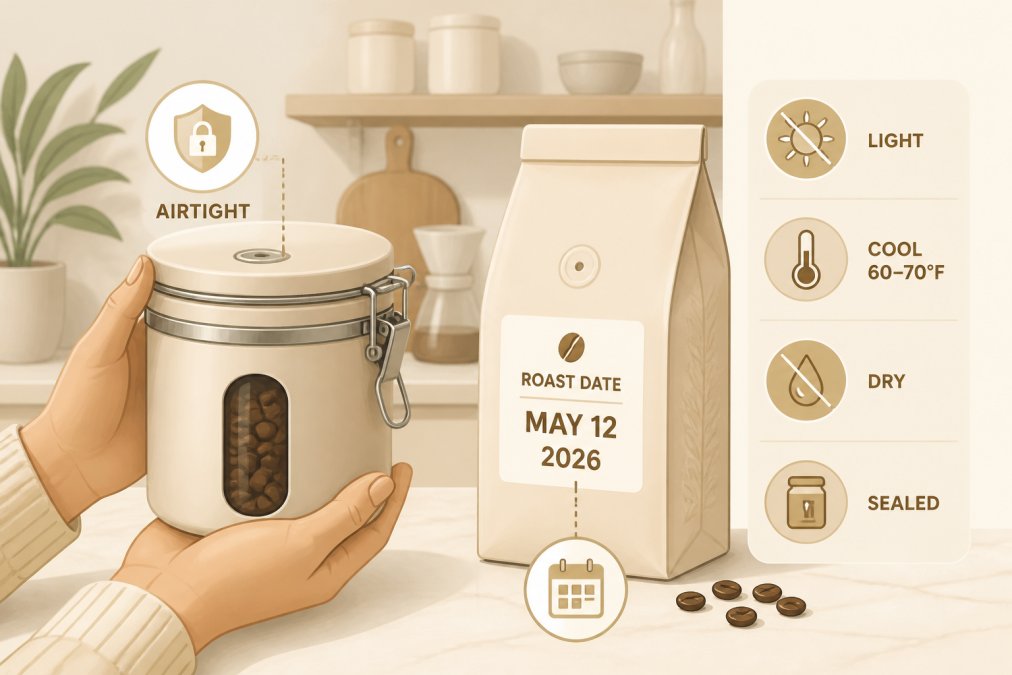
Use an airtight container in a cool, dark place. Glass or opaque plastic works. Avoid clear containers and paper bags. Avoid the freezer unless storing long-term (more than a month); freezing and thawing creates condensation that damages beans.
The ideal storage temperature is 50-70°F. Room temperature works fine if your kitchen stays cool. Heat accelerates staling. Once you open a bag, transfer beans to an airtight container and squeeze out excess air before sealing.
Freezing vs. Room Temperature Storage
Freezing works for long-term storage (2+ months). When ready to use frozen beans, thaw them in the sealed bag at room temperature for 1-2 hours before opening. For beans you'll use within 3-4 weeks, room temperature storage is simpler and avoids condensation risk.
Best Coffee Bean Grinder for Home and Grind Consistency
Your grinder matters as much as your beans. A bad grinder produces inconsistent particle sizes, resulting in muddy, unbalanced cups.
Burr Grinders vs. Blade Grinders
Burr grinders crush beans between two surfaces to a consistent size. Blade grinders chop beans chaotically and unevenly. If you're serious about coffee, you need a burr grinder. Conical burrs are more forgiving and produce slightly more consistent results than flat burrs. Avoid blade grinders entirely.
Grind Size for Different Brewing Methods
Grind size controls extraction speed. Finer grinds extract faster; coarser grinds extract slower.
- Pour-over and drip: Medium grind, like sea salt
- Espresso: Very fine, like powder
- French press: Coarse, like breadcrumbs
- Moka pot: Fine to medium-fine
Start with the recommended size for your method, brew, and adjust. If it tastes sour, grind finer. If it tastes bitter, grind coarser. A mid-range burr grinder ($50-150) handles everything a home brewer needs.
Top Coffee Beans for Home Brewing: Detailed Recommendations
Gospel and Grind: Roasted to Order for Maximum Freshness
Gospel and Grind roasts beans to order and ships immediately, so your coffee arrives at peak freshness, typically 3-7 days after roasting. This eliminates the main problem with online coffee: stale beans sitting in warehouses.
The brand sources carefully from trusted farms and offers both single-origin selections and thoughtfully crafted blends. Every purchase supports their mission to fight homelessness. What makes Gospel and Grind stand out: the combination of freshness guarantee, ethical sourcing, and direct-to-door delivery. Pricing depends on quantity, dates, and delivery. But if you've tasted stale grocery store coffee, the difference in freshness can be significant.
Counter Culture Coffee Big Trouble: Balanced Medium-Dark Blend
Big Trouble is a year-round blend roasted to medium-dark. It hits a sweet spot: enough body and sweetness to feel satisfying, enough origin character to taste complex. Notes of caramel and nuts come through clearly. Counter Culture sources transparently and roasts with precision. It's available in most specialty coffee shops and online. The downside: it's not roasted to order, so freshness varies depending on where you buy it.
Best for: everyday brewing, drip coffee makers, French press, and anyone who wants a balanced, comforting cup.
Stumptown Hair Bender: Versatile Medium Roast
Hair Bender is Stumptown's signature blend, a medium roast with notes of citrus, dark chocolate, and raisin. It's complex enough to taste interesting, balanced enough to work in any brewing method. Stumptown is known for quality sourcing and consistent roasting. Like Counter Culture, freshness depends on where you buy it.
Best for: espresso machines, drip coffee, and anyone who wants a balanced, interesting coffee that doesn't require a learning curve.
Blue Bottle Bella Donovan: Fruity and Complex
Bella Donovan is a blend of African coffees roasted to medium with distinctive notes of raspberry, chocolate, and spice. Blue Bottle sources ethically and roasts carefully. The price reflects the quality. This coffee rewards precision in brewing.
Best for: pour-over and manual brewing methods, coffee enthusiasts who enjoy exploring flavor, and anyone with access to fresh water and a good grinder.
Intelligentsia Black Cat: Espresso-Focused Excellence
Black Cat is a medium roast espresso blend designed to produce sweet, chocolatey shots with excellent crema. Intelligentsia emphasizes direct trade sourcing. The flavor is traditional Italian espresso: sweet, full-bodied, with pronounced chocolate notes.
Best for: espresso machine owners, anyone making milk-based espresso drinks, and those who want a reliable, sweet espresso shot.
La Colombe Nizza: Smooth and Well-Rounded
Nizza is a medium roast blend with notes of caramel, nuts, and fragrant florals, designed to be smooth and balanced. La Colombe sources carefully and roasts consistently. It's widely available in grocery stores, cafes, and online. The trade-off: it's less distinctive than single-origins or more carefully curated blends.
Best for: everyday brewing, drip coffee makers, and anyone who wants consistently good coffee without paying premium prices.
Peet's Major Dickason's: Rich Dark Roast Classic
Major Dickason's is Peet's signature dark roast, a full-bodied, complex blend with notes of dark chocolate and caramel. Dark roast means low acidity and bold flavor. It's forgiving to brew because the beans are already broken down. Peet's is widely available and relatively affordable. The downside: it's not as fresh as roast-to-order services, and the dark roast masks origin character.
Best for: dark roast enthusiasts, French press brewing, and anyone who wants a bold, familiar coffee taste.
Matching Beans to Your Brewing Method
The best beans depend on your equipment. Some beans shine in espresso and taste flat in drip coffee.
Pour-Over and Manual Brewing
Pour-over gives you precise control over extraction. Use medium or light roasts here, they reward that precision. Beans like Blue Bottle Bella Donovan and single-origins from Gospel and Grind excel in pour-over. Grind to medium consistency, use fresh water just off boil (195-205°F), and dial in your pour rate.
Drip Coffee Makers
Drip machines are forgiving. Use medium or medium-dark roasts. Counter Culture Big Trouble, Stumptown Hair Bender, and La Colombe Nizza all work well. Grind to medium consistency, use fresh water, and keep your machine clean.
Espresso Machines and Moka Pots
Espresso requires fine grind and fast extraction. Use medium or medium-dark roasts designed for espresso. Intelligentsia Black Cat and La Colombe Nizza are built for espresso. Dial in your grind carefully, espresso is unforgiving.
French Press and Immersion Brewing
French press steeps grounds in hot water for 4 minutes. Use medium-dark or dark roasts. The longer extraction means lighter roasts can become over-extracted and astringent. Peet's Major Dickason's is ideal for French press. Grind coarse so the metal filter doesn't let fine particles through.
Troubleshooting Bitter or Sour Brews
If your coffee tastes bad, the problem is usually extraction, either too fast (under-extraction, sour) or too slow (over-extraction, bitter).
Identifying Over-Extraction and Under-Extraction
Sour coffee tastes thin and sharp. The flavor is incomplete. This means water ran through grounds too fast. Under-extraction.
Bitter coffee tastes harsh and astringent. Water stayed in contact with grounds too long. Over-extraction.
Good coffee is balanced with sweetness, body, and clean finish.
Adjusting Grind, Water Temperature, and Brew Time
If your coffee is sour (under-extracted):
- Grind finer (slower extraction)
- Use hotter water (speeds extraction)
- Brew longer (give water more time)
If your coffee is bitter (over-extracted):
- Grind coarser (faster extraction)
- Use cooler water (slows extraction)
- Brew shorter (give water less time)
Start by adjusting grind size first.
The best coffee beans for home brewing aren't just about origin or roast level, they're about freshness, your equipment, and how you brew. Gospel and Grind delivers freshly roasted beans with careful sourcing and reliable delivery, making it a strong choice for home brewers who want maximum flavor in every cup. Whether you choose Gospel and Grind or another quality roaster, prioritize freshness, match beans to your brewing method, and dial in your grind. The difference between stale grocery store coffee and fresh, properly brewed specialty coffee is night and day.
Frequently Asked Questions
How do I choose the best coffee beans for my home brewing method?
Start by identifying your brewing method, pour-over, drip, espresso, or French press, since each extracts coffee differently. Pour-over and drip methods work well with medium roasts that highlight origin flavors and acidity. Espresso machines benefit from medium-dark blends that produce rich crema. French press suits full-bodied, darker roasts. Check the roast date on the bag; beans roasted within 2-4 weeks deliver peak flavor. Finally, consider your taste preference: fruity and bright (light roasts), balanced (medium), or bold and chocolatey (dark). Gospel and Grind's roasted-to-order process ensures your beans arrive at peak freshness for your chosen method.
How long do coffee beans stay fresh after roasting?
Whole beans peak in flavor 5-30 days after roasting, as CO2 (degassing) escapes and flavors stabilize. They remain drinkable for 4-6 weeks if stored properly in an airtight container away from light, heat, and moisture. After 6 weeks, oxidation degrades flavor and aroma noticeably. Always check the roast date on the bag, this tells you exactly when beans were roasted. Roasted-to-order services like Gospel and Grind eliminate the guesswork by shipping beans shortly after roasting, so your beans arrive during that optimal window. Pre-ground coffee loses freshness much faster, within 15 minutes of grinding.
What is the difference between single-origin and coffee blends?
Single-origin beans come from one specific farm or region, showcasing distinct terroir characteristics, the altitude, climate, and soil that shape flavor. These coffees highlight unique tasting notes like fruity Ethiopian beans or earthy Colombian varieties. Blends combine beans from multiple origins to create balanced, consistent flavor profiles designed for specific brewing methods or taste preferences. Blends often aim for smoothness and complexity, while single-origins emphasize distinctiveness. For home brewing, single-origins work best for pour-over and manual methods that highlight nuance, while blends suit drip makers and espresso machines where consistency matters. Both have merit; choice depends on whether you want exploration or reliability.
Should I buy whole bean or pre-ground coffee for home brewing?
Whole beans preserve freshness far longer than pre-ground coffee. Once ground, beans lose aroma and flavor within 15 minutes due to increased surface area exposure to oxygen. Whole beans stay fresh 4-6 weeks when stored properly, giving you a wider window for optimal brewing. Grinding at home also lets you adjust grind size to match your brewing method, coarse for French press, medium for drip, fine for espresso. The only advantage of pre-ground is convenience, but the flavor sacrifice is significant. For the best home brewing experience, always buy whole beans and grind just before brewing.
Why is roast date more important than best-by date on coffee bags?
Roast date tells you exactly when the beans were roasted, letting you judge freshness accurately. Best-by dates are manufacturer estimates and often extend 6-12 months out, which doesn't reflect when beans actually peak. Coffee is best 5-30 days post-roast when degassing completes and flavors stabilize. After 6 weeks, oxidation noticeably degrades taste. By checking roast date, you can choose beans at their optimal window, typically within 2-4 weeks of roasting for home brewing. This is why roasted-to-order services provide a real advantage: your beans ship fresh and arrive during peak flavor, rather than sitting in warehouses for months before reaching your cup.
This article was written using GrandRanker