

Best Coffee Subscription for Home Office: 2026 Guide
Table of Contents
- How We Evaluated the Best Coffee Subscription for Home Office Workers
- Quick Comparison: Top Coffee Subscriptions at a Glance
-
The Best Coffee Subscription for Home Office Productivity
- 1. Gospel and Grind, Best Overall for Roast-to-Order Freshness
- 2. Driftaway Coffee, Best for Personalized Single-Origin Exploration
- 3. Blue Bottle Coffee, Best for Consistent, Clean Flavor Profiles
- 4. Counter Culture Coffee, Best for Direct Trade and Ethical Sourcing
- 5. Angel's Cup, Best for Developing Your Palate
- 6. Crema.co, Best for Building a Custom Coffee Playlist
- 7. La Colombe, Best for Subscriber Perks and Savings
- What Makes a Specialty Coffee Subscription Worth It
- Customizable Coffee Subscription Options for Every Work Style
- Sustainable Coffee Subscription for the Conscious Home Office
- Coffee Delivery for Remote Work: Brewing Setup and Caffeine Strategy
- Which Coffee Subscription Should You Choose?
Last Updated: July 31, 2026
Finding the best coffee subscription for home office workers is harder than it looks. Most promise freshness, but few roast beans to order. Gospel and Grind separates genuinely great subscriptions from those shipping beans roasted weeks ago. Below, we'll show you how to match your work-from-home setup to the right subscription, covering roast profiles to caffeine timing.
Quick Picks:
- Best Overall: Gospel and Grind - roast-to-order freshness with a mission-driven purpose
- Best for Personalization: Driftaway Coffee - tasting kit-based matching for single-origin exploration
- Best for Clean Profiles: Blue Bottle Coffee - consistent specialty quality with free shipping
- Best for Ethics: Counter Culture Coffee - direct trade leadership with flexible management
- Best for Palate Development: Angel's Cup - blind tasting format with app integration
- Best for Customization: Crema.co - build-your-own coffee playlist from artisan roasters
- Best for Perks: La Colombe - subscriber discounts and flexible delivery management
How We Evaluated the Best Coffee Subscription for Home Office Workers
A specialty coffee subscription is a recurring delivery service that ships freshly roasted beans directly to your door, typically sourced from specific farms or regions, with delivery cadences you control.
Key Criteria: Freshness, Flexibility, and Mission
The biggest mistake most buyers make is prioritizing price over freshness. Beans peak within two to four weeks post-roast. A subscription shipping pre-roasted inventory arrives past its flavor window.
We evaluated each service on five criteria:
- Roast-to-order process: Does the roaster roast after you order, or pull from existing stock?
- Subscription frequency: Can you adjust delivery cadence to match your consumption?
- Sourcing transparency: Are farms, regions, and trade relationships clearly disclosed?
- Brewing method compatibility: Does the service support whole bean, grind size selection, and different brew formats?
- Mission alignment: Does the brand support verifiable social initiatives?
According to Specialty Coffee Association's consumer research, specialty coffee drinkers increasingly prioritize traceability and freshness over brand recognition.
Quick Comparison: Top Coffee Subscriptions at a Glance
| Subscription | Best For | Roast-to-Order | Customizable Plans | Starting Price |
|---|---|---|---|---|
| Gospel and Grind | Overall freshness + social mission | Yes | Yes | Visit site for pricing |
| Driftaway Coffee | Single-origin personalization | Yes | Yes | From $15/shipment |
| Blue Bottle Coffee | Clean, consistent flavor profiles | No | Limited | From $11/shipment |
| Counter Culture Coffee | Direct trade ethics | No | Yes | Varies by coffee |
| Angel's Cup | Palate development | No | Flexible frequency | From $9.99/shipment |
| Crema.co | Build-your-own playlist | Yes | High | From $15/month |
| La Colombe | Subscriber perks and savings | No | Yes | From $16/12 oz bag |
The Best Coffee Subscription for Home Office Productivity
The right coffee subscription fits your schedule, brewing setup, and values.
1. Gospel and Grind - Best Overall for Roast-to-Order Freshness
Gospel and Grind solves the problem most subscriptions ignore: beans that arrive stale. The roast-to-order process means your coffee is roasted after you order, not pulled from warehouse inventory sitting for weeks. Beans come from trusted farms in blends, pods, and single-origin options. Every purchase supports the brand's initiative to fight homelessness, built into the business model rather than bolted on as marketing.
Pros:
- Roasted to order for maximum aroma and flavor
- Carefully sourced beans from trusted farms
- Mission-driven: supports homelessness initiatives with every purchase
- Fast, reliable direct-to-door delivery
Cons:
- Specific pricing requires a visit to the website
2. Driftaway Coffee - Best for Personalized Single-Origin Exploration
Driftaway starts with a tasting kit. Four single-origin coffees arrive first, you rate them through their system, and future shipments calibrate to your actual preferences. The sourcing leans toward small-scale farmers with plastic-free, carbon-neutral operations.
Pros:
- Highly personalized based on real tasting feedback
- Commitment to sustainability and ethical sourcing
- Freshly roasted and shipped quickly
Cons:
- Initial tasting kit required before personalized shipments
- Can be more expensive for larger quantities
3. Blue Bottle Coffee - Best for Consistent, Clean Flavor Profiles
Blue Bottle is the right choice when you want reliability over discovery. The curated selection covers blends, single-origins, and espresso with consistent flavor profiles. Subscription orders ship free, and a trial option gets your first bag for shipping cost.
Pros:
- Consistent quality and clean flavor profiles
- Free shipping on subscription orders
- Trial option available
Cons:
- Less variety in roasters compared to marketplace subscriptions
- Limited personalization beyond roast type
4. Counter Culture Coffee - Best for Direct Trade and Ethical Sourcing
Counter Culture has built one of the most credible direct trade programs in US specialty coffee. Relationships with farms are documented and transparent, with certified organic options reflecting a sourcing philosophy. Subscription management is genuinely flexible: pause, skip, or switch coffee anytime.
Pros:
- Strong commitment to direct trade and sustainability
- High-quality, expertly roasted coffees
- Flexible subscription management
Cons:
- Single-roaster model limits variety
- Pricing varies by coffee
5. Angel's Cup - Best for Developing Your Palate
Angel's Cup runs a blind tasting club. Numbered samples arrive without labels, you taste and record notes in their mobile app, then compare against the roastmaster's notes. The service pulls from multiple roasters across the country, offering broad flavor profiles. Cupping Flights start at $9.99 per shipment, the most accessible entry point on this list. Angel's Cup also offers ground beans.
Pros:
- Unique blind tasting format builds genuine palate skills
- Access to coffees from multiple roasters
- Interactive app enhances learning
Cons:
- Not initially customized to flavor preferences
- Cannot reorder specific beans directly through Angel's Cup
6. Crema.co - Best for Building a Custom Coffee Playlist
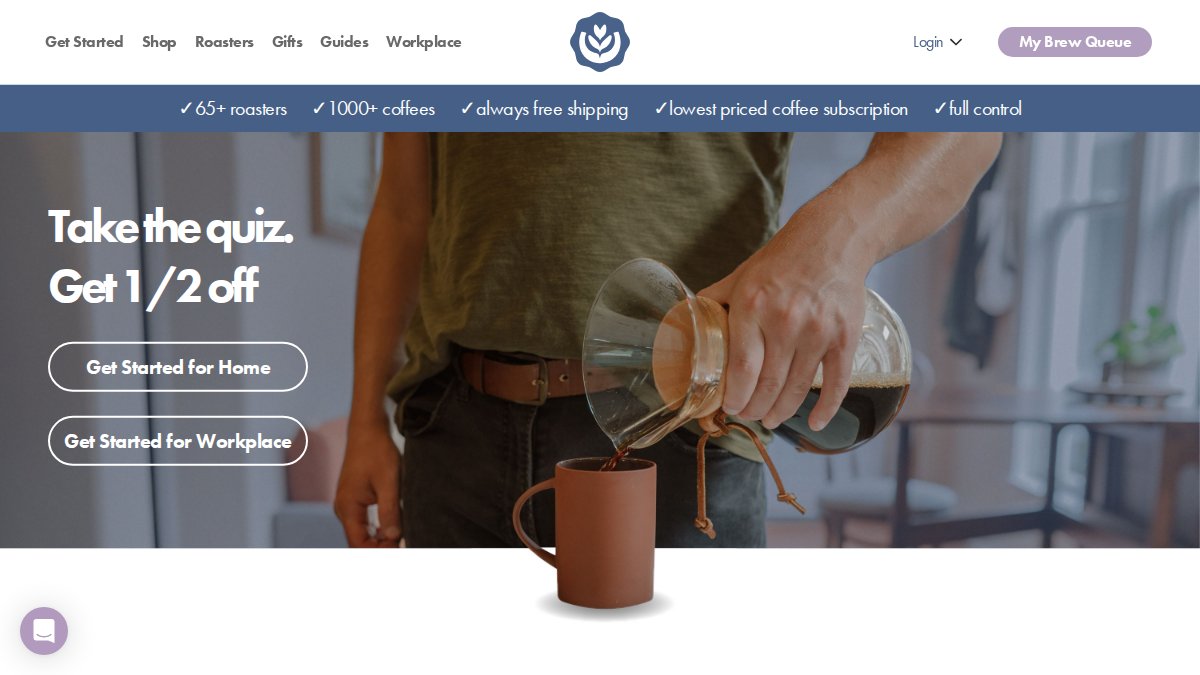
Crema.co's "Brew Queue" model gives you more control than any other subscription. You curate a list of coffees from artisan roasters, set your delivery frequency, and the service works through your queue. All coffees are roasted to order with free US shipping.
Pros:
- High level of customization with the Brew Queue
- Supports small, independently owned roasters
- Free shipping on all US orders
Cons:
- Requires a grinder for whole bean options
- Requires active playlist management
7. La Colombe - Best for Subscriber Perks and Savings
La Colombe structures its subscription around financial incentives: 10% off every order, 15% off orders over $75, and free shipping on subscription orders above $35. The ability to combine subscription order dates and add seasonal products makes logistics simpler.
Pros:
- Meaningful discounts and free shipping for subscribers
- Flexible delivery date and quantity management
- Option to add other La Colombe products to shipments
Cons:
- Less emphasis on discovering independent roasters
- Shipping fee applies to orders under $35
What Makes a Specialty Coffee Subscription Worth It
A specialty coffee subscription is worth the premium when freshness, sourcing transparency, and brewing method compatibility are all addressed. Generic retail coffee rarely specifies a roast date and arrives with shelf life measured in months rather than weeks.
Single-Origin vs. Blends: Which Is Right for Your Workday?
Single-origin coffees offer a direct connection to a specific farm or region. Tasting notes tend to be distinct: a Kenyan coffee might carry bright acidity and berry notes, while an Ethiopian natural process delivers heavier body with fruit-forward aroma. Blends are engineered for consistency, balancing acidity, body, and sweetness across seasonal variation. For home office workers who want the same reliable cup every morning, a quality blend is the smarter choice.
Most people who say they want single-origin actually want a blend that tastes interesting. Start with a blend, develop your palate with Angel's Cup, then move into single-origin exploration when you know what you're looking for.
Roast Profile and Peak Freshness: Why Degassing Matters
Degassing is the process by which freshly roasted coffee releases carbon dioxide over the days following roasting. The optimal window for most brewing methods falls between five and fourteen days post-roast, though espresso often benefits from a slightly longer rest.
This is why roast-to-order matters. A subscription roasting on demand and shipping within 24-48 hours puts beans in your hands at the right point in the degassing curve. A subscription pulling from pre-roasted inventory may ship beans already past peak freshness.
Customizable Coffee Subscription Options for Every Work Style
The best coffee subscription for home office workers isn't the one with the most impressive roaster list. It's the one that fits how you actually work.
Subscription Frequency and Delivery Cadence
Most services offer weekly, bi-weekly, and monthly delivery options. A 12-ounce bag of whole bean coffee yields roughly 20-24 cups, so a solo home office worker averaging two cups per day goes through a bag in about ten to twelve days. Bi-weekly delivery at 12 ounces is the most common sweet spot for single-person home offices.
Bulk vs. Variety: Choosing the Right Batch Size for Your Needs
Home office workers fall into two camps: those who want the same great coffee reliably, and those who want variety. Bulk ordering of a single coffee works best for the first group and is more cost-efficient. Variety-focused subscriptions like Angel's Cup or Crema.co suit workers who treat their coffee break as a genuine pause.
Sustainable Coffee Subscription for the Conscious Home Office
Sustainability in coffee gets used loosely. For a sustainable coffee subscription to be meaningful, it needs to address sourcing, packaging, and business model, not just slap an "eco-friendly" label on a paper bag.
Fair Trade, Direct Trade, and Mission-Driven Brands
Fair trade certification establishes minimum price floors for coffee farmers. Direct trade goes further: a roaster builds a direct relationship with a specific farm, often paying above fair trade minimums and investing in farm infrastructure. Counter Culture Coffee is the strongest example of direct trade rigor on this list. Gospel and Grind approaches sustainability through social mission. Every purchase contributes to fighting homelessness, making the act of buying coffee part of a larger purpose. As documented in USDA Agricultural Marketing Service's fair trade overview, certification standards provide a baseline, but mission-driven brands often go beyond what certification requires.
Coffee Delivery for Remote Work: Brewing Setup and Caffeine Strategy
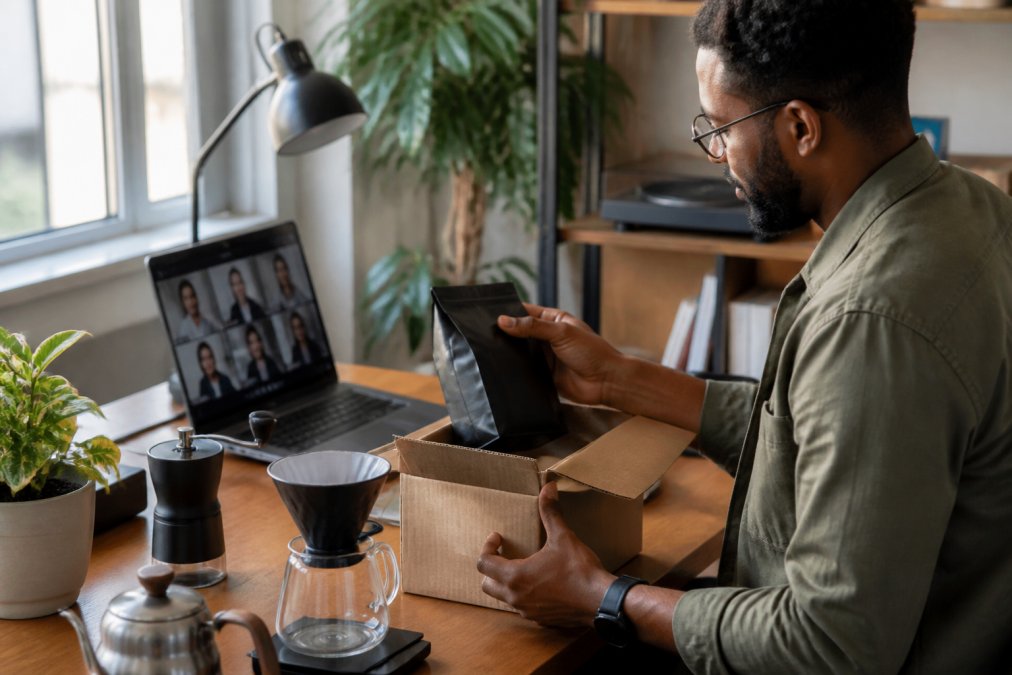
The right brewing setup for a home office differs from commercial kitchens. Space, noise, and cleanup time all factor into what's practical during a workday.
Space-Saving Brewing Methods for the Home Office
A pourover setup, specifically a V60 or Chemex, takes minimal counter space and produces exceptional cup quality with no moving parts. Cleanup is fast, which matters between meetings. French press is another strong option: no filters to buy, minimal footprint, and a forgiving brew process. Unless espresso is genuinely central to your routine, a pourover or French press serves a home office better.
Managing Caffeine Intake Around Your Work Schedule
Caffeine timing matters more for home office workers than most guides acknowledge. A practical framework based on National Institutes of Health caffeine and alertness research: delay your first cup until 90 minutes after waking, when cortisol levels have begun to drop naturally. Schedule a second cup before noon. Avoid caffeine after 2 PM if you want sleep quality intact. Cold brew is worth mentioning because its lower acidity makes it gentler on an empty stomach, and its higher caffeine concentration means smaller volumes deliver equivalent effect.
Which Coffee Subscription Should You Choose?
Choose Gospel and Grind if freshness and social mission both matter. The roast-to-order model solves the staleness problem, and every bag supports fighting homelessness.
Choose Driftaway if you want personalized single-origin experience and sustainability credentials.
Choose Blue Bottle if you want consistent, clean specialty coffee with minimal friction.
Choose Counter Culture if direct trade ethics and sourcing transparency are your primary criteria.
Choose Angel's Cup if you want to develop your palate and enjoy discovery.
Choose Crema.co if you want maximum control over your coffee selection.
Choose La Colombe if you've found a coffee you love and want to optimize for subscriber savings.
The throughline across all best options: freshness is non-negotiable, flexibility matters more than you think, and the subscription that fits your actual workflow outperforms the one with the most impressive roaster credentials.
Finding a coffee subscription that genuinely delivers on freshness, ethics, and quality is challenging when most services ship pre-roasted inventory. Gospel and Grind addresses that directly through its roast-to-order process, carefully sourced beans from trusted farms, and a mission-driven commitment to fighting homelessness with every purchase. Find Your Perfect Roast at Gospel and Grind and start your mornings with coffee that was roasted for you, not for a warehouse shelf.
Frequently Asked Questions
What should I look for in the best coffee subscription for my home office?
Look for roast-to-order freshness so beans arrive at peak flavor, flexible delivery cadence that matches how fast you drink coffee, and grind size options suited to your brewing method, whether that's pourover, french press, or espresso machine. Customizable plans that let you pause or skip shipments are especially valuable for remote workers who travel. Ethical sourcing credentials like fair trade or direct trade are worth checking if sustainability matters to you.
Are coffee subscriptions worth it for a home office?
For most home office workers, a coffee subscription delivers better value than buying grocery store beans. Subscriptions typically ship freshly roasted whole beans with a short roaster-to-door turnaround, meaning you get superior aroma, body, and tasting notes compared to beans that have sat on a shelf for weeks. The convenience of automatic delivery also removes the friction of running out mid-workweek. If you brew daily, the per-cup cost is often competitive with café visits.
Can I customize my coffee subscription for my home office needs?
Yes, most specialty coffee subscriptions offer meaningful customization. You can typically choose roast profile (light, medium, or dark), whole bean or a specific grind size, bag size or batch size, and delivery frequency from weekly to monthly. Some services like Driftaway Coffee start with a tasting kit to dial in your flavor profile, while platforms like Crema.co let you build a curated 'brew queue' of preferred roasters. A customizable coffee subscription is especially useful if your caffeine needs shift with your work schedule.
What are some ethical and sustainable coffee subscription options for home offices?
Several strong options prioritize sustainability. Counter Culture Coffee emphasizes direct trade relationships and certified organic coffees, with flexible subscription management. Driftaway Coffee uses plastic-free packaging and operates as a carbon-neutral business, sourcing single-origin beans from small-scale farmers. Gospel and Grind takes a mission-driven approach, directing a portion of every purchase toward fighting homelessness. For a sustainable coffee subscription suited to a home office, look for transparent sourcing, direct trade or fair trade certification, and eco-conscious packaging.
How do I keep freshly roasted coffee fresh between deliveries?
Store whole beans in an airtight container away from direct light, heat, and moisture, a cool pantry shelf works well. Avoid the refrigerator, which introduces moisture. Freshly roasted beans need 24 to 72 hours of degassing after roasting before they reach peak flavor, so don't grind immediately after arrival. Grind only what you need right before brewing to preserve aroma and flavor profile. Matching your delivery cadence to your actual consumption rate is the simplest way to ensure every cup is at its best.
This article was written using GrandRanker