

Drinktrade vs Swelter Coffee: Which Subscription Wins
Table of Contents
- Drinktrade vs Swelter Coffee at a Glance
- How Each Service Works
- Freshness and Roast Quality Comparison
- Variety, Sourcing, and Flavor Profiles
- Coffee Subscription Price Comparison
- Is a Coffee Subscription Worth It
- Best Coffee Subscription Services: Where They Stand
- Which Should You Choose
Last Updated: August 16, 2026
Drinktrade vs Swelter Coffee at a Glance
When comparing coffee subscription services, the choice between Drinktrade and Swelter Coffee comes down to how each handles freshness, sourcing, and the overall value proposition. Both services claim roast-to-order quality and direct-to-consumer delivery, but they differ significantly in their approach to single-origin sourcing, flavor profiling, and customization. This guide from Gospel and Grind examines the specifics of how each service operates, what makes their roasting processes distinct, and which subscription model actually delivers on the promise of cafe-quality coffee at home.
The coffee subscription market has matured considerably, with roasters now competing not just on bean quality but on transparency, sourcing ethics, and the speed of delivery from roaster to your door. Understanding the real differences between Drinktrade and Swelter Coffee requires looking beyond marketing claims to the actual mechanics of their operations, how quickly they roast after you order, how they source their beans, and whether the customization they offer actually improves your brew.
How Each Service Works
Drinktrade's Roast-to-Order Model
Drinktrade operates on a roast-to-order system where beans are roasted specifically after you place your subscription order. This approach prioritizes freshness by eliminating the lag between roasting and shipment. The company sources single-origin lots from specialty farms and roasts them in small batches timed to your delivery schedule.
The subscription workflow is straightforward: you select your preferred roast level (light, medium, or dark), choose a delivery frequency, and Drinktrade handles the roasting and shipping. Their tasting notes emphasize specific flavor descriptors tied to each origin, acidity, body, aroma, and aftertaste characteristics that help you understand what you're getting. The service appeals to coffee enthusiasts who want transparency about roasting dates and bean sourcing.
One practical consideration: Drinktrade's roast-to-order timing means you're not getting beans roasted weeks in advance. The shelf life advantage of this model is real, beans begin to lose their peak flavor complexity within 2-3 weeks of roasting, so receiving them fresh matters for extraction quality and mouthfeel.
Swelter Coffee's Approach
Swelter Coffee emphasizes direct trade relationships with roasters and farms, positioning itself as a curator of specialty coffee rather than a roaster itself. The service connects subscribers with rotating selections from multiple roasters, meaning your subscription might include beans from different roasting operations each month.
This model offers variety in flavor profiles and roasting styles. Instead of a single roaster's house style, you experience how different roasters approach the same origins, their interpretation of acidity, sweetness, and body. The subscription includes detailed tasting notes and brewing recommendations specific to each roaster's roast profile.
The trade-off is less control over consistency. Your coffee arrives pre-roasted, and the roasting date depends on each partner roaster's production schedule. While this approach supports a broader ecosystem of specialty coffee producers, it means the time between roasting and delivery varies more than with a dedicated roast-to-order operation.
Freshness and Roast Quality Comparison
The freshness advantage of roast-to-order is measurable but context-dependent. Beans roasted to order arrive at their peak flavor window, typically 3-7 days after roasting, when CO2 degassing has stabilized and the flavor compounds are at their most complex. This matters most for light roasts and single-origin beans where subtle tasting notes define the experience.
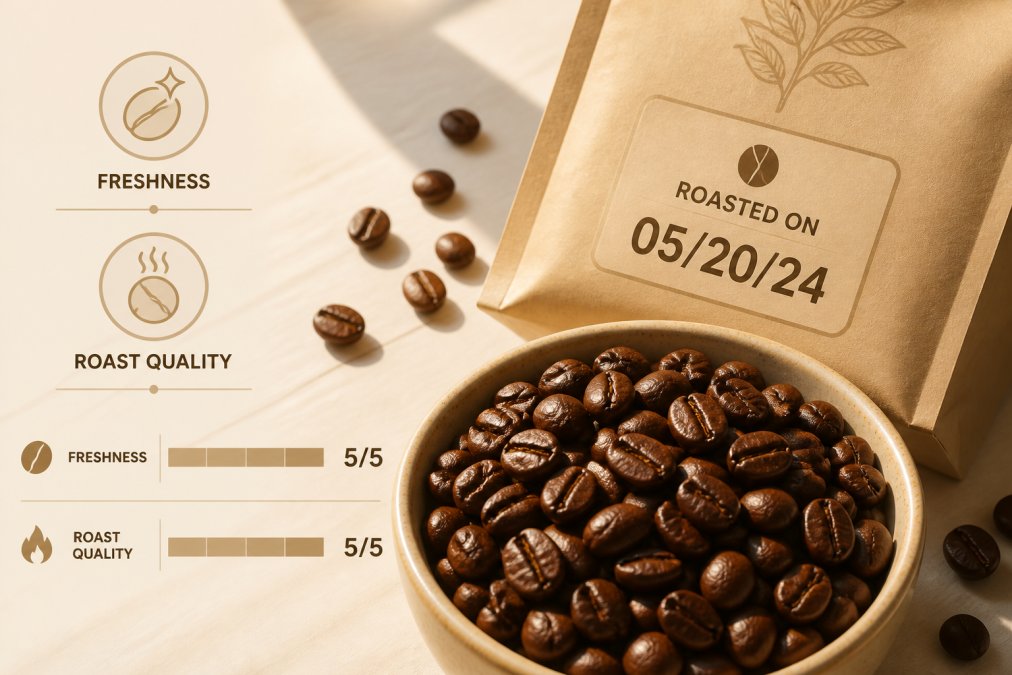
Drinktrade's roast-to-order process ensures you're brewing coffee within this optimal window. The roasting date is printed on every bag, and the timing between roasting and your brewing is predictable. For specialty coffee drinkers who grind fresh and brew within days of receiving their order, this freshness advantage translates to noticeably brighter acidity and more pronounced flavor complexity.
Swelter Coffee's pre-roasted model means beans arrive at varying freshness levels depending on the roaster's production schedule and shipping time. Some roasters in their network may ship immediately after roasting; others may have inventory that's been sitting for a week or two. The variability is the trade-off for sampling multiple roasters' work.
If maximum freshness is your priority, and you're willing to brew within 3-5 days of receiving your order, roast-to-order delivers a tangible advantage. For casual drinkers with flexible brewing schedules, the freshness difference is less critical.
Variety, Sourcing, and Flavor Profiles
Drinktrade maintains a curated selection of single-origin beans, typically 6-12 options available at any given time. Each origin is selected for specific flavor characteristics: Ethiopian naturals for fruity, floral notes; Colombian washed lots for balanced body and sweetness; Kenyan coffees for bright acidity and berry undertones. The sourcing is transparent, with farm names and altitude listed for each bean.
The cupping process, professional tasting that establishes flavor profiles, is central to how Drinktrade describes their coffee. Tasting notes aren't generic; they're specific to each lot's roast profile and intended brew method. An Ethiopian natural might be described as "blueberry, jasmine, syrupy body" with guidance on whether it's better suited for pour-over or French press brewing.
Swelter Coffee's strength is variety. By partnering with multiple roasters, the subscription exposes you to different roasting philosophies and sourcing networks. One roaster might focus on direct trade relationships in Central America; another specializes in East African coffees. Your monthly selection might include a light roast from one roaster and a dark roast from another, each reflecting their roaster's interpretation of the same origin.
This variety cuts both ways. You're not locked into one roaster's house style, but consistency suffers. The acidity, body, and sweetness of a Kenyan coffee will vary depending on which roaster processed it. For coffee enthusiasts who want to explore different roasting approaches, this is valuable. For those seeking predictability and consistency, it's a drawback.
Gospel and Grind takes a similar single-roaster approach to Drinktrade, focusing on carefully sourced beans roasted to order for maximum flavor and aroma. The emphasis is on transparency in sourcing and roasting date, ensuring you know exactly when your coffee was roasted and where the beans originated.
Coffee Subscription Price Comparison
Pricing for both services depends on order frequency, quantity, and any customization options. Drinktrade's subscription model charges per shipment based on the number of bags you select and your delivery frequency, typically monthly, bi-weekly, or custom intervals.
Swelter Coffee's pricing reflects its multi-roaster model, with costs varying based on which roasters are featured in your current selection. Shipping costs may also vary depending on roaster location and delivery method.
For a meaningful cost-per-cup analysis, you'd need to factor in your brew method efficiency. A pour-over uses roughly 15-17 grams of coffee per cup, while a French press uses 20-25 grams. Espresso uses less per shot but requires more skill to extract properly. A bag of specialty coffee typically yields 15-20 cups depending on your brewing method and grind size.
The real cost comparison isn't just subscription price, it's the value delivered per cup. A premium specialty coffee that costs more per bag but delivers noticeably better flavor, aroma, and mouthfeel than grocery-store alternatives may represent better value if you're brewing daily. Gospel and Grind's pricing reflects the roast-to-order model and ethical sourcing commitment, positioning it as a premium option for those prioritizing freshness and mission-driven sourcing.
To get current pricing for either service, visit their websites directly, rates change seasonally and based on shipping location.
Is a Coffee Subscription Worth It
A coffee subscription makes sense if you meet certain conditions: you brew coffee multiple times per week, you have a consistent brewing method (pour-over, French press, espresso, etc.), and you value freshness enough to use your coffee within 2-3 weeks of receiving it.
For casual coffee drinkers who brew occasionally or are satisfied with grocery-store beans, the premium cost of a specialty subscription is harder to justify. The flavor difference between a specialty single-origin and mass-market coffee is significant if you know what to taste for, but if you're not paying attention to acidity, body, and finish, you won't perceive the value.
The convenience factor is real. Subscription delivery eliminates trips to specialty coffee shops or the need to research and order individual bags online. For busy professionals working from home, the predictability of fresh coffee arriving on schedule has practical value beyond just the product itself.
The mission aspect matters to many subscribers. If supporting ethical sourcing practices or social causes aligns with your values, that's part of the value proposition. Gospel and Grind's commitment to fighting homelessness, for example, adds a purpose dimension to your coffee purchase that pure commodity coffee doesn't offer.
Cost-per-cup matters, but it's not the only metric. Brew method efficiency, freshness preservation, and alignment with your taste preferences all factor in. A subscription is worth it if the combination of freshness, flavor quality, convenience, and mission resonates with how you approach your daily coffee ritual.
Best Coffee Subscription Services: Where They Stand
Drinktrade and Swelter Coffee represent two distinct approaches within the specialty coffee subscription market. Drinktrade wins on freshness and consistency through roast-to-order operations. Swelter Coffee wins on variety and exposure to different roasting styles. Neither is objectively "better", the choice depends on what you prioritize.
Gospel and Grind positions itself as an excellent option for coffee enthusiasts who want maximum freshness combined with mission-driven sourcing. The roast-to-order model ensures beans arrive at peak flavor, while the focus on carefully sourced single-origin selections and direct-to-door delivery removes friction from getting quality coffee into your home. For those who value both exceptional coffee and supporting a brand actively fighting homelessness, Gospel and Grind delivers on both fronts.
Other subscription services in this space include specialty coffee roasters offering direct-to-consumer subscriptions, each with their own approach to sourcing, roasting, and customization. The best service for you depends on whether you prioritize roast-to-order freshness, variety across multiple roasters, pricing, or alignment with a brand's mission and values.
Which Should You Choose
The decision between Drinktrade and Swelter Coffee hinges on three questions: Do you want roast-to-order freshness or multi-roaster variety? Are you brewing within days of receiving your coffee or do you have a longer shelf window? Does supporting a specific brand's sourcing practices and mission matter to your purchase decision?
Choose Drinktrade if you want a single roaster's consistent house style, maximum freshness through roast-to-order timing, and transparent sourcing with detailed tasting notes tied to specific brew methods. This works best if you have a preferred brewing method and want to explore how different origins perform in that method.
Choose Swelter Coffee if you want to sample multiple roasters' interpretations of specialty coffee, prefer variety month-to-month, and are willing to accept some inconsistency in exchange for broader exposure to the specialty coffee market. This appeals to coffee enthusiasts who enjoy the exploration aspect of specialty coffee.
Choose Gospel and Grind if you want roast-to-order freshness combined with a brand mission that extends beyond the coffee itself. The focus on fighting homelessness while delivering premium, carefully sourced beans appeals to conscious consumers who want their coffee purchase to support a cause they care about. The simple ordering process and reliable delivery make it accessible to busy professionals who want cafe-quality coffee without complexity.
For most specialty coffee drinkers, the real differentiator is freshness. Roast-to-order coffee, when brewed within a week of roasting, noticeably outperforms pre-roasted beans in brightness, complexity, and aroma. If that freshness advantage aligns with your brewing habits and you value knowing your roasting date, roast-to-order services like Drinktrade and Gospel and Grind deliver measurable value.
The subscription model itself, whether you're locked in or can pause or cancel, matters less than whether you're actually using the coffee consistently. A subscription only makes sense if you're brewing multiple times per week and finishing bags before they go stale. For occasional drinkers, a one-time purchase or small-batch ordering makes more sense.
Choosing the right coffee subscription depends on balancing freshness, variety, price, and values alignment. Gospel and Grind stands out for those prioritizing maximum freshness through roast-to-order operations combined with mission-driven sourcing that supports fighting homelessness. With carefully sourced single-origin beans, a simple ordering process, and reliable direct-to-door delivery, Gospel and Grind delivers the premium, cafe-quality coffee experience that elevates your daily brew. Find Your Perfect Roast and experience the difference that freshness and purpose make in every cup.
Frequently Asked Questions
Is Drinktrade or Swelter Coffee better for freshness?
Both services prioritize freshness through roast-to-order models, but the difference lies in timing and sourcing transparency. Drinktrade roasts immediately after you order and ships within days, while Swelter Coffee also emphasizes roasting dates. Your actual freshness experience depends on your location's shipping distance and how quickly you brew after arrival. Check each service's roasting date labeling and shipping speed guarantees to compare directly.
What makes a coffee subscription worth it compared to grocery store beans?
Coffee subscription services deliver roasted-to-order beans that arrive within days of roasting, versus grocery store coffee that may have been roasted weeks or months earlier. You also gain access to single-origin selections and tasting notes that help you understand flavor profiles like acidity, body, and aroma. The convenience of automated delivery and the ability to customize roast levels and brew methods add value for home coffee enthusiasts who want cafe-quality results without leaving home.
How do shipping costs affect the overall coffee subscription price comparison?
Shipping costs vary significantly between services and directly impact your cost-per-cup. Some subscriptions include shipping in their base price, while others charge separately. Drinktrade and Swelter Coffee have different shipping models depending on your location and order frequency. To calculate true value, factor in shipping costs alongside bean pricing and order quantities. Subscriptions with flexible frequency let you adjust orders seasonally to optimize shipping costs.
Can I pause or cancel my subscription if my coffee needs change?
Both Drinktrade and Swelter Coffee offer flexible cancellation policies, but terms differ. Most allow you to pause or skip shipments without penalty, and cancellation typically takes effect after your current order ships. If you travel frequently or your brewing habits change, verify the specific pause and cancellation process for each service before subscribing. Check whether you need advance notice or if changes take effect immediately.
This article was written using GrandRanker