

Fresh Roasted Coffee vs Grocery Store: Which Is Worth It
Table of Contents
- Fresh Roasted Coffee vs Grocery Store: The Core Difference
- Why Coffee Roast Date Importance Matters More Than You Think
- Signs of Stale Coffee Beans and What They Tell You
- How to Store Coffee Beans for Freshness: Long-Term Strategy
- Fresh Roasted Coffee: Pros and Cons
- Grocery Store Coffee: Pros and Cons
- Which Option Is Right for Your Routine?
- Conclusion
Last Updated: August 6, 2026
Fresh Roasted Coffee vs Grocery Store: The Core Difference
The difference between fresh roasted coffee and grocery store coffee comes down to time. Grocery store coffee has already lost much of what makes coffee worth drinking, while fresh roasted coffee arrives days after roasting, when the beans are still releasing the compounds that create flavor, aroma, and complexity.
The moment coffee is roasted, a window opens, and it closes fast. Understanding this window determines whether you're drinking coffee that tastes alive or flat. Gospel and Grind focuses on this exact problem by roasting to order and shipping directly to you, ensuring your beans hit peak flavor while it's still open. Most grocery store coffee never gets close.
Why Coffee Roast Date Importance Matters More Than You Think
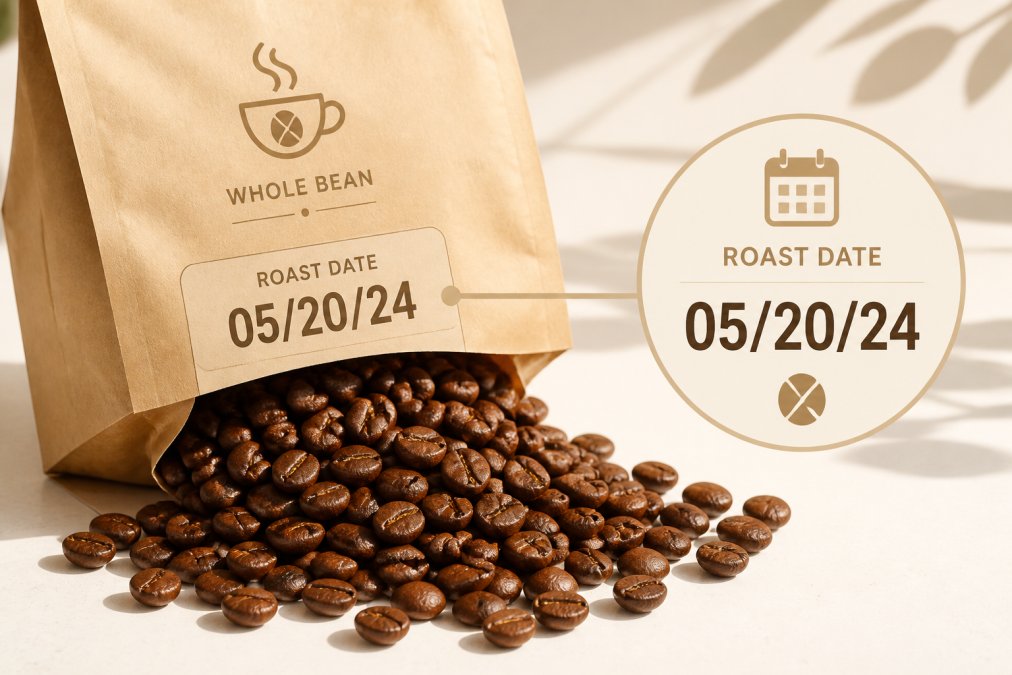
The roast date is the single most useful piece of information on a coffee bag. It tells you exactly when green beans transformed into the brown beans you brew with. Everything that follows is decline.
For the first 5-14 days after roasting, beans actively degas, releasing carbon dioxide trapped during roasting. This degassing is tied directly to flavor development. The CO2 release carries volatile compounds that create aroma and taste. Once degassing slows, those compounds begin oxidizing and becoming stale.
Grocery store coffee rarely displays a roast date. When it does, that date is often weeks or months old by the time it reaches your hands. Fresh roasted coffee from Gospel and Grind ships within days of roasting, arriving during the window when degassing is still active and flavor compounds remain intact.
The Peak Flavor Window After Roasting
The peak flavor window for most coffees is between 5 and 30 days after roasting. Light roasts hit their sweet spot quickly and stay open longer. Medium roasts peak around day 7-10. Dark roasts need a few more days to fully degas.
After 30 days, beans are still drinkable but the aroma flattens and flavor loses brightness. By 60 days, the sensory experience noticeably dulls. By 90 days, most character has faded. This is why specialty roasters obsess over roast dates, a coffee exceptional on day 8 tastes merely good on day 25 and mediocre on day 45.
Degassing and CO2 Release in Fresh Beans
When beans are roasted, heat creates pressure inside each bean, forcing carbon dioxide to build up. Once roasting stops and beans cool, that CO2 begins escaping. This degassing is essential, the CO2 carries flavor compounds out of the bean.
A bean that hasn't fully degassed tastes thin and sour because CO2 blocks water from extracting flavor evenly. A bean that has finished degassing but hasn't oxidized yet tastes full and complex. Grocery store beans have finished degassing long before you buy them. Fresh roasted beans are still in the middle of this process when they arrive.
Signs of Stale Coffee Beans and What They Tell You
Fresh beans have a glossy, oily appearance. As beans age, that shine dulls and the surface becomes matte. This visual change reflects oxidation breaking down the oils on the surface into bitter, flat-tasting compounds.
Open a bag of fresh roasted coffee and the aroma should be intense and specific, floral, fruity, or nutty depending on origin and roast level. This comes from volatile compounds still being released by degassing beans. As beans age, that aroma fades to something muted and generic.
When you brew stale coffee, it produces weak or no crema, thin body, sharp acidity instead of brightness, and a short finish. These signs indicate oxidation has broken down compounds responsible for body, sweetness, and complexity. Grocery store coffee shows all three signs because it's old, not because it's inherently bad.
How Oxidation Degrades Flavor Profile and Aroma
Oxidation is the chemical process that makes coffee stale. Oxygen in the air reacts with compounds in the bean, breaking them down into simpler, less flavorful molecules. This accelerates with exposure to heat, light, and air.
The volatile aromatic compounds oxidize first, these are the most delicate and most flavorful. Once they oxidize, they're gone. The remaining compounds tend toward bitter and flat. Fresh roasted coffee tastes different because oxidation hasn't had time to destroy these volatile compounds yet.
Reading Packaging: Identifying Roast Dates and Best-By Labels
A roast date tells you when beans were roasted. A best-by date tells you when the roaster thinks you should use them by. The roast date is the useful one.
Look for the roast date printed clearly on the bag. If a bag doesn't have one, that's a red flag, the roaster either doesn't track it or doesn't want you to know it. A best-by date is often 6-12 months after the roast date, but beans aren't at their best past the peak flavor window.
Fresh roasted coffee from online roasters includes the roast date because it's a selling point. Gospel and Grind ships coffee within days of roasting, so the roast date is recent. Grocery store coffee rarely displays a roast date, this lack of transparency is intentional.
How to Store Coffee Beans for Freshness: Long-Term Strategy
Storage determines how fast oxidation happens. The right method can extend the peak flavor window by days or weeks.
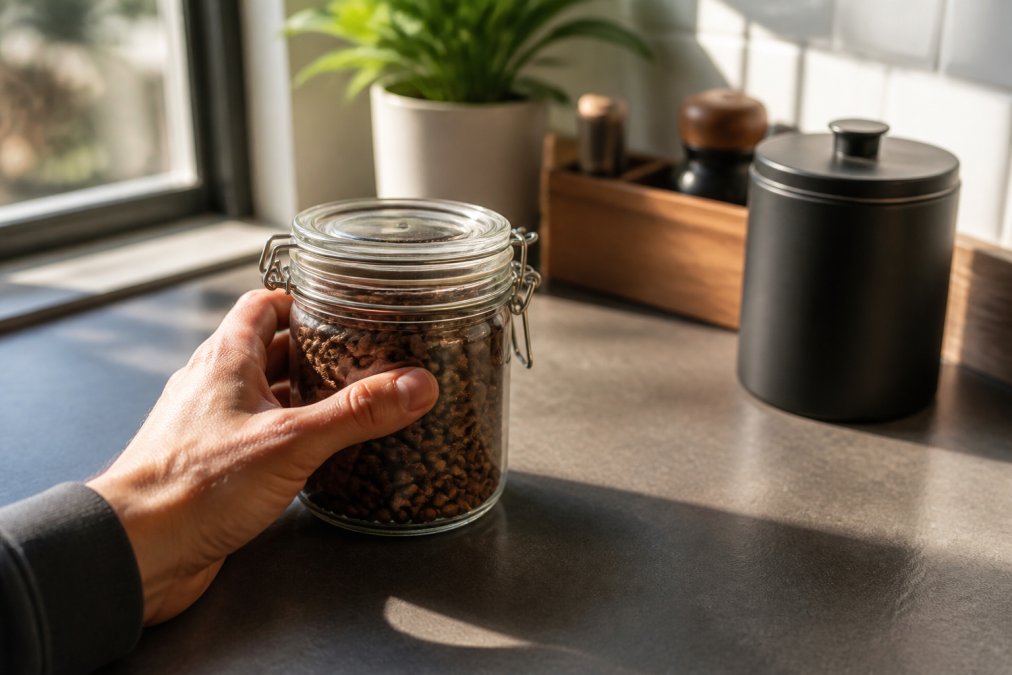
The enemies are air, light, heat, and moisture. Air is the primary culprit, oxygen reacts with beans. Sealed containers slow this dramatically. Airtight glass or ceramic containers work well; vacuum-sealed bags work even better.
Light degrades beans through UV breakdown of chlorophyll and other compounds. Store beans in dark cupboards, not clear jars on sunny windowsills. Heat accelerates oxidation chemically, every 10-degree temperature increase roughly doubles oxidation rate. The ideal storage temperature is 50-70 degrees Fahrenheit in a cool cupboard.
Store whole beans in an airtight container in a cool, dark cupboard and use them within 30 days of the roast date. Grind only what you'll use immediately. For bulk purchases, freeze extra beans in airtight bags, freezing slows oxidation dramatically, though thaw to room temperature before grinding to avoid condensation.
Grocery store coffee often sits in paper bags with one-way valves on shelves under fluorescent lights. These storage conditions work against freshness from the moment the bag hits the shelf.
Fresh Roasted Coffee: Pros and Cons
Pros of Fresh Roasted Online
Maximum flavor and aroma in every cup. Beans arrive during the peak flavor window. You taste complexity, brightness, and specific notes the roaster intended. The aroma is intense and the body is full.
Access to specialty beans and origins. Online roasters source directly from farms and carry beans grocery stores don't. You can buy single-origin coffees from specific regions and explore different roast levels.
Transparency about sourcing and roasting. Gospel and Grind publishes roast dates, tasting notes, and sourcing information. You know exactly what you're buying and when it was roasted.
Convenience of delivery. Fresh coffee arrives on a schedule. You don't have to go to the store or think about running out.
Support for mission-driven businesses. Gospel and Grind dedicates part of its revenue to fighting homelessness. Your purchase supports causes you care about.
Cons of Fresh Roasted Online
Higher cost per pound. Specialty sourcing, small-batch roasting, and direct shipping add to the price.
Requires commitment to a routine. You need to set up a subscription or remember to order regularly.
Brewing method matters more. Fresh beans are sensitive to how you brew them. You may need better equipment, a burr grinder, pour-over setup, or espresso machine.
Subscription commitment. Many roasters require subscriptions, which can feel inflexible if your needs change.
Taste preferences vary. Fresh roasted tastes noticeably different from commodity blends. The acidity is brighter and body might be lighter. It takes time to adjust.
Grocery Store Coffee: Pros and Cons
Pros of Grocery Store Coffee
Immediate availability. You walk into a store and buy coffee. No waiting for delivery or planning.
Low cost. Mass production and commodity beans reduce the price.
Consistency. Major brands taste the same every time.
Familiarity. Most people grew up with grocery store coffee and know what to expect.
Long shelf life. You can buy in bulk and store for months without significant further degradation.
Cons of Grocery Store Coffee
Past peak flavor before you buy it. By the time it reaches you, it's 2-8 weeks old and past the peak flavor window.
No roast date transparency. Most grocery store coffee doesn't display a roast date. This lack of transparency is intentional.
Commodity sourcing. Coffee is made from the cheapest, most standardized beans with generic flavor profiles.
Storage conditions. Coffee sits on shelves under fluorescent lights, sometimes in warm aisles, accelerating oxidation.
Limited selection. Grocery stores carry 5-10 options. Online roasters carry 50-100.
No control over freshness. You buy what's on the shelf with no say in when it was roasted or how it was stored.
Which Option Is Right for Your Routine?
Choose fresh roasted coffee if: You brew at home regularly and care about taste. You have proper equipment, at minimum, a burr grinder and pour-over or French press. You're willing to pay more for better flavor. You value knowing where your coffee comes from and supporting mission-driven businesses. You have a consistent routine and can commit to regular ordering. You're curious about exploring different origins and roast levels.
Choose grocery store coffee if: You want maximum convenience and minimal planning. You're on a tight budget. You drink coffee for caffeine and familiarity. You don't have time to invest in brewing technique or equipment. Your coffee needs are unpredictable.
The hybrid approach: Buy fresh roasted coffee for home brewing, where you control the process and can appreciate quality. Buy grocery store coffee for the office or travel, where convenience matters more. This gives you the best of both without full commitment.
If you've never tried genuinely fresh roasted coffee, you don't know what you're missing. The difference between a 10-day-old bean and a 60-day-old bean is dramatic. If taste matters to you at all, it's worth trying once. Gospel and Grind makes this easy, order a bag, brew it carefully, and taste the difference.
The gap between fresh roasted coffee and grocery store coffee is real, but it's only worth closing if you're willing to pay attention to what you're drinking. For coffee enthusiasts who prioritize flavor and freshness, Gospel and Grind delivers beans roasted to order and shipped directly to you, ensuring you taste coffee at its peak. The carefully sourced single-origin and blend options arrive within days of roasting, maximizing aroma and flavor profile before oxidation takes hold. Beyond exceptional coffee, Gospel and Grind's mission to fight homelessness means every purchase supports a cause. Find Your Perfect Roast and experience the difference that true freshness makes.
Frequently Asked Questions
Is fresh roasted coffee actually better than grocery store coffee?
Yes, fresh roasted coffee typically delivers noticeably better flavor and aroma. Grocery store coffee often sits on shelves for weeks or months, allowing oxidation to degrade flavor compounds and oils. Fresh roasted beans, ideally used within 2-4 weeks of roasting, retain their peak flavor profile, acidity, and complexity. The sensory experience is more vibrant, with clearer tasting notes and fuller body. However, the difference matters most if you have a good grinder and brewing method; poor equipment can mask the quality advantage.
Does the roast date on coffee bags really matter?
Absolutely. The roast date is critical because it tells you exactly how fresh your beans are. Coffee is most flavorful during the 2-4 week window after roasting, when degassing is complete but oxidation hasn't significantly degraded the oils. Grocery store bags rarely show roast dates, they show "best by" dates instead, which can be 6-12 months after roasting. Always choose coffee with a visible roast date, and prioritize beans roasted within the last 2-3 weeks for optimal extraction and flavor complexity.
How can you tell if coffee beans are stale?
Stale beans show several telltale signs: they look dull or faded rather than shiny and vibrant, they lack aroma when you open the bag, and they produce little to no crema when brewed. Older beans often taste flat, bitter, or thin-bodied instead of complex and balanced. The oils that give fresh coffee its richness migrate or oxidize over time, leaving behind a hollow taste. If your coffee tastes sour or lacks sweetness, the beans are likely past their prime. Trust your senses: fresh beans smell intensely aromatic and taste clean and lively.
What is the best way to store coffee beans for freshness?
Store beans in an airtight container away from heat, light, and moisture, a cool, dark cupboard is ideal. Avoid clear containers that expose beans to light, which accelerates oxidation. Freezing whole beans in an airtight, moisture-proof container can extend freshness for several months, though room-temperature storage in an airtight vessel is simpler for beans you'll use within 3-4 weeks. Never store coffee in the refrigerator, where humidity and odors from other foods can degrade flavor. Grind only what you need immediately before brewing to preserve the freshness window.
Is it cheaper to buy fresh roasted coffee online?
Fresh roasted coffee online typically costs more per pound than mass-market grocery store brands, but the price difference reflects quality and supply chain practices. Specialty roasters source higher-grade, single-origin or carefully selected blend beans and roast in smaller batches for flavor control. Grocery store coffee relies on commodity beans and bulk production to keep prices low. The value equation depends on your priorities: if you value maximum freshness, superior flavor, and ethical sourcing, the premium is justified. If convenience and lowest cost matter most, grocery store options work fine.
This article was written using GrandRanker