

How to Brew Better Coffee at Home: A 2026 Guide
Table of Contents
- What You Need Before You Brew Better Coffee at Home
- Coffee Bean Grinding for Home Brewing: Why It Changes Everything
- Coffee to Water Ratio Home Brewing: Getting the Numbers Right
- Water Temperature for Coffee Brewing: The Range That Makes or Breaks Your Cup
- Step-by-Step: How to Brew Better Coffee at Home With Four Popular Methods
- Troubleshooting Specific Flavor Profiles: Fixing Bitterness, Acidity, and Weak Body
- Common Coffee Brewing Mistakes and How to Avoid Them
- Sustainability and Waste Reduction in Your Home Coffee Routine
Last Updated: July 30, 2026
The gap between a forgettable cup and a genuinely great one comes down to a handful of variables. At Gospel and Grind, we work with coffee enthusiasts who discover that beans, grind, and water matter far more than the machine on their counter. Below, we'll walk through how to control each variable, including water chemistry and troubleshooting, angles most guides skip.
Here's what most guides get wrong: they treat brewing as a recipe rather than a system. Fix the system, and every cup improves.
What You Need Before You Brew Better Coffee at Home
Freshness is not marketing, it's measurable. Coffee peaks between four days and three weeks after roasting. After that, aromatics fade and the cup flattens.
Freshness Starts With the Roast Date
Check the roast date on the bag. If only a "best by" date appears, the roaster isn't confident about when it was roasted. Whole beans stay fresh significantly longer than pre-ground coffee, which loses aromatics within 20 to 30 minutes of grinding. Store beans in an airtight container away from heat and light. Avoid the freezer unless storing a large batch you won't open for weeks.
Budget-Friendly vs. Pro-Sumer Equipment: What Actually Matters
Equipment matters less than technique up to a threshold, then returns diminish quickly.
| Equipment | Budget Option | Pro-Sumer Option | Impact on Cup |
|---|---|---|---|
| Grinder | Baratza Encore (~$170) | Comandante C40 (~$230+) | Very High |
| Kettle | Basic stovetop kettle | Gooseneck electric with temp control | High (pour over) |
| Scale | Any digital scale with 0.1g precision | Acaia Pearl | High |
| Brewer | AeroPress, French press | Hario Switch, Chemex | Medium |
| Water filter | Brita pitcher | Third-wave water packets | Medium-High |
The grinder is worth spending on. A burr grinder at any price outperforms a blade grinder. A digital scale is non-negotiable for consistency.
Coffee Bean Grinding for Home Brewing: Why It Changes Everything
Grind size controls extraction speed. Get it wrong, and no other adjustment saves the cup.
Burr Grinder vs. Blade Grinder
A burr grinder crushes beans between two abrasive surfaces, producing uniform grounds. A blade grinder chops randomly, creating fine powder and large chunks. This inconsistency means some grounds over-extract while others under-extract, producing a cup that is simultaneously bitter and sour.
Burr grinders come in flat and conical configurations. Flat burrs produce more uniform grinds and dominate commercial settings. Conical burrs are quieter and common in home equipment. For most home brewers, owning any burr grinder matters more than the distinction. According to the Specialty Coffee Association's brewing guidelines, grind uniformity is a primary factor in achieving target extraction yield.
Matching Grind Size to Your Brewing Method
Correct grind size depends on contact time between water and grounds. Longer contact requires coarser grind to prevent over-extraction.
- French press: Coarse, resembling coarse sea salt. Steeping time: 4 minutes.
- Pour over / Hario Switch: Medium to medium-fine, like table salt. Brew time: 3 to 4 minutes.
- AeroPress: Medium to medium-fine for standard recipes; finer for espresso-style shots.
- Moka pot: Fine, but not as fine as espresso. Closer to table salt than powder.
- Drip coffee machine: Medium grind, similar to pour over.
Dial in grind size by taste, not feel. If bitter, grind coarser. If sour or weak, grind finer.
Coffee to Water Ratio Home Brewing: Getting the Numbers Right
The coffee-to-water ratio determines strength and body before any other variable. A 1:15 ratio means 1 gram of coffee for every 15 grams of water. A 1:17 ratio produces a lighter cup. A 1:13 ratio produces a stronger, denser cup.
Brew Ratios by Method
| Method | Recommended Ratio | Coffee (g) | Water (ml) | Brew Time |
|---|---|---|---|---|
| French Press | 1:15 | 30g | 450ml | 4 min |
| Pour Over | 1:16 | 25g | 400ml | 3-4 min |
| AeroPress | 1:13 to 1:15 | 18g | 240ml | 2-3 min |
| Moka Pot | 1:7 (concentrated) | 20g | 140ml | 5-7 min |
| Drip Coffee | 1:16 to 1:18 | 60g | 1000ml | 5-6 min |
These are starting points. Light roasts often taste better at slightly stronger ratios because their acidity needs density for balance. Dark roasts can taste muddy at 1:13 and cleaner at 1:16 or 1:17.
A digital scale is the only reliable way to hit these ratios consistently. Measuring by tablespoons introduces too much variability.
Water Temperature for Coffee Brewing: The Range That Makes or Breaks Your Cup
Water temperature sits in a specific range: 195°F to 205°F, just off a full boil. Boiling water at 212°F over-extracts, pulling bitter compounds before desirable flavors develop. Water below 195°F under-extracts, producing a sour, thin cup.
Bring water to a full boil, then let it rest for 30 to 45 seconds before brewing. For pour over methods, a gooseneck kettle with a built-in thermometer removes guesswork.
Water Chemistry and TDS: The Hidden Variable Most Guides Skip
TDS (Total Dissolved Solids) measures mineral content in water. Coffee extraction requires minerals, particularly magnesium and calcium, to carry flavor compounds from grounds into the cup. Distilled water produces flat, lifeless coffee. Heavily mineralized water can interfere with extraction.
According to the Specialty Coffee Association's water quality standards, target TDS for brewing is between 75 and 250 parts per million, with 150 ppm ideal. Most U.S. municipal tap water falls within acceptable range, but heavily chlorinated or very soft water underperforms.
Use a Brita-style carbon filter to remove chlorine, or use bottled spring water with moderate mineral content. Third-wave water packets allow custom mineral profiles from distilled water, a pro-sumer approach with noticeable cup quality differences.
Step-by-Step: How to Brew Better Coffee at Home With Four Popular Methods
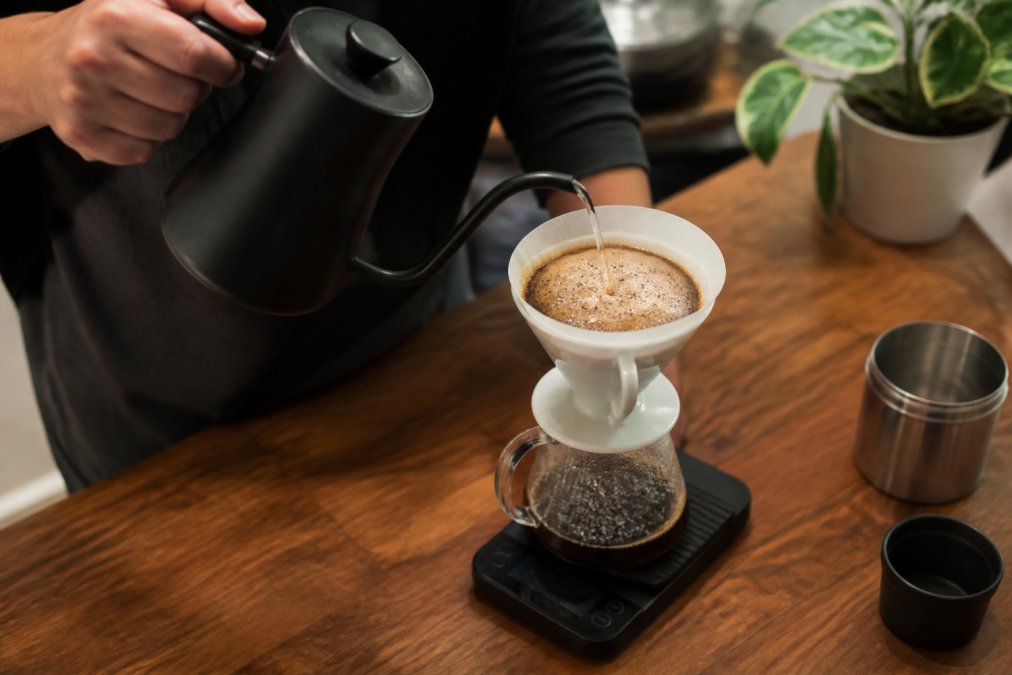
Pour Over (Including Hario Switch)
Total Time: 5 to 6 minutes. Difficulty: Beginner to intermediate.
- Heat water to 200°F to 205°F.
- Place filter paper in the dripper and rinse with hot water. Discard rinse water.
- Add freshly ground coffee at medium-fine grind. Use a 1:16 ratio.
- Pour just enough water to saturate the grounds (roughly twice the coffee weight). Wait 30 to 45 seconds for the bloom phase, where CO2 releases.
- Pour water in slow, steady circles, keeping the slurry level consistent.
- Total brew time: 3 to 4 minutes. If it runs long, grind coarser. If short, grind finer.
The Hario Switch combines pour over and immersion brewing. Closing the switch allows water to steep before releasing, producing fuller body than standard pour over with less technique required.
French Press
- Heat water to 200°F. Coarse grind coffee at a 1:15 ratio.
- Add coffee to the press. Pour all water at once and stir gently.
- Place the lid on without pressing. Steep for 4 minutes.
- Press slowly and pour immediately. Leaving coffee in the press causes over-extraction.
French press is immersion brewing, grounds and water stay in full contact throughout. The lack of filter paper means oils pass into the cup, producing heavier body and richer mouthfeel than pour over.
AeroPress
The AeroPress is the most forgiving brewer and most flexible, with hundreds of community recipes.
- Insert a filter paper into the cap, rinse it, and attach to the chamber.
- Add medium-fine ground coffee. Use 18g coffee to 240ml water (roughly 1:13).
- Pour hot water over the grounds and stir for 10 seconds.
- Press slowly over 30 to 45 seconds. Total brew time: 2 to 3 minutes.
Agitation during stirring speeds extraction. Reduce stirring for a cleaner, lighter cup. Increase it for more body.
Moka Pot
- Fill the bottom chamber with cold water to just below the pressure valve.
- Fill the filter basket with fine-ground coffee. Do not tamp it down.
- Assemble the pot and place on medium-low heat.
- Remove from heat as soon as coffee begins to sputter into the top chamber.
Moka pot coffee is concentrated and rich, closer to espresso in strength than drip coffee. It produces a satisfying, bold cup that works well with milk.
Troubleshooting Specific Flavor Profiles: Fixing Bitterness, Acidity, and Weak Body
Most home brewing problems trace to one of three extraction errors.
| Problem | Likely Cause | Fix |
|---|---|---|
| Bitter, harsh taste | Over-extraction | Grind coarser, lower water temp, shorten brew time |
| Sour, sharp, thin | Under-extraction | Grind finer, raise water temp, extend brew time |
| Weak, watery body | Ratio too low | Increase coffee dose or reduce water volume |
| Flat, no aroma | Stale beans | Use fresher beans; check roast date |
| Papery, dry finish | Filter not rinsed | Rinse filter paper before brewing |
Bitterness is most common, usually from grind coarseness or water temperature. Brewing at full boil reliably produces bitterness. Dropping to 200°F and coarsening the grind one step resolves most cases.
Acidity is more nuanced. Some acidity is desirable, particularly in light roasts from East African origins. Unpleasant sourness signals under-extraction. Finer grind, hotter water, and longer contact time all reduce sourness.
Weak body is a ratio problem first. Before adjusting grind or temperature, try adding 20% more coffee to the same water volume.
Common Coffee Brewing Mistakes and How to Avoid Them
Using pre-ground coffee: Pre-ground coffee loses most aromatics within 30 minutes of grinding.
Ignoring water quality: Chlorinated tap water suppresses flavor. A basic carbon filter costs $30 and improves the cup more than most equipment upgrades.
Not measuring: Eyeballing coffee and water produces inconsistent results. A digital scale measuring to 0.1g costs less than specialty coffee.
Skipping the bloom: For freshly roasted coffee, skipping the bloom creates uneven extraction. The 30-second bloom is functional, not ritual.
Storing beans in the bag: Most coffee bags aren't airtight after opening. Transfer beans to an airtight container immediately.
Brewing with boiling water: Water at 212°F extracts bitter compounds aggressively. Let the kettle rest 30 to 45 seconds after boiling.
According to Penn State Extension's food science resources, water quality and temperature are highly controllable variables that produce measurable sensory differences.
Sustainability and Waste Reduction in Your Home Coffee Routine
Home brewing has a lower environmental footprint than daily café visits. Paper filters are compostable, and used coffee grounds are excellent compost material. Metal mesh filters for French press and AeroPress eliminate paper waste entirely, though the trade-off is a slightly heavier cup with more sediment.
Buying larger bags reduces packaging waste per cup. Freshness is manageable if you store beans properly and consume within three to four weeks. Roast-to-order subscription delivery eliminates retail supply chain delays, ensuring freshness while reducing intermediate packaging and transportation.
Gospel and Grind roasts beans to order and ships directly to your door, so you're not buying coffee that has sat on shelves. The model is better for freshness and reduces logistical overhead of traditional retail chains.
The broader principle: the most sustainable cup is the one you actually drink and enjoy. Brewing well is itself a form of sustainability.
Getting consistently great coffee at home is achievable without a professional setup, but it requires treating freshness as non-negotiable. Gospel and Grind roasts beans to order and delivers directly to your door, solving the freshness problem before you reach for the grinder. Every bag ships with a clear roast date, and sourcing reflects the same care you're putting into your brewing process. Find Your Perfect Roast at Gospel and Grind and start with beans that are actually ready to brew.
Frequently Asked Questions
What is the best coffee to water ratio for brewing at home?
A reliable starting point for most home brewing methods is a 1:15 to 1:17 ratio, meaning 1 gram of coffee for every 15 to 17 grams of water. A 1:15 ratio produces a stronger, bolder cup, while a 1:17 ratio yields something lighter and more delicate. Using a digital scale removes the guesswork entirely. From there, adjust based on your taste preference and the specific brewing method you're using, whether that's a French press, pour over, or AeroPress.
What temperature should water be for brewing coffee?
For most brewing methods, water temperature for coffee brewing should fall between 195°F and 205°F, just off a full boil. Water that is too hot over-extracts the coffee grounds, pushing bitterness forward. Water that is too cool under-extracts, leaving the cup flat and sour. If you don't have a thermometer, bring water to a boil and let it rest for 30 to 45 seconds before brewing. This simple step meaningfully improves extraction consistency.
Does grinding your own coffee beans actually make a difference?
Yes, coffee bean grinding for home brewing is one of the highest-impact upgrades you can make. Pre-ground coffee begins losing volatile aromatics within minutes of grinding. Freshly ground beans preserve the oils, acidity, body, and mouthfeel that define a quality cup. A burr grinder produces a uniform grind size, which leads to even extraction. Uneven grounds from a blade grinder cause some particles to over-extract while others under-extract, resulting in a muddled, inconsistent flavor regardless of how good your beans are.
What are the most common mistakes people make when brewing coffee at home?
The most common coffee brewing mistakes include using stale beans past their roast date, skipping the bloom step that releases trapped CO2, eyeballing coffee and water instead of using a digital scale, using the wrong grind size for the brewing method, and ignoring water quality. Hard tap water with high mineral content can dull flavor and affect extraction. Many home brewers also use water that is too hot or too cool without realizing it. Correcting even two or three of these variables can dramatically improve the cup you're already making.
What equipment do I need to brew better coffee at home without overspending?
You don't need a full café setup to brew better coffee at home. The three most impactful tools are a burr grinder, a digital scale, and a reliable kettle, ideally a gooseneck style for pour over methods. For brewing devices, an AeroPress, a basic pour over dripper, or a French press are all affordable entry points that produce excellent results. Pro-sumer upgrades like a temperature-controlled kettle or a Hario Switch add precision but aren't required to see a meaningful improvement in your daily cup.
How does water chemistry affect the taste of home-brewed coffee?
Water chemistry has a measurable impact on extraction and final flavor. Water that is too soft lacks the minerals needed to carry flavor compounds effectively, resulting in a flat cup. Water that is too hard, high in calcium and magnesium, can interfere with extraction and leave a chalky mouthfeel. TDS (total dissolved solids) in the range of 75-150 ppm is generally considered ideal for coffee brewing. If your tap water tastes strongly of chlorine or minerals, filtered water is a simple, low-cost fix that noticeably improves clarity and brightness in the cup.
This article was written using GrandRanker