

Is Specialty Coffee Worth the Price? A Honest Breakdown
Table of Contents
- Specialty Coffee vs Regular Coffee: What Actually Sets Them Apart
- Why Is Specialty Coffee Expensive? The Full Supply Chain Explained
- Is Specialty Coffee Worth the Price? Weighing the Pros and Cons
- Cost Per Cup of Specialty Coffee: Breaking Down the Real Numbers
- Does Your Brewing Setup Justify the Jump to Specialty Beans?
- How to Appreciate Specialty Coffee: A Practical Tasting Framework
- Is Specialty Coffee Worth the Price for Everyday Home Brewers?
- Conclusion: One Cup at a Time Toward a Better Morning
Last Updated: August 1, 2026
Is specialty coffee worth the price? That question sits at the center of every conversation between someone staring at a bag of single-origin Ethiopian beans and a grocery store shelf full of canned commodity coffee. At Gospel and Grind, we work with this question every day, and the honest answer is: it depends on what you're comparing, how you're brewing, and whether your setup can actually unlock what you're paying for.
Specialty Coffee vs Regular Coffee: What Actually Sets Them Apart
Specialty coffee is coffee that scores 80 points or higher on a 100-point scale developed by the Specialty Coffee Association, evaluated by trained tasters called Q Graders who assess flavor, aroma, acidity, body, sweetness, and aftertaste. Commodity coffee is not graded or traceable to any measurable standard.
The practical difference shows up in the cup. Commodity coffee is blended across origins to hit a consistent, middle-of-the-road flavor profile. Specialty coffee is built to express something specific: the terroir of a hillside farm in Yirgacheffe, the processing method of a micro-lot in Colombia, or the altitude at which the cherries were grown.
The SCA Grading System and the 80-Point Threshold
The Specialty Coffee Association's cupping score is the industry's quality benchmark. Coffees are evaluated on a tasting wheel covering ten sensory attributes. A coffee must score 80 or above to qualify as specialty, with 80-84 classified as "Very Good," 85-89 as "Excellent," and 90+ as "Outstanding."
Defect count matters too. Specialty-grade green coffee is permitted zero Category 1 defects and a tightly limited number of Category 2 defects per sample. Commodity coffee has no such requirement, which is why you'll occasionally get a flat, papery, or sour cup from a grocery store bag without explanation.
Arabica vs Robusta: Why Bean Species Matter
Arabica and Robusta are the two dominant commercial coffee species, producing dramatically different cups. Arabica tends toward sweetness, complex acidity, and nuanced flavor notes. Robusta carries more caffeine, lower acidity, and a harsh, rubbery bitterness.
Nearly all specialty coffee is Arabica. Arabica plants grow at higher altitudes, produce denser beans, and develop more complex sugars during ripening. The flavor gap between a well-grown Arabica and a Robusta commodity blend is substantial.
Why Is Specialty Coffee Expensive? The Full Supply Chain Explained
The price premium on specialty coffee reflects a supply chain that prioritizes quality at every stage, from seed to roaster.
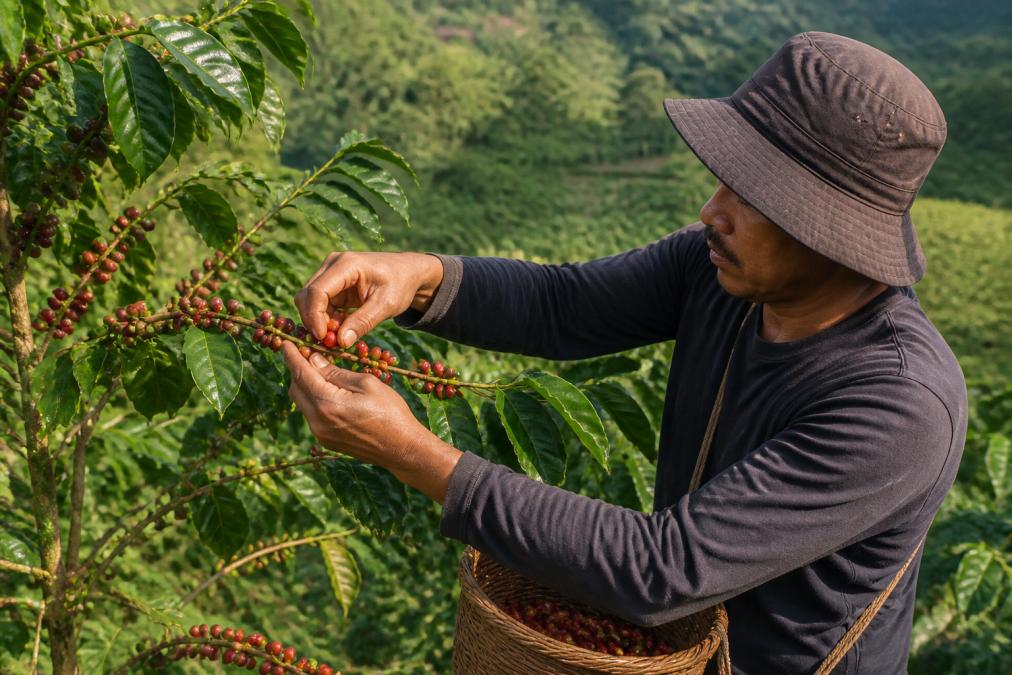
Hand-Harvesting, Altitude, and Terroir
Specialty coffee is almost always hand-harvested using selective picking, meaning workers pass through plants multiple times to collect only ripe cherries. This is labor-intensive compared to strip harvesting, where all cherries are removed at once regardless of ripeness.
Altitude compounds the cost. High-altitude farms produce denser beans with more complex flavor development, but they're harder to access and harvest mechanically. The terroir of a 1,800-meter farm in Guatemala produces a cup that a flatland plantation cannot replicate.
Processing Methods: Washed, Natural, and Honey
After harvest, how the coffee cherry is processed determines a significant portion of the final flavor profile. Washed processing removes the fruit before drying, producing clean, bright acidity. Natural processing dries the whole cherry intact, imparting fruity, wine-like sweetness. Honey processing removes the skin but leaves some mucilage on the bean during drying, landing between washed clarity and natural richness.
Natural and honey processing require more careful monitoring, more drying space, and more time, which is why they command higher prices.
Ethical Sourcing: Fair Trade and Direct Trade
Supply chain transparency is a defining feature of specialty coffee. Fair trade certification guarantees minimum price floors for farmers. Direct trade goes further: roasters build direct relationships with specific farms, often paying significantly above fair trade minimums in exchange for exclusive access to high-quality lots.
As documented in USDA Foreign Agricultural Service reports on coffee trade, coffee farmers in many producing countries receive a small fraction of the retail price consumers pay. Specialty coffee's direct trade model is designed to close that gap.
Is Specialty Coffee Worth the Price? Weighing the Pros and Cons
The most honest answer is: yes, with conditions. The value proposition is real, but it's not unconditional.
The Case For: Flavor Complexity, Freshness, and Transparency
Specialty coffee delivers a sensory experience that commodity coffee structurally cannot. The flavor notes on a well-roasted single-origin bean are the result of specific altitude, processing, and roast decisions that create measurable chemical compounds in the cup.
Freshness is the other major argument. Specialty roasters typically roast to order or in small batches, printing the roast date on every bag. A bag without a roast date is a bag you can't trust.
Supply chain transparency is the third pillar. With specialty coffee, you can often trace your beans to a specific farm, region, and harvest, supporting better farming practices.
The Case Against: The Diminishing Returns Curve
The quality curve flattens quickly. The jump from commodity coffee to a solid 82-point specialty bean is dramatic. The jump from an 87-point bean to a 91-point micro-lot is subtle and often requires a calibrated brewing setup to detect.
Paying twice as much for a coffee that scores 10 points higher does not produce twice the enjoyment for most home brewers. At a certain point, the marginal improvement in the cup is smaller than the marginal increase in cost.
| Quality Tier | SCA Score Range | Typical Consumer Experience | Value for Money |
|---|---|---|---|
| Commodity | Below 80 | Flat, bitter, inconsistent | Low |
| Entry Specialty | 80-84 | Noticeably cleaner, more balanced | High |
| Mid Specialty | 85-89 | Complex, distinctive, rewarding | High to moderate |
| Micro-lot / Competition | 90+ | Exceptional, nuanced, setup-dependent | Moderate (requires equipment) |
Entry and mid-tier specialty beans offer the best return for most home brewers.
Cost Per Cup of Specialty Coffee: Breaking Down the Real Numbers
A standard 12-ounce bag of specialty beans typically yields 20-24 cups of drip coffee or 16-18 double espresso shots. At home, even a premium specialty bag produces a cost-per-cup that competes favorably with anything you'd buy at a café counter. The economics of home brewing specialty coffee are genuinely strong once you account for what you'd otherwise spend on commercial coffee drinks.
The variable that changes the math is equipment. A quality burr grinder and a precise brewing method are prerequisites for extracting what you've paid for.
Does Your Brewing Setup Justify the Jump to Specialty Beans?
The bean is only part of the equation.
Equipment Requirements: Grind Size, Water Temperature, and Extraction Yield
Grind size is the single biggest variable in home brewing. A burr grinder produces consistent particle size that allows even extraction. A blade grinder produces inconsistent fragments that extract unevenly. Specialty beans run through a blade grinder will taste worse than commodity beans through a burr grinder.
Water temperature matters too. The accepted range for optimal extraction is 195-205°F. Most cheap drip machines don't reach this range consistently, under-extracting your coffee regardless of bean quality.
Extraction yield is the percentage of soluble material pulled from your grounds. The target range for most brewing methods is 18-22%. A decent scale and basic knowledge of your brew ratio will get you there faster than any expensive bean upgrade.
Storage and Freshness Science: Why Roast Date Changes Everything
Coffee is not shelf-stable. After roasting, beans release CO2 and begin oxidizing. The first two weeks post-roast are peak freshness. By week four, the aromatics that define specialty coffee's complexity have degraded substantially.
Store beans in an airtight container at room temperature, away from light and heat. Grind immediately before brewing. According to food science research on coffee oxidation and staling, the primary drivers of coffee staling are oxidation of lipids and loss of volatile aromatic compounds, both of which accelerate significantly after the bean is ground.
How to Appreciate Specialty Coffee: A Practical Tasting Framework
Learning to appreciate specialty coffee is faster than most people expect. Start with a clean cup, use filtered water, and dose consistently. Then slow down and actually taste. Notice acidity first: does the cup feel bright and lively, or flat and dull? Then sweetness: is there a natural sugar quality, or does it taste harsh? Then aftertaste: does the finish linger pleasantly, or does it turn bitter?
Blind Taste Test Methodology: How to Know What You Actually Prefer
Run a blind taste test between a commodity coffee and a specialty coffee brewed under identical conditions. Same brew method, same grind setting, same water temperature, same ratio. Pour both into identical cups, label them A and B, and taste without knowing which is which.
Most people find the specialty coffee clearly preferable. The blind test removes expectation bias and tells you what your palate actually responds to.
Is Specialty Coffee Worth the Price for Everyday Home Brewers?
For most everyday home brewers, yes. The sweet spot for value sits in the 82-87 point range: clearly better than commodity coffee, meaningfully complex, and accessible without a competition-level brewing setup.
The people for whom specialty coffee is unambiguously worth it: anyone who currently buys daily café drinks, anyone who uses a burr grinder and cares about brew temperature, and anyone who values knowing where their food comes from.
Those brewing with a blade grinder or a machine that doesn't reach proper temperature should upgrade equipment before upgrading beans. Gospel and Grind roasts to order, which directly addresses the freshness problem that makes many specialty coffee purchases disappointing. Beans arrive at peak freshness, not weeks off a warehouse shelf.
Frequently Asked Questions
What makes specialty coffee more expensive than regular coffee?
Specialty coffee costs more because of every step in its supply chain. Beans are hand-harvested at peak ripeness, grown at high altitudes where yields are lower, and processed using labor-intensive methods like washed or natural processing. Roasters pay above-commodity prices through direct trade or fair trade arrangements to ensure supply chain transparency. Add small-batch roasting and a roast-to-order model for freshness, and the premium pricing reflects genuine quality at every stage, not just marketing.
Does freshness really impact the taste of specialty coffee?
Yes, freshness is one of the most significant variables in the specialty coffee experience. Coffee releases carbon dioxide after roasting, and most flavor notes peak within two to four weeks of the roast date. After that, oxidation dulls acidity, sweetness, and body. Buying from a roaster who ships shortly after roasting preserves the sensory experience the Specialty Coffee Association's cupping scores are based on. Stale beans, even high-scoring ones, will taste flat no matter how precise your brewing variables are.
Is specialty coffee worth the price if I'm not a coffee expert?
Absolutely. You don't need to know the SCA tasting wheel to notice the difference between a bright, complex single-origin and a flat commodity blend. The practical question is whether your current brewing setup, grinder quality, water temperature, and extraction yield, can actually unlock those flavor notes. If you're using a burr grinder and filtered water, specialty coffee will reward you noticeably. If you're using pre-ground beans in a basic drip machine, the gap narrows. Start simple and taste the difference yourself.
How do I calculate the real cost per cup of specialty coffee?
A standard brewing ratio uses roughly 1 to 1.5 ounces of whole bean coffee per 12-ounce cup. Divide the price of your bag by the number of cups that weight yields, and you have your cost per cup. Specialty coffee's cost per cup is often more comparable to commodity options than the bag price suggests, especially when you factor in the flavor complexity, ethical sourcing, and freshness you're getting. Check Gospel and Grind's website for current pricing to run your own calculation.
What is the SCA grading system, and why does it matter?
The Specialty Coffee Association uses a 100-point cupping score to evaluate green and roasted coffee. Beans scoring 80 points or above qualify as specialty grade. Trained tasters assess attributes including acidity, body, sweetness, aftertaste, and flavor notes, while also counting defects. A low defect count combined with a high cupping score signals that the coffee was grown, processed, and handled with exceptional care. This grading system gives consumers a reliable, standardized benchmark for quality beyond marketing language.
How can I tell the difference between specialty and regular coffee at home?
The most reliable method is a simple blind taste test. Brew both a specialty single-origin and a standard grocery store blend using the same method, grind size, water temperature, and ratio. Taste each without knowing which is which. Specialty coffee typically shows more distinct flavor notes, fruit, floral, or chocolate characteristics, along with cleaner acidity and a longer aftertaste. If you notice a meaningful difference, your palate is already calibrated enough to appreciate specialty coffee's value.
The real barrier to specialty coffee isn't price. It's knowing what you're buying and whether your setup can do it justice. Gospel and Grind makes the sourcing and freshness side straightforward: roasted to order, carefully sourced beans, delivered directly to your door with a mission behind every bag. Find Your Perfect Roast and put the question of whether specialty coffee is worth the price to rest with your first cup.
This article was written using GrandRanker