

Why Drink Locally Roasted Artisan Coffee
Table of Contents
- The Freshness Advantage of Locally Roasted Artisan Coffee
- Superior Flavor Profiles in Artisan Roasting
- Benefits of Fresh Roasted Coffee for Home Brewing
- How to Store Coffee Beans for Maximum Freshness
- How to Identify High Quality Coffee Beans
- Supporting Local Economy and Community Impact
- Environmental Impact and Sustainability
- Conclusion
Last Updated: August 9, 2026
The Freshness Advantage of Locally Roasted Artisan Coffee
Locally roasted artisan coffee represents a fundamental shift in how coffee reaches your cup. The difference between a bean roasted last week and one roasted three months ago is the difference between tasting what the farmer grew and tasting what's left after oxidation has stripped away the good stuff.
At Gospel and Grind, we've built our entire operation around this single principle: freshness determines flavor. When coffee is roasted to order and shipped directly to your door, you're buying a product at peak potential, not inventory sitting in a warehouse.
How roast dates determine shelf life
The roast date is the most important number on your coffee bag. Coffee begins to degrade immediately after roasting through degassing, when beans release carbon dioxide and volatile compounds essential to flavor. After the initial 24-48 hours, oxidation begins: oxygen breaks down the oils and compounds that create distinctive flavor profiles. A bean roasted two weeks ago tastes noticeably different from one roasted two months ago, the aroma fades, brightness dulls, vibrancy becomes flat.
Specialty coffee roasters print roast dates on every bag because it's critical information. If a bag doesn't have one, that's a red flag. Most commercial coffee omits roast dates because they'd rather you not know how old the product is.
Why roast-to-order beats pre-roasted inventory
Mass production coffee is roasted in massive batches weeks or months before reaching retail shelves. The supply chain alone adds time: roasting facility to distributor to retailer to your kitchen. By the time you open the bag, significant freshness and flavor complexity have already been lost.
Roast-to-order changes this equation entirely. You place an order, the beans are roasted, they're shipped, and you receive them at their peak. Gospel and Grind roasts to order because we know the difference matters. Single-origin beans have distinctive characteristics, floral notes, fruit undertones, balanced acidity, most pronounced in the first two to three weeks after roasting. Pre-roasted inventory can't compete with that timeline.
Superior Flavor Profiles in Artisan Roasting
Single-origin and small-batch roasting aren't just marketing terms, they're the technical foundation for flavor complexity that mass production can't replicate.
Single-origin beans and distinctive taste
A single-origin coffee comes from one specific farm or region, not a blend of multiple sources. Coffee flavor is determined by altitude, soil composition, rainfall, processing method, and dozens of other variables that change from farm to farm. When you buy single-origin, you're tasting the specific terroir of that location. Ethiopian coffees often have floral and fruity notes. Colombian coffees tend toward chocolate and balanced acidity. Kenyan coffees frequently show berry characteristics.
Blended coffees mix beans from different origins to create consistent products, sacrificing distinctive character for predictability. Artisan roasters focus on single-origin beans because distinctive flavor is the whole point. Gospel and Grind sources carefully selected single-origin beans specifically because we want your coffee to taste like something.
Small-batch roasting for consistency
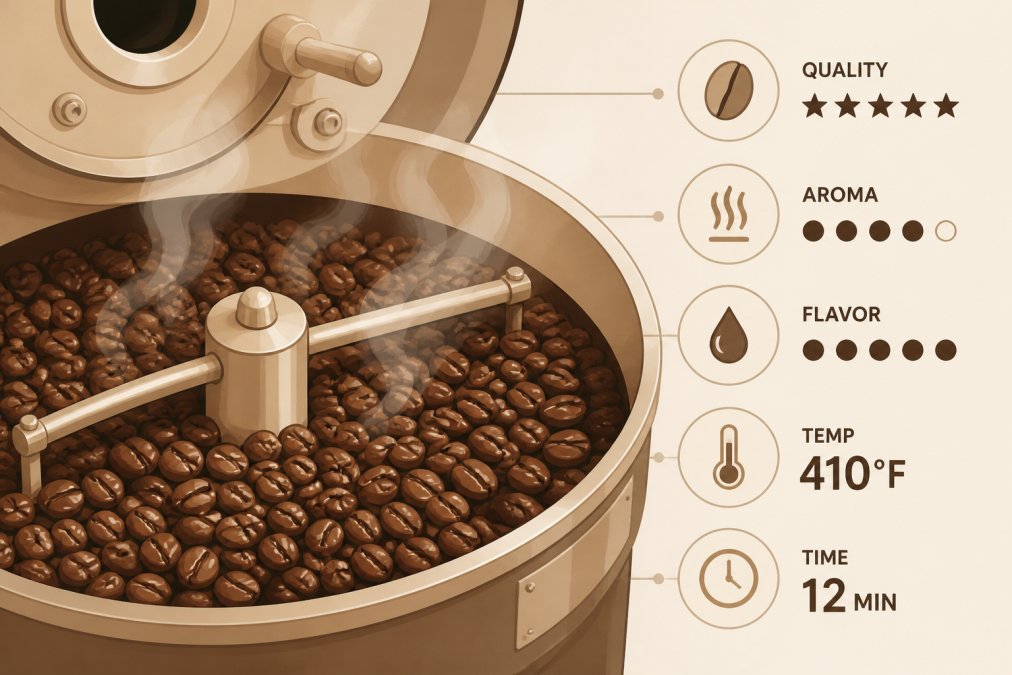
Small-batch roasting means roasting smaller quantities more frequently, giving roasters precise control over the roasting process. Every bean gets attention, temperature curves are carefully monitored, and development time is exact.
Mass production roasters prioritize speed and volume, roasting enormous batches in industrial equipment. Some beans get slightly darker, others slightly lighter. The variation averages out across tons of coffee, but you never get the peak expression of that bean. Small-batch roasting eliminates this problem, a roaster working with 10 pounds of beans has complete visibility and can make micro-adjustments to stop the roast at exactly the right moment for that specific bean's characteristics.
Benefits of Fresh Roasted Coffee for Home Brewing
The advantages of fresh roasted coffee become immediately obvious when you brew it. The aroma is fuller, extraction is cleaner, and flavor is more expressive.
Optimal aroma and extraction
Aroma and flavor are deeply connected. Fresh roasted coffee has more volatile compounds still present, making the aroma stronger and flavor brighter. Extraction, the process of pulling flavor from ground coffee into water, works better with fresh beans. The structure of the bean changes as it ages, fresh beans release their flavor compounds more readily during brewing, while older beans require longer brewing times or hotter water to extract the same amount of flavor, often with flat results.
This is why fresh roasted coffee tastes noticeably better in any brewing method. Pour-over, French press, espresso, and cold brew all benefit from fresh beans. The difference is most dramatic in pour-over and espresso, where precision matters.
Degassing and flavor development
Degassing isn't just something that happens to your coffee, it's something you can work with. Immediately after roasting, beans release carbon dioxide. Some coffee drinkers wait 24-48 hours after roasting before brewing, allowing volatile compounds to settle and flavor to fully develop. This is different from staling, which is oxidation and damage.
Fresh roasted coffee gives you the ability to time your brewing to hit the sweet spot: after degassing is complete but before oxidation has progressed significantly. With pre-roasted coffee sitting for months, this window has already passed.
How to Store Coffee Beans for Maximum Freshness
Once you've invested in fresh, high-quality coffee, storing it correctly becomes essential. The enemy is oxidation.
Protecting against oxidation and air exposure
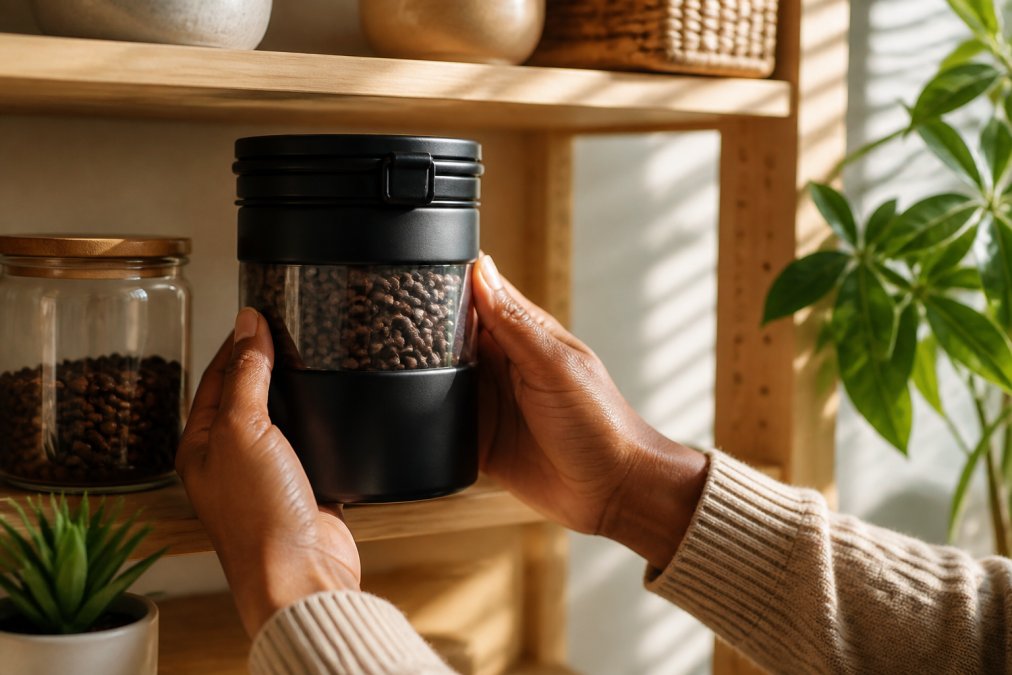
Oxygen is the primary enemy of coffee freshness. It reacts with the oils and compounds in the beans, breaking them down over time. Store your coffee in an airtight container, a bag with a simple fold-over closure isn't enough. An airtight container with a seal, or better yet, a vacuum-sealed container like the Fellow Atmos Vacuum Canister, dramatically slows oxidation by actively removing air.
Don't store coffee in the original bag unless it has a one-way valve and proper seal. Avoid clear containers, as light accelerates oxidation. Transfer your beans to a dark, airtight container as soon as you open the bag.
Temperature and light considerations
Heat and light both accelerate oxidation. Store your coffee in a cool, dark place, a pantry or cabinet away from direct sunlight is ideal. Avoid storing coffee above the stove or near windows, and avoid places where temperature swings dramatically.
The refrigerator is not recommended. Condensation forms when cold coffee is removed and exposed to room temperature air, damaging the beans and introducing mold risk. Room temperature storage in a cool, dark location is better. Freezing is acceptable for long-term storage if you keep it frozen until ready to use, avoiding repeated thawing.
How to Identify High Quality Coffee Beans
Not all coffee labeled "artisan" or "specialty" is actually high quality. Learning what to look for protects you from paying premium prices for mediocre product.
Supply chain transparency and ethical sourcing
High-quality coffee roasters know where their beans come from. They can tell you the specific farm, altitude, processing method, and harvest date. Transparency indicates the roaster cares about quality and ethical sourcing. If a roaster is proud of their sourcing, they'll discuss direct trade relationships with farms, farmer compensation, and environmental practices.
Gospel and Grind sources carefully from trusted farms because we believe the people growing the coffee deserve fair compensation and sustainable practices. When a roaster discusses their sourcing in detail, that's a positive signal. Vagueness is a red flag.
Bean origin and cupping standards
Cupping is the coffee industry's version of wine tasting. Professional cuppers evaluate coffee using a standardized process, rating it across acidity, body, flavor, balance, and other dimensions. High-quality roasters use cupping to evaluate beans before and after roasting.
Look for information about cupping scores or tasting notes. A coffee described as "balanced with chocolate and nutty undertones" has been evaluated. A roaster who can explain why their coffee tastes a certain way knows what they're selling. Single-origin coffees from well-known regions like Ethiopian Yirgacheffe, Colombian Geisha, or Kenyan AA tend to be higher quality because those regions have established reputations for excellent coffee.
Supporting Local Economy and Community Impact
Buying locally roasted coffee supports your community in ways that mass-market coffee never can.
Direct trade and farm relationships
Direct trade means the roaster works directly with farms, cutting out middlemen and allowing farmers to receive a higher percentage of the retail price. This enables farmers to invest in their farms, improve practices, and produce better coffee. Gospel and Grind prioritizes direct relationships with farms because good coffee starts with farmers who are treated fairly.
Mission-driven roasters making real change
Some roasters are just businesses. Others have a mission beyond profit. Gospel and Grind's mission is fighting homelessness. Every purchase supports that work. When you choose a mission-driven roaster, you're voting with your dollar for the kind of business you want to see in your community.
Environmental Impact and Sustainability
The environmental cost of coffee varies dramatically depending on how and where it's grown and roasted.
Carbon footprint of local roasting versus mass production
Local roasting has a smaller environmental footprint than mass production. Roasting happens closer to where you live, meaning shorter shipping distances. Small-batch roasting is more efficient, precise control wastes less product. Local roasters are more likely to use sustainable practices because they're visible to their community and care about their reputation.
Ethical sourcing and environmental stewardship
How coffee is grown matters as much as how it's roasted. Coffee farms using sustainable practices, shade-grown coffee, water conservation, minimal pesticide use, have less environmental impact than industrial monoculture farms. Ethical sourcing usually correlates with environmental stewardship. When you buy from a roaster emphasizing ethical sourcing, you're supporting farms that are better for the environment and the people who work there.
Choosing locally roasted artisan coffee is about more than taste. It's about freshness that mass production can't match, flavor complexity that reveals itself in every cup, and supporting a business model that treats farmers fairly and cares about your community. Gospel and Grind roasts to order, sources carefully from trusted farms, and channels every purchase toward fighting homelessness. When you order coffee roasted to your specifications and delivered fresh to your door, you're getting maximum flavor and aroma in every batch, supporting a mission-driven approach, and making a choice that matters beyond your morning cup. Find Your Perfect Roast and experience the difference freshness makes.
Frequently Asked Questions
How does locally roasted artisan coffee differ from mass-produced coffee?
Locally roasted artisan coffee is roasted in small batches by skilled roasters who focus on bringing out each bean's distinctive flavor profile. Mass production prioritizes volume and shelf stability over flavor expression. Artisan roasters use careful temperature control and shorter roast cycles to preserve the bean's origin characteristics, while mass-produced coffee is often roasted weeks or months before reaching consumers, losing freshness and aroma. The roasting process itself, whether it's artisan craftsmanship or industrial efficiency, determines the final cup quality.
What are the benefits of fresh roasted coffee compared to store-bought beans?
Fresh roasted coffee delivers superior aroma, more vibrant flavor, and better extraction during brewing. Beans reach peak flavor 3-7 days after roasting and maintain quality for 2-4 weeks if stored properly. Store-bought beans often sit in warehouses or on shelves for months, allowing oxidation to degrade flavor compounds. Fresh roasted beans also have better degassing characteristics, meaning CO2 releases gradually during brewing for optimal extraction. Home brewers using fresh beans report noticeably richer, more balanced cups compared to older inventory.
How long does coffee stay fresh after roasting, and how can I tell if beans are still good?
Coffee beans are freshest 3-7 days after roasting and maintain good flavor for 2-4 weeks in proper storage. Look for a roast date on the bag, this is your freshness indicator. Beans that smell flat or lack aroma are likely past their peak. Check the color for consistency; beans should have an even, rich brown tone without visible defects. If beans were roasted more than 4 weeks ago, flavor will have degraded noticeably. Always purchase from roasters who print roast dates and explain their sourcing, as this transparency indicates quality control.
Why should I pay more for locally roasted artisan coffee instead of grocery store brands?
The price difference reflects freshness, quality control, and impact. Locally roasted beans are roasted to order, arriving fresher than anything in retail distribution. Artisan roasters source from specific farms using direct trade or ethical sourcing, ensuring fair prices for growers and better bean quality. You're also supporting local businesses and, in many cases, mission-driven companies making real community impact. The flavor difference is immediate, fresh, properly roasted beans deliver noticeably better taste in every brewing method, making each cup more satisfying and worth the investment.
This article was written using GrandRanker