

Best Coffee Brewing Methods for Beginners in 2026
Table of Contents
- Pour-Over: The Beginner's Path to a Clean Cup
- French Press: Full-Bodied Coffee Without the Fuss
- Automatic Drip: The Set-It-and-Forget-It Option
- AeroPress and Moka Pot: Versatile and Pressure-Based Brewing
- Cold Brew: Smooth, Low-Acid Coffee for Warm Days
- The Best Coffee to Water Ratio for Beginners
- Coffee Grind Size Chart for Beginners: Match Your Method
- Essential Coffee Brewing Tools for Home
- Frequently Asked Questions
Last Updated: September 27, 2026
Pour-Over: The Beginner's Path to a Clean Cup
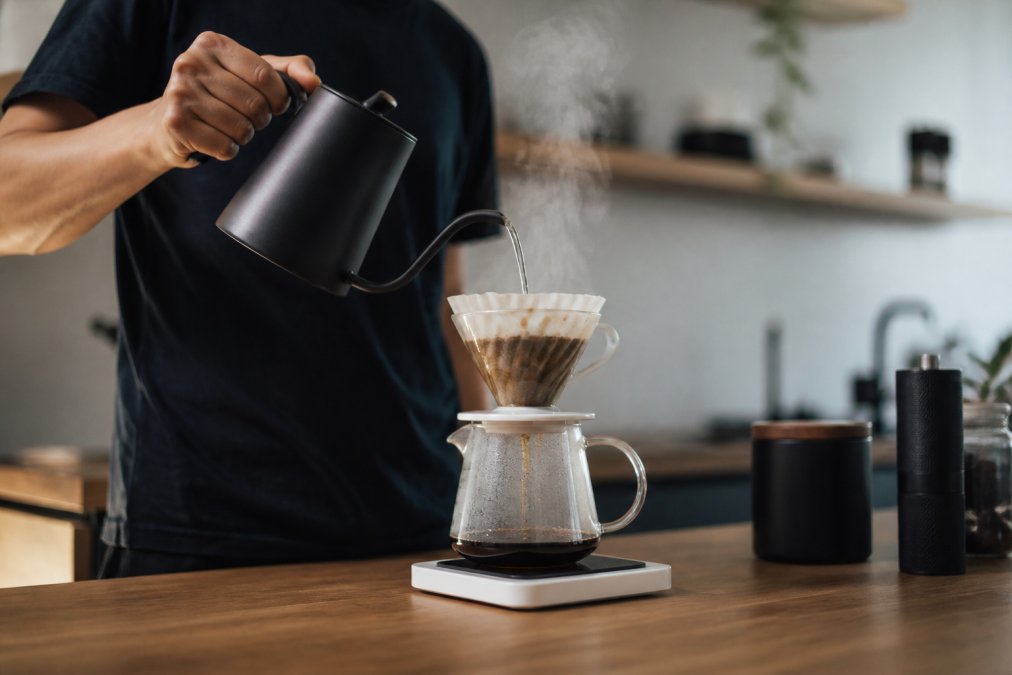
The best coffee brewing methods for beginners start with pour-over, and for good reason. Pour-over is a manual brewing technique where hot water is poured over coffee grounds in a paper or metal filter, producing a clean, bright cup that highlights a bean's origin characteristics. This guide breaks down every major method so you can pick the right one for your kitchen and your routine.
How to Brew Pour-Over: Step-by-Step
- Heat water to between 195°F and 205°F
- Place a paper filter in your dripper and rinse it with hot water
- Add medium-fine grounds at a 1:16 coffee-to-water ratio
- Pour just enough water to saturate the grounds, then wait 30-45 seconds for the bloom
- Pour in slow circles, keeping the water level steady
- Total brew time should land between 2:30 and 3:30
French Press: Full-Bodied Coffee Without the Fuss
French press delivers the opposite experience of pour-over: a full-bodied, rich cup with more oils and sediment left in. Immersion brewing means the grounds steep fully in water rather than being rinsed through, which produces a heavier mouthfeel and deeper flavor.
How to Brew French Press: Step-by-Step
- Add coarse grounds to the carafe at a 1:15 ratio
- Pour water at 200°F over the grounds and stir gently
- Set the lid on but do not press yet
- Steep for 4 minutes
- Press the plunger down slowly and evenly
- Decant immediately to stop extraction
That last step matters more than people realize. Leaving coffee sitting on the grounds keeps extracting, and within minutes your cup turns bitter.
Automatic Drip: The Set-It-and-Forget-It Option
Automatic drip machines are the most common home brewing equipment for a simple reason: consistency with zero technique required. A drip brewer heats water, distributes it over the grounds, and finishes the brew cycle on its own while you get ready for work.
AeroPress and Moka Pot: Versatile and Pressure-Based Brewing
Pressure-based brewing gives you two very different tools. The AeroPress uses manual pressure to push water through grounds in about 90 seconds, producing a concentrated, smooth cup with almost no bitterness. It's the most forgiving method for beginners because you can adjust steep time, temperature, and pressure independently.
| Method | Time | Grind Size | Best For |
|---|---|---|---|
| Pour-over | 3-4 min | Medium-fine | Flavor clarity |
| French press | 4-5 min | Coarse | Full-bodied texture |
| Drip | 5-8 min | Medium | Hands-off mornings |
| AeroPress | 2 min | Fine-medium | Versatility |
| Moka pot | 5 min | Fine | Strong, espresso-style |
| Cold brew | 12-18 hrs | Coarse | Smooth, low-acid |
Cold Brew: Smooth, Low-Acid Coffee for Warm Days
Cold brew trades speed for smoothness. Coarse grounds steep in cold water for 12 to 18 hours, and the low temperature extracts fewer of the acids and bitter compounds that heat pulls out. The result is a naturally sweet, low-acid concentrate you dilute to taste.

The Best Coffee to Water Ratio for Beginners
The best coffee to water ratio for beginners is 1:16 by weight, meaning one gram of coffee for every 16 grams of water. That's roughly two tablespoons of grounds per six ounces of water.
- Want it stronger? Move toward 1:14
- Prefer it lighter? Move toward 1:17
- Using immersion brewing? Stay closer to 1:15
Coffee Grind Size Chart for Beginners: Match Your Method
Grind size consistency matters more than almost any other variable. Get it right and a mediocre brewer can still make a good cup; get it wrong and even a premium machine can't save you. The reason is surface area: finer particles expose more coffee to water and extract faster, while coarser particles slow extraction down.
| Grind Size | Texture | Method | Typical Contact Time |
|---|---|---|---|
| Coarse | Sea salt | French press, cold brew | 4 min - 18 hrs |
| Medium | Sand | Drip, flat-bottom pour-over | 5-8 min |
| Medium-fine | Table salt | Cone pour-over | 2:30-3:30 |
| Fine | Powdered sugar | Moka pot, espresso | 30 sec - 2 min |
How to Dial In Your Grind by Taste
Charts give you a starting point, not a final answer. Every grinder, bean, and water source shifts the target slightly, so the real skill is adjusting from what you taste:
- Sour, thin, or salty? You are under-extracting. Grind finer in small steps.
- Bitter, dry, or harsh? You are over-extracting. Grind coarser.
- Both sour and bitter at once? That is usually channeling or an inconsistent grind, not a ratio problem.
Burr vs. Blade: The Equipment That Actually Delivers
A burr grinder crushes beans between two abrasive surfaces set a fixed distance apart, producing uniform particles. A blade grinder spins a metal blade and chops beans randomly, so a single batch contains everything from powder to boulders. Those fines over-extract while the boulders under-extract, and the cup tastes muddy no matter what you do.
A Note on Countertop Footprint
Grind equipment takes up real space, and beginners in small kitchens often overlook it. A hand grinder stores in a drawer and needs no outlet. A hopper-style electric burr grinder claims a permanent corner of the counter. Measure before you buy, a grinder that lives in a cabinet rarely gets used, and an unused grinder means stale coffee.
12 Pack Single Serve Coffee Capsules →
Essential Coffee Brewing Tools for Home
Essential coffee brewing tools for home come down to four items: a burr grinder, a digital scale, a kettle, and your chosen brewing device. Everything else is optional. But "essential" means different things at different budgets, and most guides skip that distinction entirely. Here is how to spend without overspending.
Budget Tiers: Starter Kit vs. Prosumer
Starter kit. A hand burr grinder, a basic digital scale, a stovetop or electric kettle, and a single brewing device, a dripper, a French press, or an AeroPress. This tier gets you freshly ground coffee, repeatable ratios, and one method you can learn well. Buy the grinder first; it is the single biggest upgrade to cup quality.
Countertop Footprint: Fit the Method to Your Kitchen
Space is the variable no chart captures. If your counter is tight:
- Smallest footprint: AeroPress or a single-cup dripper. Both store in a cabinet.
- Medium footprint: French press or a compact drip brewer.
- Largest footprint: A full drip machine with a carafe, or a cold brew setup that needs refrigerator space for 12-18 hours.
Sustainability: Filters, Mesh, and Pods
Every method carries a waste trade-off, and beginners rarely get told which:
- Paper filters are compostable in most home setups but generate a daily stream of used filters. Rinsing and reusing one is possible but degrades the paper.
- Metal mesh filters are reusable indefinitely and keep more oils in the cup, but they let fine sediment through and need regular deep cleaning.
- Single-serve capsules are the highest-waste option per cup. Some are recyclable where programs exist, but availability varies by municipality, so check locally before assuming.
- French press and Moka pot produce no filter waste at all, just grounds, which compost well.
Freshness and Sourcing
Freshness is the other half of the equation. Roasted coffee loses its best flavors within weeks of roasting, so buying from a roaster who ships to order matters more than any single tool. Gospel and Grind roasts beans to order and ships them directly, which is why the brand's Best Sellers Sample Pack exists: it lets you test six roasts in 2oz packs before committing to a full bag.

Sensory Training: Taste the Difference
For sensory training, taste the same bean brewed two ways side by side. Your palate learns faster from contrast than from any chart. Ask two questions as you sip: how bright or sour is it (acidity), and how heavy does it feel on your tongue (body)? Pour-over typically reads high-acidity and light-bodied; French press reads low-acidity and heavy-bodied.
Frequently Asked Questions
What are the best coffee brewing methods for beginners to start with?
Pour-over and French press are the most forgiving for beginners. Pour-over gives you a clean cup and teaches you about bloom phase and extraction time. French press is even simpler: add coarse grounds, pour hot water, wait four minutes, press, and drink. Both require minimal equipment and let you taste the difference fresh beans make.
What is the best coffee to water ratio for a beginner?
Start with 1:15 or 1:16 by weight. That means 20 grams of coffee to 300 grams of water for a standard mug. If you do not have a scale, use two tablespoons of ground coffee per six ounces of water. Adjust from there: more coffee for a stronger cup, less for a lighter one.
How do I choose the right grind size for my brewing method?
Use a coffee grind size chart for beginners: coarse for French press and cold brew, medium for drip and pour-over, fine for AeroPress and Moka pot, and extra-fine for espresso. A burr grinder gives you consistent particles, which prevents over-extraction and under-extraction. Blade grinders work but produce uneven grounds that lead to bitter or weak coffee.
Do I need expensive equipment to brew great coffee at home?
No. A French press costs under $25 and makes excellent coffee. A pour-over cone and paper filters run about $15. The two upgrades that matter most are a burr grinder and a digital scale. Freshly roasted beans from a roaster like Gospel and Grind will improve your cup more than a costly machine will.
Choosing a brewing method is less about finding the "best" one and more about matching technique to your mornings. If you want cafe-quality coffee without the guesswork, Gospel and Grind roasts every order fresh and delivers it to your door, with beans, capsules, and sample packs built for whatever method you land on. Every purchase also supports the brand's work fighting homelessness. Find your perfect roast and start brewing better coffee this week.