

Best Fresh Roasted Coffee for Beginners: 2026 Guide
Table of Contents
- Why Fresh Roasted Coffee Tastes Better Than Grocery Store Beans
-
Best Fresh Roasted Coffee for Beginners: 6 Roasts Worth Starting With
- Best Sellers Sample Pack: Try Six Roasts Before You Commit
- Breakfast Blend: The Easygoing Morning Cup
- House Blend: Balanced, Chocolatey, and Reliable
- Gourmet Donut Shop: For Beginners Who Want More Flavor
- Brazil Santos and Colombia: Approachable Single-Origin Picks
- Costa Rica and the Flavored Roasts: Sweet, Bright, and Easy to Love
- The Best Roast Level for Beginners (And How Roast Dates Change Everything)
- How to Tell If Coffee Beans Are Fresh: 5 Checks Anyone Can Do
- How to Store Fresh Roasted Coffee Beans So They Stay Fresh Longer
- How to Choose Your First Coffee Beans Without Overthinking It
- Frequently Asked Questions
Last Updated: September 12, 2026
Why Fresh Roasted Coffee Tastes Better Than Grocery Store Beans
Fresh roasted coffee is coffee roasted within days, not months, of reaching your kitchen. That timing matters more than almost anything else you control at home, because roasted beans start losing aroma and complexity the moment they leave the roaster.
Bagged coffee on a supermarket shelf often sits for months. Oxygen, light, and time flatten the oils that carry tasting notes, which is why a bag with no roast date tastes dull no matter how you brew it. This guide from Gospel and Grind covers the best fresh roasted coffee for beginners, with six roasts worth starting on and simple checks anyone can run.
The difference shows up in the cup: brighter acidity, fuller body, and sweetness that survives the brew. Below, we'll show you how to pick a roast that fits your equipment, budget, and mornings.
Best Fresh Roasted Coffee for Beginners: 6 Roasts Worth Starting With
The best fresh roasted coffee for beginners is a medium roast with a printed roast date and a balanced flavor profile. Medium roasts forgive small brewing mistakes, work in nearly every method, and let you taste the bean rather than the char.
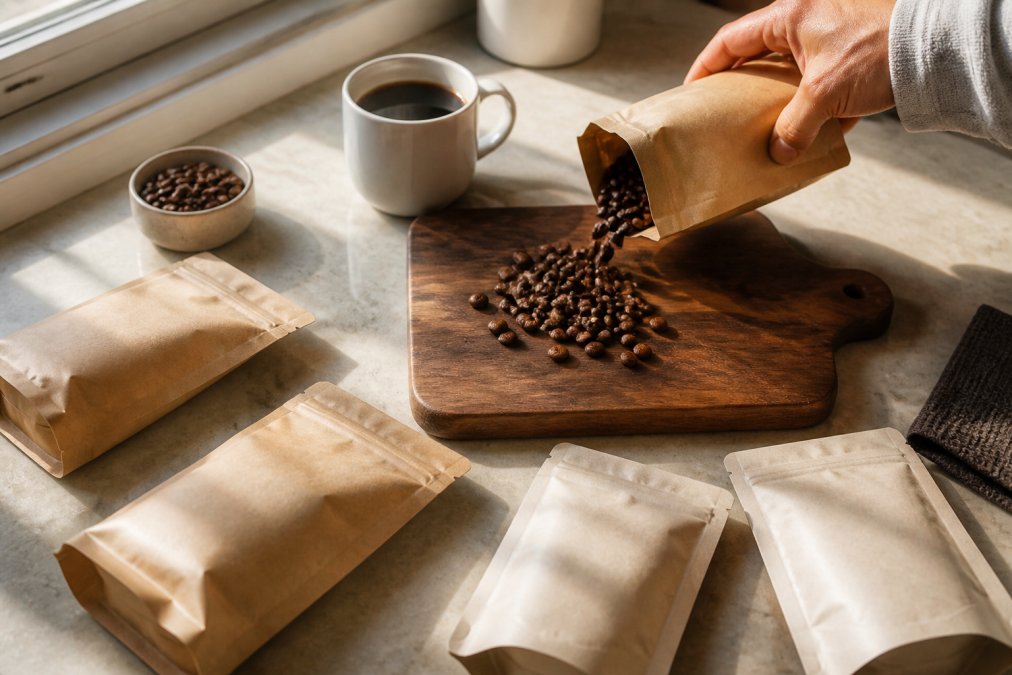
Each pick below comes from Gospel and Grind, roasted to order and shipped direct. Here's how they compare.
| Roast | Level | Tasting Notes | Best For |
|---|---|---|---|
| Best Sellers Sample Pack | Mixed | Six different profiles | Testing before committing |
| Breakfast Blend | Medium | Smooth, South American | Drip and pour-over |
| House Blend | Medium | Nutty, chocolate, citrus | All-round daily cup |
| Gourmet Donut Shop | Light-medium | Cocoa, caramel, toffee | More flavor, still easy |
| Brazil Santos / Colombia | Medium | Cocoa; orange, berry | Single-origin exploration |
| Costa Rica / Flavored | Medium | Apple, honey; vanilla | Sweet, approachable cups |
Best Sellers Sample Pack: Try Six Roasts Before You Commit
Six 2-ounce packs for $20.89 make this the smartest first order if you don't yet know what you like. You get the 6Bean Blend, Cowboy Blend, Breakfast Blend, Peru, Mexico, and Bali in one box, covering dark, medium, and medium-dark territory without committing to a full bag.

The drawback is portion size: two ounces brews roughly two or three cups per roast, so it's a tasting exercise, not a supply run. Still, for a beginner mapping their taste, nothing else here teaches you as much per dollar.
Breakfast Blend: The Easygoing Morning Cup
A medium roast of South American beans at $23.99, and the closest thing to a no-risk starter: smooth, uncomplicated, and forgiving of a coarse grind or a lazy pour.
Where it falls short: if you already drink dark, smoky coffee, this reads as thin. Start here if you're moving up from pre-ground grocery coffee.
House Blend: Balanced, Chocolatey, and Reliable
Gospel and Grind's House Blend is a medium roast of Central and South American coffees with a medium body and notes of nutty, sweet chocolate, mild citrus, and a clean bright finish. It's $23.99 and the pick I'd hand most beginners first.
Gourmet Donut Shop: For Beginners Who Want More Flavor
At $23.99, this light-medium blend leans into cocoa, caramel, toffee, and mild fruit, a stronger cup than the breakfast blends without dark roast bitterness.
This is the right pick if plain coffee tastes boring but you're not ready for a heavy roast. The balance keeps it drinkable black and holds up with a splash of milk.
Brazil Santos and Colombia: Approachable Single-Origin Picks
Single-origin coffee comes from one region or farm rather than a blend of countries, letting you taste the character of a specific place.
Brazil Santos ($23.99) is the gentler introduction: elegant and smooth with cocoa notes, grown in Parana and Sao Paulo. Colombia ($23.99) brings dried orange, berry, and chocolate from smallholder farms near Medellin, with more acidity and a livelier aftertaste. Try Brazil for smooth, Colombia for bright.
Costa Rica and the Flavored Roasts: Sweet, Bright, and Easy to Love
Costa Rica ($23.99) is a medium roast with sweet apple, raisin, and honey notes, eco-pulped and sun-dried by micro farms in Alajuela, the sweetest single-origin and the easiest to love black.
If you'd rather have flavor built in, French Vanilla and Hazelnut ($23.99 each) start as specialty-grade single-origin coffee, roasted in small batches and flavored while still warm. Hazelnut blends nutty flavor with Brazilian coffee; French Vanilla is creamy and rounded.
The Best Roast Level for Beginners (And How Roast Dates Change Everything)
The best roast level for beginners is medium. It sits between bright, tea-like blonde roasts and smoky dark roasts, and it's the most tolerant of imperfect brewing. But "medium" is only half the answer, the other half is understanding what roast level does to a bean, and how the roast date tells you whether it's ready to brew.
What Roast Level Actually Changes in the Bean
Roasting is controlled heat over time. Beans go through drying, browning (the Maillard reaction), then "first crack", an audible pop as moisture and carbon dioxide escape the bean. Where the roaster stops relative to first crack and any second crack determines the roast level.
Three things change as the roast gets darker:
- Acidity drops. The bright, fruity, tea-like acids that define a good Ethiopian or Kenyan coffee are heat-sensitive. The longer you roast, the more of them you burn off.
- Body rises. Darker roasts develop more of the heavy, syrupy mouthfeel that many people associate with "strong" coffee.
- Origin character fades. At a certain point, the roast flavor itself, smoky, bittersweet, sometimes ashy, overpowers whatever the bean tasted like before it hit the drum.
That's why medium is the beginner default: dark enough to develop sweetness and body, light enough to taste where the coffee came from, and forgiving enough that an off grind or water temperature won't ruin the cup.
Blonde vs. Medium vs. Dark: A Practical Comparison
| Roast Level | Acidity | Body | Origin Character | Forgiveness |
|---|---|---|---|---|
| Blonde / Light | High | Light | Strong | Low, punishes bad grind and low water temp |
| Medium | Medium | Medium | Present | High, works across most brewers |
| Dark | Low | Heavy | Mostly masked | High on flavor, low on nuance |
A common beginner mistake is assuming dark roast means more caffeine (PubMed). Caffeine is largely stable through roasting, and by weight a light roast retains slightly more because the bean loses less mass. For a bigger caffeine hit, use a stronger ratio, not a darker roast.
Why Roast Dates Matter More Than Roast Level
Degassing is the release of carbon dioxide from beans after roasting. Freshly roasted beans are full of CO2, and brewing too soon lets that gas push water away from the grounds, giving you an uneven, sour, or flat cup. That's why almost every roaster recommends a rest period.
A rough timeline most roasters follow:
- Days 0-2 after roast: Too fresh for most brew methods. Beans are still off-gassing heavily. Good for espresso, which benefits from the extra resistance.
- Days 3-7: The sweet spot for filter brewing. Aromatics are peaking, CO2 has settled, and the cup is at its most expressive.
- Days 7-21: Still excellent, with flavor gradually rounding out. Many people prefer this window for pour-over because the cup is more consistent.
- Days 21-35: Drinkable but fading. Acidity softens first, then sweetness.
- Beyond 35 days: Not spoiled, but you are drinking a shadow of what the roaster intended.
A printed roast date tells you exactly where a bag sits on that curve. A "best by" date tells you nothing useful, it's usually set months out and says more about the retailer's inventory cycle than the coffee's quality.
How Roast Level and Brew Method Interact
Roast level isn't chosen in a vacuum, your brewer changes which level performs best:
- Drip and pour-over: Medium roasts shine here. The paper filter strips some oils, so you want a bean with enough developed sweetness to survive the filtration.
- French press: The metal mesh lets oils through, so a medium or medium-dark roast gives you a richer, heavier cup without turning bitter.
- Espresso: Darker or blended roasts are the traditional choice because the pressure and short extraction time reward a bean with less acidity and more body. A very light roast can taste sharp and underdeveloped as espresso unless you really know what you are doing.
- Cold brew: Medium and dark roasts both work. The long, cold extraction pulls sweetness and chocolate notes without the acidity that hot water would extract.
If you remember one thing: pick a medium roast with a roast date within the last two to three weeks, rest it a few days if brand new, and match the grind to your brewer.
How to Tell If Coffee Beans Are Fresh: 5 Checks Anyone Can Do
Knowing how to tell if coffee beans are fresh comes down to five quick checks you can run in the store or at your counter.
- Find the roast date. Not the best-by date. If there's no roast date on the bag, treat it as old.
- Smell the bag. Fresh beans release a strong, sweet aroma when you open the valve or the seal.
- Squeeze a bean. Fresh beans feel firm and dense; stale ones crush easily and feel hollow.
- Look for surface oil. A little sheen on dark roasts is normal. Oily, greasy beans at room temperature usually mean they've sat a while.
- Watch the bloom. Pour hot water over fresh grounds and they swell and bubble. Flat, quiet grounds are past their prime.
A common mistake is judging freshness by the one-way valve alone. The valve keeps oxygen out, but it doesn't stop time.
How to Store Fresh Roasted Coffee Beans So They Stay Fresh Longer
Store fresh roasted coffee beans in an airtight, opaque container at room temperature, away from light and heat. Skip the fridge and freezer for daily-use bags.
- Keep beans whole until the moment you brew
- Store in a sealed canister, not the rolled-down bag
- Keep the container in a dark cabinet, not on the counter beside the stove
- Buy in quantities you'll finish within a few weeks
- For long-term storage of an unopened bag, the freezer works; thaw it fully before opening
Whole bean coffee holds flavor longer than pre-ground because the surface area is smaller. Grind size matters too: coarse for French press, medium for drip, fine for espresso. Match the grind to your method and adjust from there.
How to Choose Your First Coffee Beans Without Overthinking It
Choosing your first beans is a three-question decision, not a research project. Most beginner guides stop at "buy medium roast." Here's the version that actually helps you pick a bag this week.
Question 1: What Do You Brew With?
This is the question most guides skip, and it matters most. A bean that sings in a French press can taste thin and sour in a pour-over, and an espresso bean can taste muddy in a drip machine. Match the bean to the device:
| Your Brewer | Best Bean Profile | Why |
|---|---|---|
| Drip machine | Medium roast, blended, nutty/chocolate notes | Consistent water temp and even extraction reward a balanced, forgiving bean |
| Pour-over (V60, Chemex) | Medium roast, single-origin, brighter fruit notes | Paper filter highlights clarity and acidity; a washed Ethiopian or Colombian shines here |
| French press | Medium or medium-dark, full-bodied, cocoa/caramel notes | Metal mesh lets oils through, so you want a bean with enough body to carry them |
| Espresso | Medium-dark or dark, blended, low-acid | Pressure and short extraction reward body and sweetness over delicate acidity |
| Cold brew | Medium or dark, chocolate/nutty notes | Long cold extraction pulls sweetness without the sharp acids hot water would extract |
| AeroPress | Medium, versatile, balanced |
If you own more than one brewer, buy a medium blend first, the closest thing to a universal bean, adjustable by grind and ratio for whichever device you reach for.
Question 2: How Do You Drink It?
Black drinkers should start with a single-origin like Colombia or Costa Rica, where fruit and sweetness are the point. If you add milk or sugar, go bolder, a medium-dark blend or flavored roast holds up against dairy and sweetener. There's no wrong answer, but there is a wrong order: don't buy a delicate light roast and drown it in oat milk.

Question 3: One-Time Purchase or Subscription?
Beginners are often pushed toward subscriptions before they know what they like. That's backwards. Start with a sample pack or single bag, brew it through, and note what you finished versus what sat in the cupboard. Once you know your roast level and favorite origin, a subscription makes sense because you're reordering something you know you'll drink.
A practical rule: if you finish a 12-ounce bag in under two weeks, a subscription saves money and hassle. If a bag lasts a month, buy one-time and keep the flexibility. If you travel often, favor one-time orders over a locked plan so you're not paying for coffee that arrives while you're away.
The Budget Question: Is Specialty Coffee Worth It?
A $20.89 sample pack or $23.99 bag costs more per ounce than a supermarket tub. Here's the honest math: a 12-ounce bag at $23.99 brews roughly 16 to 20 cups at a 1:16 ratio, about $1.20 to $1.50 per cup. A $10 supermarket tub brews the same number of cups at roughly $0.50 to $0.60 each, but from beans roasted months ago, and the flavor reflects it.
What you're paying for with fresh roasted coffee isn't luxury. It's a roast date measured in days instead of months, a known origin instead of whatever was cheapest that season, and a cup that tastes specific rather than generically brown. At one cup a day, the difference is about $0.70, less than a bottled water.
The Variable Nobody Talks About: Your Water
Coffee is roughly 98% water (PubMed). If your tap water tastes off, heavily chlorinated, very hard, or metallic, your coffee will too, no matter how fresh the beans are. This is the most common reason a beginner blames the roast for a bad cup.
A few practical fixes:
- Filtered water removes chlorine and most sediment. A basic pitcher filter is enough for most households.
- Bottled spring water works well if your tap water is unusually hard or soft. Avoid distilled water, it has no minerals, and coffee needs some to extract properly.
- Water temperature matters too. Aim for 195-205°F for most brewers (sca.coffee). Water straight off a rolling boil is too hot and will scorch the grounds; water that has sat for ten minutes is too cool and will under-extract.
If your coffee tastes flat despite fresh beans and a good grind, try filtered water before changing anything else. It's the cheapest fix in brewing and the one most beginners overlook.
Pick a medium roast, match it to your brewer, buy a single bag or sample pack before committing to a subscription, and use filtered water. Do those four things and you will enjoy a great cup of coffee.
Frequently Asked Questions
What makes coffee beans freshly roasted?
Freshly roasted coffee beans have been roasted within the past two to four weeks, with the roast date printed on the bag. During roasting, beans go through a degassing period where they release carbon dioxide, which peaks in the first few days and then settles. Beans roasted to order, like those from Gospel and Grind, are roasted after you buy them, so they arrive near their peak flavor window instead of sitting on a shelf for months.
How can you tell if coffee beans are fresh?
Check the roast date first, since a printed date within the last two to four weeks is the clearest sign. Fresh whole beans smell sweet and roasty when you open the bag, feel slightly oily or matte depending on roast level, and bloom visibly when hot water hits them. Stale beans smell flat or papery and barely bubble during brewing. Buying small batches and storing them properly keeps those freshness signals strong for longer.
What is the best roast level for beginners?
Medium roasts are the most forgiving starting point because they balance sweetness, acidity, and body without the smoky intensity of dark roasts or the delicate brightness of light roasts. A medium roast like the Breakfast Blend or House Blend works well in drip makers, French presses, and pour-over setups, so you can experiment with brewing methods without changing beans. Once you know what you like, you can move toward lighter or darker options.
How long do fresh roasted coffee beans stay fresh?
Whole bean coffee tastes best within two to four weeks of the roast date, though it stays drinkable for several weeks longer if stored well. Ground coffee loses aroma much faster, often within a week. Keeping beans in an airtight container away from light, heat, and moisture slows the decline. Buying smaller amounts more often, or choosing a roast-to-order option, helps you stay inside that peak window.
Does buying coffee roasted to order make a difference in taste?
Yes, roast-to-order coffee skips the warehouse and shelf time that dulls grocery store beans. When beans are roasted close to the ship date, they arrive with fuller aroma, clearer tasting notes, and a more balanced cup. That difference shows up most in medium roasts, where sweetness and acidity are easiest to taste. A sample pack is a low-cost way to compare roast-to-order coffee against what you normally buy.
The hard part of buying better coffee isn't finding a roast you like. It's finding a roaster who ships it fresh enough to matter, and who you actually want to buy from again. Gospel and Grind roasts to order so every bag leaves the facility at its peak, sources beans from trusted farms, and delivers direct to your door. Every purchase also supports the mission to fight homelessness one cup at a time. Find your perfect roast and start with a sample pack or a single bag.