

Why Fresh Roasted Coffee Tastes Better
Table of Contents
- The Difference Between Fresh Roasted and Store-Bought Coffee
- The Science of Degassing: Carbon Dioxide and Flavor
- How Oxidation and Staling Quietly Ruin Your Cup
- How Long Does Coffee Stay Fresh After Roasting?
- How to Tell if Coffee Beans Are Fresh: Visual and Sensory Clues
- The Best Way to Store Coffee Beans for Maximum Freshness
- Why Roast-to-Order Coffee Is Worth the Switch
- Conclusion: Taste the Difference in Your First Sip
- Frequently Asked Questions
Last Updated: September 8, 2026
The difference between a coffee bean roasted last week and one roasted six months ago isn't subtle. It's the difference between tasting the farm where it grew and tasting a cardboard box. Fresh roasted coffee is coffee that has been recently roasted and allowed only a brief resting period before brewing, a window where the beans retain their volatile aromatic compounds and produce a lively, complex cup. This guide from Gospel and Grind explains the science behind that flavor gap, how to spot beans past their prime, and how to protect the freshness you paid for.
The Difference Between Fresh Roasted and Store-Bought Coffee
Most grocery store coffee sits in a bag for months before it reaches your cart. That long shelf life is the enemy of flavor. The staling process begins the moment roasting ends.
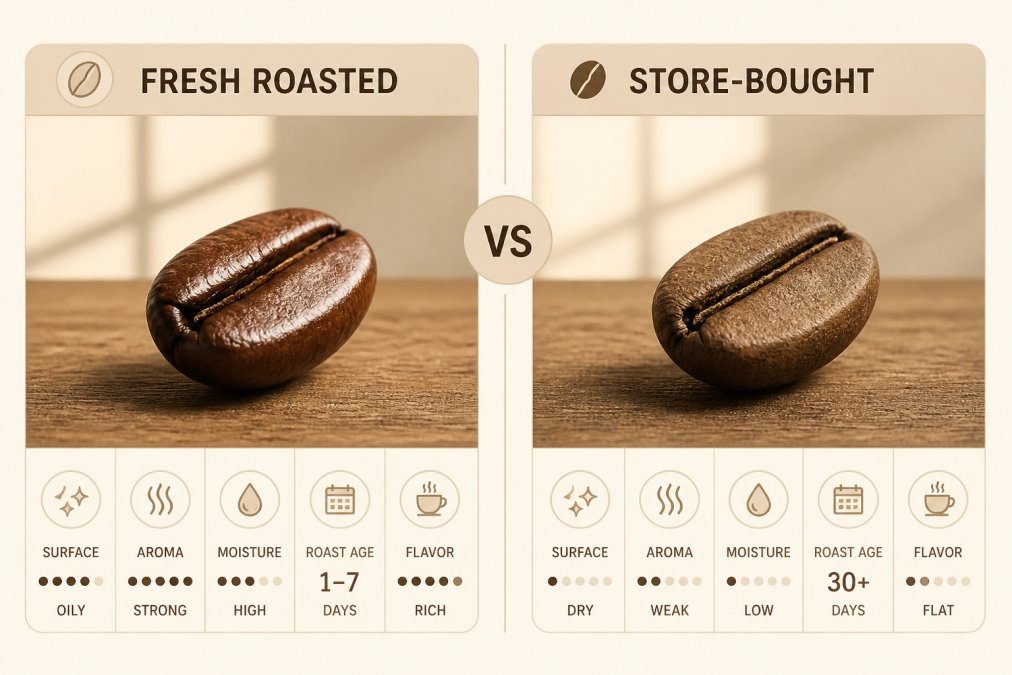
A fresh bean has a visible sheen of oils on its surface, especially in darker roasts. A stale bean looks dusty and lifeless. When you grind fresh roasted coffee, the room fills with fragrance instantly. With old beans, you get a faint, flat smell. Roast-to-order coffee, like the batches Gospel and Grind sends out, is usually brewed within days or weeks of roasting, not months, and that timing changes everything about the cup.
The Science of Degassing: Carbon Dioxide and Flavor
Roasting triggers a cascade of chemical reactions, the Maillard reaction, caramelization, and pyrolysis, that transform green coffee's dense, flavorless seeds into brittle, aromatic beans. One byproduct is carbon dioxide (CO₂), which forms inside the bean's cellular structure under significant pressure. A single roasted bean can hold a significant volume of CO₂, and that gas needs an exit route.
The escape route is the bean's pore structure. Roasting expands the bean in volume while the internal matrix becomes increasingly porous. This porosity is not uniform, it is dictated by the roast profile. A light roast stops the process early, leaving a denser, less porous bean that traps CO₂ longer. A dark roast pushes further, creating a more fragile, highly porous structure that releases gas quickly and also allows oxygen to penetrate faster, accelerating staling.
The conventional advice to "wait a few days" hides a critical nuance: the ideal rest depends on the roast level and the brewing method.
| Roast Level | Bean Porosity | Degassing Rate | Ideal Rest Before Brewing | Why It Matters |
|---|---|---|---|---|
| Light (City, Cinnamon) | Low | Slow | 10-14 days | Dense beans hold CO₂ longer; brewing too early causes under-extraction and a sour, grassy cup |
| Medium (Full City) | Moderate | Moderate | 5-7 days | Balanced structure; allows enough gas release without losing delicate acidity |
| Dark (Vienna, French, Italian) | High | Fast | 3-5 days | Highly porous; gas escapes quickly, but oxygen also enters fast, so peak flavor is brief |
Why Espresso Demands a Longer Rest Than Pour-Over
Espresso operates at 9 bars of pressure, forcing water through a compacted puck (peer-reviewed research). If the beans are too fresh, within the first 3-4 days after roasting, the rapid release of CO₂ during extraction creates channels in the puck, producing a thin, sour, uneven shot with pale crema. Specialty espresso bars routinely rest their beans 7-14 days before pulling shots, even for medium roasts.
Pour-over and drip brewing are more forgiving. Atmospheric pressure extraction means CO₂ escapes during the bloom rather than fighting the brew. A vigorous 30-45 second bloom releases most of the remaining gas, allowing even a 3-day-old light roast to extract reasonably well (sciencedirect.com). However, the flavor will still be muted compared to a properly rested bean.
The Resting Sweet Spot: A Practical Timeline
For a light roast single origin, the peak window typically opens around day 10 and closes around day 21. For a dark roast espresso blend, the window opens around day 4 and closes around day 14.
This timeline explains why "too fresh" is a real problem, but it is a narrow one. Coffee that is 1-2 days off roast is not stale, it is simply not ready. Patience of 5-14 days, depending on roast and method, is not a compromise; it is the difference between tasting the roast and tasting the bean's potential.
How Oxidation and Staling Quietly Ruin Your Cup
Once degassing slows, a second enemy takes over: oxygen. Oxidation is the chemical reaction that turns the delicate oils in coffee rancid over time. The bright acidity fades into a flat, papery taste, and the distinctive tasting notes of a single origin blur into a generic bitterness.
This flavor degradation is relentless. Every time you open the bag, fresh oxygen reaches the beans and accelerates the staling process. The aromatic compounds that carry most of a coffee's flavor are highly volatile, meaning they evaporate at room temperature. Home brewers may notice their coffee tastes noticeably flatter about two to three weeks after the roast date, even when stored properly.
How Long Does Coffee Stay Fresh After Roasting?
Coffee is a perishable product with a clear freshness window. Using beans within two to four weeks of the roast date is recommended for the best flavor, though the coffee will not become undrinkable after that point, it just loses its peak character (scaa.org).
| Roast Type | Rest Before Brewing | Peak Freshness Window | Primary Risk |
|---|---|---|---|
| Light Roast | 7-14 days | 2-5 weeks after roast | Staling, loss of acidity |
| Medium Roast | 4-7 days | 1-4 weeks after roast | Oxidation, flavor fade |
| Dark Roast | 2-4 days | 1-3 weeks after roast | Oxidative rancidity, oiliness |
The single most important habit is checking the roast date on the bag, not the "best by" date. A bag with no roast date is a red flag. This is where a roast-to-order model shines. When you order from Gospel and Grind, the beans are roasted after you place your order, so the clock starts when they ship.
How to Tell if Coffee Beans Are Fresh: Visual and Sensory Clues
You do not need a lab to assess bean freshness, but you do need to know what to look for. The signs of staling appear in a predictable order. Here is a field guide to diagnosing your beans, from the bag to the cup.
The Roast Date Is the Only Date That Matters
Start with the bag. A roast date is non-negotiable. If the bag only shows a "best by" date, the information you need may be missing. Grocery store coffee often omits the roast date.
The Bloom Test: Your Most Reliable Diagnostic
The bloom is not just a brewing ritual, it is a freshness meter. When hot water hits freshly ground coffee, trapped CO₂ escapes as bubbles. The volume and duration of that bloom correlate directly with roast recency.
- Vigorous bloom (30-45 seconds): Coffee roasted within the last 2-3 weeks. The grounds swell, bubble, and release a fragrant, sweet aroma.
- Moderate bloom (15-20 seconds): Coffee roasted 3-5 weeks ago. Still drinkable, but the aromatic peak has passed.
- Minimal or no bloom (under 5 seconds): Coffee roasted more than 5-6 weeks ago. The CO₂ has fully escaped, and oxidation has flattened the flavor.
This test works because CO₂ release is a physical process that follows a predictable curve. You can perform it with any pour-over dripper, a French press, or even a simple cup.
Visual Cues: Surface Oil and Bean Density
The surface of a roasted bean tells a story. Freshly roasted beans, especially medium and dark roasts, show a light, even sheen of oil. This oil carries many of the volatile aromatic compounds that create flavor. As the bean ages, the oil migrates to the surface and oxidizes into a sticky, dull coating.
- Light roast, matte surface: Normal. Light roasts do not push oil to the surface until they are quite old.
- Light roast with visible oil beads: Warning sign. Oil on a light roast means the bean has aged significantly, often 6+ weeks.
- Dark roast with oily surface: Normal for the first 1-2 weeks. If the oil looks sticky or tacky, oxidation is well underway.
- Any roast with a dusty, chalky surface: The bean has lost its internal moisture and is past its peak.
Bean density also matters. Bean density also matters. Denser beans may resist staling longer than softer beans.
The Grind Test: Aroma and Texture
Grind a small amount and smell it immediately. Fresh coffee releases a burst of fragrance, floral, fruity, nutty, or chocolatey, depending on origin. Stale coffee smells flat, dusty, or vaguely like old cardboard.
Touch the grounds. Fresh grounds feel slightly moist and clump together when pressed. Stale grounds feel dry, powdery, and separate easily. This moisture difference comes from the volatile oils still present in fresh coffee.
The Crema Test (Espresso Only)
If you pull espresso, crema is a freshness indicator. Fresh beans produce a thick, golden-brown crema with fine bubbles that lasts 30-60 seconds. Stale beans produce a thin, pale crema that dissipates quickly. Crema is an emulsion of CO₂ and coffee oils, no CO₂, no crema.
The Best Way to Store Coffee Beans for Maximum Freshness
The best way to store coffee beans is in an airtight container, kept in a cool, dark place, and used within a few weeks of roasting. Oxygen, light, heat, and moisture destroy coffee, and your storage method should block all of them.
Keep beans in the opaque bag they came in if it has a one-way valve, or transfer them to a ceramic or glass container with a tight seal. Do not put coffee in the refrigerator, where it absorbs odors and moisture, and avoid the freezer for beans you plan to use soon, as temperature swings cause condensation. Buy whole beans and grind only what you need right before brewing. Ground coffee stales dramatically faster because grinding increases the surface area exposed to oxygen. Smaller, more frequent purchases of fresh roasted coffee are the better trade.
Why Roast-to-Order Coffee Is Worth the Switch
Roast-to-order coffee solves the freshness problem at its source. The roast date is tied to your order, and the coffee arrives during its peak freshness window.
For many drinkers, the switch is noticeable in the first cup. The body may feel richer, the sweetness more pronounced, and the finish cleaner. Espresso drinkers may notice better crema and less channeling. Pour-over enthusiasts may find the flavors brighter and the extraction more forgiving. Grocery store coffee works in a pinch, but fresh beans offer clarity and complexity.
Conclusion: Taste the Difference in Your First Sip
The gap between fresh roasted coffee and stale coffee is not a marketing story; it is chemistry you can taste. Paying attention to the roast date, storing beans properly, and brewing them within their freshness window will improve your daily cup more than any equipment upgrade. Gospel and Grind roasts every batch to order, so your coffee arrives at its peak, and every purchase helps fight homelessness. Find your perfect roast and taste what you have been missing.

Frequently Asked Questions
Why is fresh roasted coffee better?
Fresh roasted coffee tastes better because the beans retain the volatile aromatic compounds and oils that carry flavor and aroma. After roasting, beans release carbon dioxide for several days. Once that off-gassing slows, oxygen begins to degrade those delicate compounds. This staling process dulls acidity, flattens sweetness, and introduces stale, papery flavors. Drinking coffee within the first few weeks after the roast date captures the full flavor profile the roaster intended.
How long should you wait to drink freshly roasted coffee?
It is recommended to wait 3 to 7 days after the roast date before brewing. This resting period lets the beans release excess carbon dioxide that can cause uneven extraction and bitter flavors. Very light roasts may need a few extra days, while darker roasts are often ready sooner. The key is balancing that initial degassing with the slow onset of staling. Your ideal window typically falls between day 4 and day 21 post-roast.
Does coffee go bad after roasting?
Coffee doesn't spoil like food, but it does go stale. The flavor degradation begins almost immediately after roasting as oxygen interacts with the oils and aromatic compounds in the beans. You'll notice the loss of aroma, a flat and muted flavor profile, and reduced crema in espresso. While stale coffee is safe to drink, it simply won't deliver the clarity, sweetness, and complexity that fresh beans offer. Airtight storage slows this process.
What is the difference between fresh roasted and store-bought coffee?
The main difference is the roast date. Most store-bought coffee sits in bags or bulk bins for months after roasting, allowing oxidation to dull its flavor. Fresh roasted coffee from a roaster like Gospel and Grind is packaged shortly after roasting and shipped directly to you. You get the full aromatic experience, brighter acidity, and a cleaner taste. The beans also bloom properly during brewing, which signals better extraction and a more flavorful cup.