

Subscription Coffee vs. Grocery: True Cost Breakdown
Table of Contents
- The Real Price Comparison: Subscription Coffee vs. Grocery Store
- Fresh Roasted Coffee Beans Subscription: What You're Actually Paying For
- Hidden Costs That Change the Equation
- How to Save Money on Premium Coffee Without Sacrificing Quality
- Coffee Subscription Frequency and Savings: Finding Your Sweet Spot
- Quality, Freshness, and Long-Term Value
- Is Subscription Coffee Cheaper? The Honest Answer
Last Updated: August 21, 2026
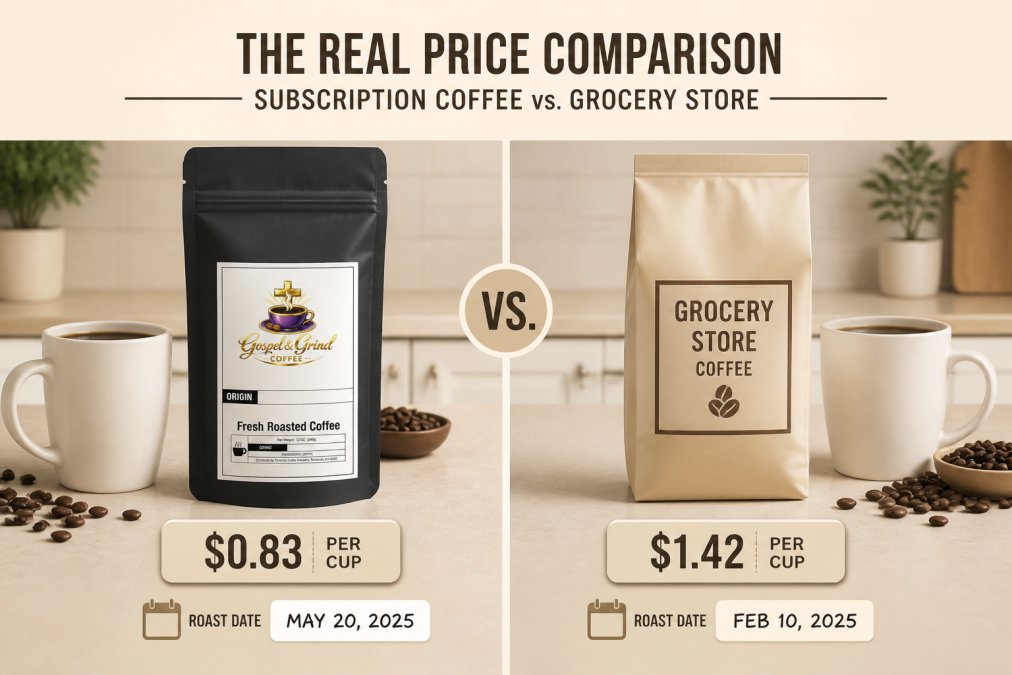
The Real Price Comparison: Subscription Coffee vs. Grocery Store
Is subscription coffee cheaper than grocery? No, but that's the wrong question. Most people assume subscription services cost more because they're premium, and that's partially true. The real comparison isn't sticker price, it's what you're actually getting for your money.
Grocery store coffee has been roasted weeks or months before reaching you. Oxygen exposure continuously degrades flavor compounds. By the time you brew that $8 bag, the product is past its peak freshness window.
Subscription coffee operates differently. Roasters like Gospel and Grind roast beans to order, shipping days after roasting, not months. Fresher beans extract better, taste brighter, and deliver more complexity. The real question isn't whether subscription coffee is cheaper, it's whether the quality justifies the price difference.
Fresh Roasted Coffee Beans Subscription: What You're Actually Paying For
When you order a fresh roasted coffee beans subscription, you're paying for a roasting process optimized for flavor, sourcing that prioritizes quality, and a supply chain designed to deliver product at peak freshness.
Gospel and Grind's model illustrates this. Their beans are roasted to order, sealed with no oxygen exposure, and shipped within days. The roasting process is calibrated to bring out specific flavor notes.
Specialty roasters source from direct trade partners or cooperatives, not commodity brokers. You know which farm grew your beans, at what altitude, and how they were processed. Gospel and Grind's 60 Pack Single Serve Coffee Capsules ($56.99) or their Best Sellers Sample Pack ($20.89) show how subscription pricing works, you're getting beans roasted specifically for your order, not warehouse stock.

The subscription model adds convenience value. You're not hunting for coffee weekly or remembering which roast you liked last month. For busy professionals and home office workers, this justifies a premium over grocery shopping.
Hidden Costs That Change the Equation
Grocery coffee appears cheaper because you only see the shelf price. Total cost of ownership tells a different story.
Shipping fees seem like a disadvantage until you factor in order size. A $5 shipping charge spread across five bags works out to $1 per bag. Waste is the bigger hidden cost. Grocery store coffee loses flavor rapidly once opened. Most people finish a bag within two weeks, but oxidation degrades remaining coffee. Subscription services ship smaller quantities more frequently, reducing waste.
Brewing method alignment matters. A bag optimized for espresso won't perform well in a French press. Grocery store coffee is a generic medium roast acceptable in any method but excellent in none. Subscription roasters offer roasts calibrated for specific equipment.
Inconsistency costs money over time. Grocery store brands change suppliers and roast profiles. Subscription services maintain consistent profiles, you know what you're getting every time.
A household drinking two cups daily spends roughly $1,500-$2,000 annually on grocery store coffee (usda.gov). A subscription coffee drinker with the same consumption might spend $1,800-$2,400 annually. The difference is $300-$400 per year. For that premium, you're getting fresher product, better flavor consistency, and less waste.
How to Save Money on Premium Coffee Without Sacrificing Quality
Start by calculating your actual consumption. Track it for two weeks. If you're drinking two cups daily, that's 14 cups per week. A 12-ounce bag (roughly 30 cups) lasts two weeks for one person. Knowing this prevents overbuying.
Choose subscription frequency based on consumption. Ordering monthly often means beans sit longer than necessary. Bi-weekly or tri-weekly orders keep product fresher. Gospel and Grind's model supports flexible ordering, you're not locked into a fixed schedule.
Sample packs solve the discovery problem without waste. Gospel and Grind's Flavored Coffees Sample Pack ($20.89) or their Best Sellers Sample Pack ($20.89) let you try multiple roasts without committing to full bags.
Brewing method efficiency matters. A French press extracts more from a given amount of coffee than drip brewing. Better extraction means better flavor from less coffee, directly reducing per-cup cost.
Build a rotation. Instead of ordering the same roast every month, rotate between three or four favorites. This keeps your palate engaged and lets you use up inventory systematically.
| Strategy | Savings Impact | Implementation Time |
|---|---|---|
| Track actual consumption | Prevents 20-30% overbuying | 2 weeks |
| Adjust order frequency to consumption | Reduces waste by 15-25% | Ongoing |
| Use sample packs for discovery | Eliminates full-bag waste | One-time |
| Optimize brewing method | Reduces per-cup cost by 10-15% | 30 minutes |
| Rotate roasts | Maintains freshness, reduces waste | Ongoing |
Coffee Subscription Frequency and Savings: Finding Your Sweet Spot
Subscription frequency is where most people get the math wrong. Bulk buying only saves money if you use the product before it degrades.
Coffee peaks in flavor 5-14 days after roasting (peer-reviewed research). After 30 days, it's noticeably less vibrant (peer-reviewed research). After 60 days, it's stale. If you order a month's worth and it sits for 30 days before finishing, you're drinking degraded product for half your consumption.
The optimal frequency depends on consumption rate. A single person drinking two cups daily needs roughly 15 ounces of coffee per week, a 12-ounce bag every five days. Ordering bi-weekly keeps product in the freshness window. A household of three needs one bag every 2-3 days and should order weekly or bi-weekly.
Services offering flexible frequency, allowing weekly, bi-weekly, or monthly adjustments, let you optimize for freshness. Gospel and Grind's subscription model supports this flexibility.
Cost per cup is the metric that matters. If you order bi-weekly and drink all product within 14 days, your cost per cup is lower than monthly ordering where beans sit unused. For a household of two drinking two cups daily, bi-weekly ordering of two 12-ounce bags costs roughly $35-$45 per order, or about $70-$90 monthly, roughly $1.17-$1.50 per cup. Grocery store coffee at $8 per 12-ounce bag runs $0.27 per cup only if you drink it all before it stales. Account for waste, and grocery store coffee costs $0.35-$0.45 per cup.
The subscription coffee cost per cup looks higher until you account for freshness and waste. Then the math flips.
Quality, Freshness, and Long-Term Value
Quality makes subscription coffee economically sensible. You're paying for flavor consistency and freshness that grocery stores can't match.
A specialty roast optimized for a specific brewing method extracts more flavor per gram of coffee. The same amount of specialty roast in a French press produces a noticeably different cup, brighter, more complex, with clearer flavor notes. That quality difference translates to satisfaction and less waste.
Freshness compounds this advantage. Peak flavor lasts roughly 14 days post-roast. After 30 days, volatile flavor compounds have oxidized. Grocery store coffee ships from roaster to distributor to warehouse to shelf, a process taking weeks. By the time you buy it, you might have 2-3 weeks of freshness left. Subscription coffee ships within days of roasting, giving you the full freshness window.
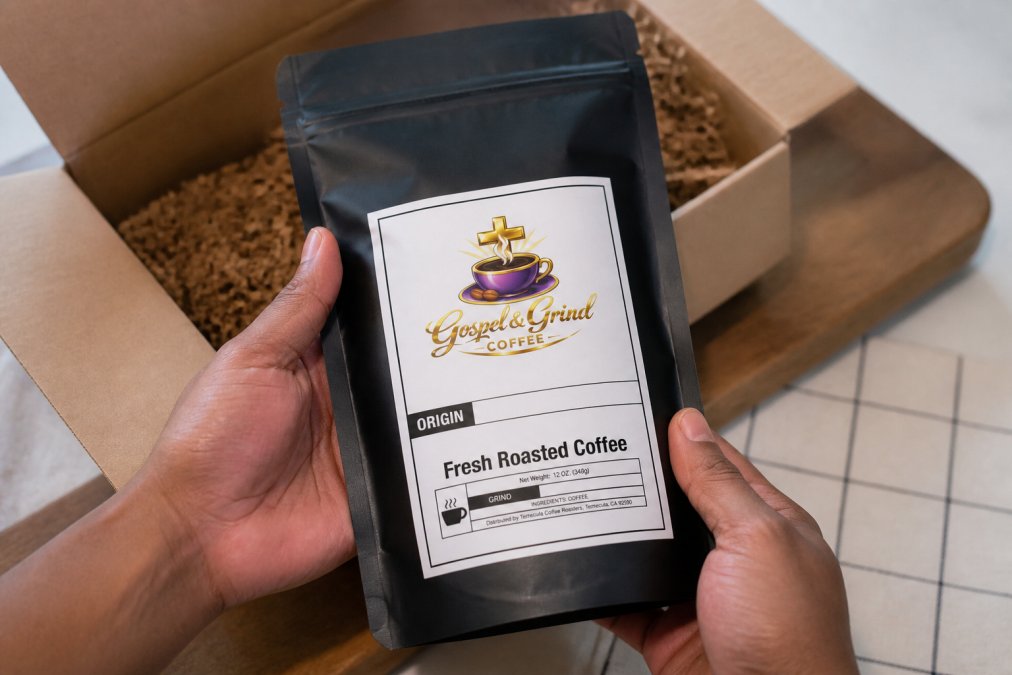
Long-term value compounds over years. A coffee drinker switching to subscription coffee and maintaining that switch for five years will spend roughly $3,000-$4,000 more on coffee. But they'll consume fresher product, experience better flavor consistency, and waste less. For coffee enthusiasts, that's an an investment in daily quality of life.
Gospel and Grind's mission to fight homelessness means every purchase supports a cause beyond the product. For conscious consumers prioritizing ethical sourcing and social impact, this transforms the purchase into something with purpose.
Is Subscription Coffee Cheaper? The Honest Answer
No. Subscription coffee is not cheaper than grocery store coffee. It's more expensive. But that's not the right question. The right question is whether the quality justifies the price difference. For most coffee enthusiasts, the answer is yes.
If you value convenience and drink coffee as fuel, grocery store coffee is the right choice. You'll spend less money.
If you value freshness, flavor consistency, and a genuinely good cup, subscription coffee makes economic sense despite the higher price. You'll spend more money but get more value per dollar because you're wasting less product and enjoying better flavor.
Gospel and Grind's Instant Coffee ($18.39) or their 12 Pack Single Serve Coffee Capsules ($16.99) offer entry points at different price tiers. Neither is cheaper than grocery store equivalents, but both deliver fresher product and better flavor.


Over five years, the premium you pay for subscription coffee is offset by reduced waste, better extraction efficiency, and consistent quality. You're not just buying coffee, you're buying a daily experience that's noticeably better than the alternative.
For busy professionals working from home, coffee enthusiasts who brew daily, and conscious consumers aligning purchases with values, subscription coffee is worth the premium. The cost difference is modest. The quality difference is substantial.
Frequently Asked Questions
Q: Is subscription coffee actually cheaper than grocery store coffee?
A: No, subscription coffee typically costs more per pound upfront. However, the value proposition differs: subscription services charge $12-18 per pound for specialty, fresh roasted coffee beans, while grocery store beans run $6-10 per pound. The gap narrows when you factor in freshness, flavor quality, and the specialty-grade roasting that subscription services provide. Grocery store beans are often older commodity coffee with less flavor complexity. For cost-conscious buyers, subscription coffee isn't cheaper, it's a premium product you're paying extra for superior freshness and taste.
Q: What hidden costs should I expect with a coffee subscription?
A: Shipping fees are the biggest hidden cost, typically $5-8 per order depending on weight and frequency. Some subscriptions bundle shipping into the price, while others charge separately. If you subscribe monthly, annual shipping costs can add $60-96 to your total. There's also the cost of commitment: canceling early may forfeit discounts or free shipping offers. Additionally, if you don't adjust frequency based on consumption, you may accumulate unopened bags, wasting money on coffee you don't drink before it passes peak freshness at 2-3 weeks post-roast.
Q: How does fresh roasted coffee beans subscription quality compare to grocery store options?
A: Fresh roasted coffee beans from subscription services are roasted within days of shipping, meaning they arrive at peak flavor within 1-2 weeks. Grocery store beans are often roasted weeks or months before purchase, with no visible roast date. Subscription services typically source specialty-grade, single-origin beans with documented sourcing and roast profiles. Grocery store coffee is usually commodity-grade blends with minimal traceability. The flavor difference is noticeable: subscription coffee delivers more complex, vibrant tasting notes, while grocery beans taste flat and stale by comparison. For coffee enthusiasts, the quality jump justifies the price premium.
Q: Can I find affordable subscription coffee options that don't break the budget?
A: Yes. Sample packs like our Best Sellers Sample Pack at $20.89 let you try multiple roasts before committing to full-size bags. Buying larger quantities upfront, such as our 60 Pack Single Serve Coffee Capsules at $56.99, reduces per-cup costs compared to smaller purchases. Adjusting subscription frequency to match your actual consumption prevents waste. Instant coffee options at $18.39 for 30 servings offer a budget-friendly alternative for busy mornings. The key is finding the subscription tier and frequency that fits your budget and consumption rate, not forcing yourself into a plan that leaves you with stale, unopened bags.
Subscription coffee costs more upfront, but the long-term value equation favors it when you prioritize freshness and flavor. Gospel and Grind delivers roasted-to-order beans with a mission-driven approach that transforms coffee from a commodity into an experience. Find Your Perfect Roast and experience the difference that freshness and intentional sourcing make in your daily cup.
This article was written using GrandRanker