

Sustainable Coffee Practices for Home Offices
Table of Contents
- Why Sustainable Coffee Practices Matter for Home Office Workers
- Understanding Your Carbon Footprint: Coffee Consumption at Home
- Choosing Sustainable Coffee Beans for Daily Brewing
- Eco-Friendly Coffee Brewing Methods That Reduce Waste
- Reusable Coffee Filters and Sustainable Brewing Equipment
- Composting Coffee Grounds and Managing Brewing Waste
- Building a Zero-Waste Home Office Coffee Routine
- Frequently Asked Questions
Last Updated: October 6, 2026
Why Sustainable Coffee Practices Matter for Home Office Workers
For many home office workers, that morning cup of coffee is a ritual that sets the tone for the workday. But have you considered its environmental cost?
Sustainable coffee practices reduce waste, support farmers, and lower your carbon footprint without sacrificing quality. At Gospel and Grind, we believe home office workers have real power to make a difference each morning.
The coffee industry generates significant waste: pods pile up in landfills, packaging gets discarded, and grounds end up in trash instead of compost. When you work from home, you control your entire coffee routine, from the beans you buy to how you dispose of the grounds, an opportunity most office workers don't have.
This guide covers practical steps to build sustainable coffee practices into your home office workflow: choosing better beans, brewing with less waste, and managing what's left over.
Understanding Your Carbon Footprint: Coffee Consumption at Home
Every cup of coffee carries an environmental cost. Understanding where that impact comes from helps you make smarter choices.
Coffee production requires water, land, and energy; shipping beans adds emissions, and packaging, equipment, and waste disposal all factor in. For home office workers brewing multiple cups daily, these costs multiply over a year.
The biggest waste happens in three places:
- Single-serve pods accumulate quickly and rarely get recycled
- Paper filters and grounds end up in landfills instead of composting systems
- Packaging materials from store-bought coffee often aren't recyclable
The beans themselves account for a large portion of coffee's environmental impact: how they're grown, where they're sourced, and whether they're shade-grown or monoculture makes a real difference. Brewing method matters too, some approaches waste water or energy, others are far more efficient.
Working from home puts you ahead: no commute to a cafe or office, and full control over every variable in your coffee routine.
Choosing Sustainable Coffee Beans for Daily Brewing
The beans you select set the foundation for everything else. Not all coffee is grown the same way, and the differences matter.
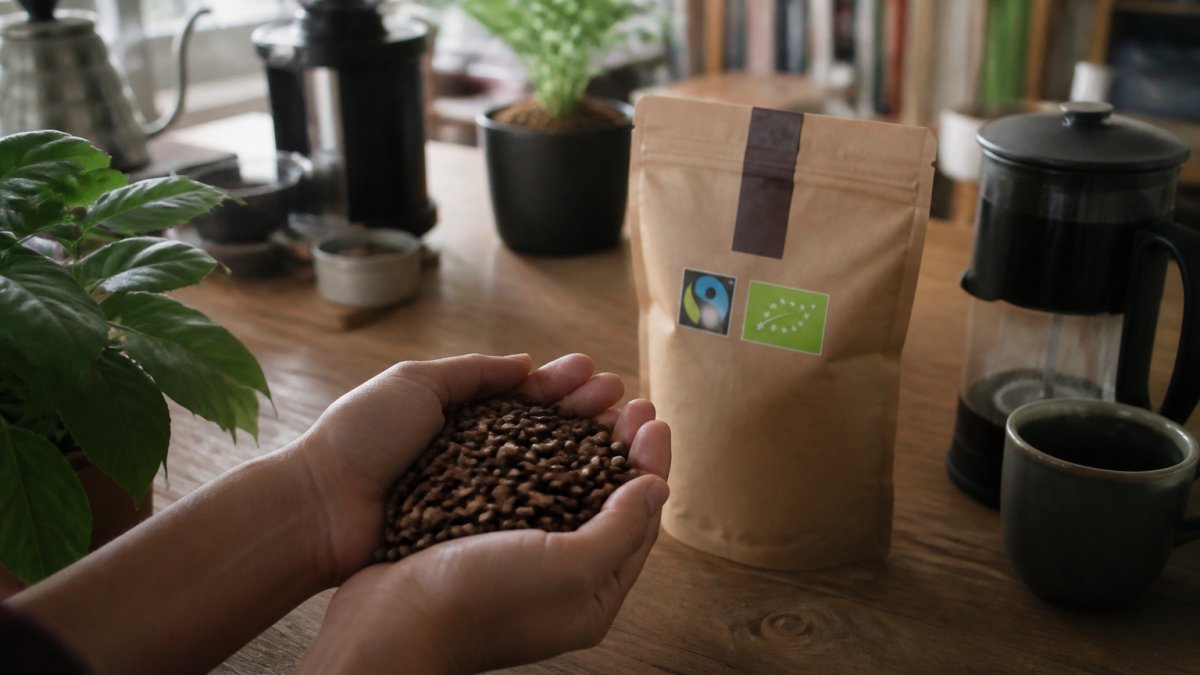
Fair-trade certification ensures farmers receive fair prices, while organic certification means no synthetic pesticides or fertilizers were used. Both cost more upfront but support better farming practices.
Single-origin beans from smaller farms often have lower environmental impact than mass-produced blends, and knowing where your coffee comes from supports specific farmers and communities. Gospel and Grind sources beans from trusted farms and roasts to order, ensuring maximum freshness and minimal waste from old inventory.
Here's what to prioritize when choosing beans:
- Shade-grown coffee preserves forest ecosystems and bird habitats
- Fair-trade certified beans support farmer livelihoods
- Organic certification eliminates harmful pesticide runoff
- Roasted to order ensures peak freshness with zero waste
Buying whole beans instead of pre-ground reduces packaging waste and keeps coffee fresh longer in an airtight container. If you need convenience, look for brands using minimal, recyclable packaging.
Sustainable coffee costs more, but you're paying for fresher beans, better flavor, environmental responsibility, and farmer support. Gospel and Grind's roast-to-order commitment means every batch arrives at peak flavor, never old stock.
Eco-Friendly Coffee Brewing Methods That Reduce Waste
How you brew matters as much as what you brew, but "sustainable" isn't a single label. Each method trades off across four variables: water use, electricity draw, filter/pod waste, and the embodied carbon of the equipment.
Here's how the common home office methods stack up on those four variables.
Pour-over brewing uses gravity and simple equipment: a ceramic or glass dripper lasts for years and draws zero electricity. The catch is water, pour-over uses a higher water-to-coffee ratio than immersion methods, and pre-heating and rinsing the filter adds water and energy.
French press brewing requires no filters and no electricity: add grounds, pour hot water, wait about four minutes, and press.
Automatic drip coffee makers use electricity but are efficient when you brew a full pot. The waste comes from paper filters and standby energy draw.
Instant coffee has the smallest environmental footprint per cup: minimal water, no brewing equipment, and compact packaging. Gospel and Grind offers instant coffee with 30 servings in a resealable pouch, convenience without the per-cup waste of pods.

Single-serve pod systems create the highest recurring waste per cup: each pod is discarded after one use, and the plastic-and-foil shell is hard to recycle in most municipal programs. If you use pods, choose quality options like Gospel and Grind's 12-pack single-serve capsules, sealed to keep coffee fresh without excess outer packaging, and treat them as an occasional convenience, not a daily default.

| Brewing Method | Water Use | Electricity | Recurring Waste | Equipment Lifespan |
|---|---|---|---|---|
| Pour-over | Medium-High | None | Low (reusable filter) | Years to decades |
| French press | Medium | None | Low (grounds only) | Decades |
| Automatic drip | Medium | Medium | Medium (paper filters) | Years |
| Instant coffee | Low | None (kettle only) | Low (compact packaging) | N/A |
| Single-serve pods | Low | Low | High (pod per cup) | Years |
One home-office-specific move most guides skip: run a quick energy audit on your coffee corner. A smart plug that cuts power to the drip machine after 30 minutes of idle time can eliminate the standby draw that otherwise runs 24/7, often saving more energy over a year than switching brewing methods entirely.
Reusable Coffee Filters and Sustainable Brewing Equipment
If you use a pour-over or drip coffee maker, your filter choice matters more than you might think.
Paper filters are convenient but create waste, one per brew, hundreds per year in landfills. Reusable filters eliminate this waste entirely.
Metal mesh filters last for years, are easy to clean, and cost just a few dollars. They let more coffee oils through for a richer cup; try both metal and paper to see what you prefer.
Cloth filters are washable and reusable, requiring more care than metal but producing an excellent cup. Rinse them immediately after use to prevent mold.
Gospel and Grind's cold brew coffee is designed for reusable brewing: a jar, a fine mesh strainer, and patience. Brew a large batch once and use it throughout the week, minimal waste, maximum convenience.

Here's what sustainable equipment looks like:
- Durable materials that last years, not months
- Easy to clean and maintain
- Works without electricity
- Produces excellent coffee without compromise
- Minimal packaging
Composting Coffee Grounds and Managing Brewing Waste
Coffee grounds belong in compost, not trash. But if you work from a home office, especially in an apartment without a yard, "just compost it" isn't a complete answer. Here's the practical, small-space circular economy for home coffee waste.
A single daily brewer generates roughly 5-10 pounds of spent grounds per year. In landfill they decompose anaerobically and release methane, a potent greenhouse gas, so keeping grounds out of the trash is one of the highest-leverage changes a home office worker can make.
If you have a yard or garden: add grounds directly to a compost bin. They're rich in nitrogen, balancing carbon-heavy "browns" like dried leaves and cardboard, and they speed up decomposition while improving soil structure and water retention.
If you're in an apartment or have no outdoor space, you still have options:
- Bokashi or countertop electric composters ferment or dehydrate food scraps indoors with minimal odor. Both handle coffee grounds well and produce a finished amendment you can add to houseplants or donate to a community garden.
- Worm composting (vermicomposting) works indoors in a bin under a sink or in a closet. Red wiggler worms process coffee grounds and filters efficiently, and the resulting castings are a premium soil amendment. Keep the bin balanced and it won't smell.
- Community compost programs are increasingly common, many farmers markets, libraries, and municipal drop-off sites accept organic waste. Check your city's waste department or a local community garden.
- Neighborhood garden giveaways: post grounds on a local Buy Nothing or gardening group. Urban gardeners actively seek them out.
Don't throw away used filters either: paper filters compost along with the grounds, and metal and cloth filters just need rinsing and reuse.
Coffee grounds also work as a gentle abrasive for scrubbing pots, absorb odors in a fridge or freezer, and serve as a mild exfoliant in DIY skincare. Get creative before you compost, but compost them in the end rather than trashing them.
The key is tracking where your waste actually goes. Set up a two-bin system next to your coffee station, one for compost, one for genuine trash, and the habit builds itself.
Building a Zero-Waste Home Office Coffee Routine
Creating a sustainable routine takes planning but becomes automatic over time.
Start by auditing your current setup: brewing method, filter type, how you dispose of grounds, and what packaging your coffee comes in. Identify the biggest waste sources first.
Next, make one change at a time. Don't overhaul everything at once. Pick the easiest swap:
- Switch to reusable filters if you use paper
- Choose whole beans over pre-ground
- Buy from brands with minimal packaging
- Start composting grounds
- Upgrade to quality equipment that lasts
Track your progress: notice how much less trash you generate and how the coffee tastes. Better sourcing and fresher roasting usually mean better flavor, which reinforces your commitment.
Here's a practical zero-waste routine:
- Order fresh beans from a roaster like Gospel and Grind
- Store beans in an airtight container away from light and heat
- Brew using a reusable filter method
- Compost the grounds immediately
- Reuse or recycle all packaging
Gospel and Grind's roast-to-order approach supports this routine: fresh beans without old inventory waste, and quality that makes every cup worth the extra effort.
Build this routine gradually. After a month it becomes habit; after three, you won't remember doing it any other way. The environmental impact compounds over time, and so does the satisfaction.
Sustainable coffee practices start with small, intentional choices. With carefully sourced beans, convenient delivery, and a mission to support communities fighting homelessness, you get exceptional coffee while making a real impact. Find Your Perfect Roast and transform your home office coffee routine into something you feel good about, for your taste buds and the planet.
Frequently Asked Questions
How can I make my home office coffee routine more sustainable?
Start by switching to sustainable coffee beans with fair-trade and organic certifications, which support responsible sourcing and small-scale farmers. Use eco-friendly brewing equipment like French presses or pour-over methods with reusable filters instead of single-serve pods. Compost your coffee grounds instead of throwing them away, and choose packaging that is recyclable or compostable. Gospel and Grind's roasted-to-order beans arrive fresh, reducing waste from stale coffee that gets discarded.
What is the most eco-friendly way to brew coffee at home?
French press and pour-over methods are among the most sustainable brewing options because they require no electricity, produce minimal packaging waste, and allow you to use reusable filters. These methods also have a lower environmental impact than single-serve pod machines. Pair your brewing method with freshly roasted beans delivered directly to your door, this eliminates the carbon footprint from long-term storage and reduces the likelihood of waste from stale coffee.
Are reusable coffee filters better for the environment than disposable ones?
Yes, reusable coffee filters significantly reduce waste over time. While disposable paper filters are biodegradable, reusable metal or cloth filters eliminate ongoing waste and the resource consumption required to manufacture new filters repeatedly. A single reusable filter can last years, making it a practical choice for home office workers committed to waste reduction and circular economy principles in their daily routines.
How should I dispose of used coffee grounds?
The best option is composting. Coffee grounds are rich in nitrogen and break down quickly, making them excellent for compost bins or garden soil. If you don't have a compost system, check if your local waste management program accepts food waste. Alternatively, coffee grounds can be used directly in potted plants or gardens to improve soil quality. This approach keeps grounds out of landfills and supports sustainable agriculture practices.