

How to Make Iced Coffee at Home with Regular Coffee
Table of Contents
- Why Regular Coffee Works for Iced Coffee
- The Best iced coffee ratio for Strong, Flavorful Results
- Step-by-Step: How to Make Iced Coffee with a Drip Machine
- How to Make Coffee Ice Cubes So Your Drink Never Waters Down
- Iced Coffee vs Cold Brew: What's the Difference?
- Troubleshooting: Bitter, Acidic, or Weak Iced Coffee
- Milk, Sweeteners, and Finishing Touches
- Frequently Asked Questions
Last Updated: September 7, 2026
Why Regular Coffee Works for Iced Coffee
Many home brewers assume they need a special blend or expensive equipment to make a great glass of iced coffee. The truth is that your everyday drip coffee, pour over, or French press batch is the perfect starting point. Iced coffee is simply regular hot coffee that has been brewed stronger and then chilled or poured over ice.
The key difference between a mediocre glass and a memorable one comes down to strength and freshness. When you learn how to make iced coffee at home with regular coffee, you control both variables completely. At Gospel and Grind, we roast our beans to order precisely because fresh coffee holds its aromatic oils and flavor compounds better, which matters even more when the drink gets diluted by melting ice.
The real challenge is that ice waters down your cup. You are not just brewing coffee; you are brewing coffee that needs to survive contact with water in its solid form. This guide covers the ratios, techniques, and fixes that separate a refreshing summer drink from a sad, watery disappointment.
The Best iced coffee ratio for Strong, Flavorful Results
The best iced coffee ratio for regular coffee is double your normal strength, roughly 1:8 coffee to water by weight (ncausa.org). If you normally use 2 tablespoons of ground coffee per 6 ounces of water, double it to 4 tablespoons for the same water volume. This concentrated brew ensures that after the ice melts, your final cup tastes like the coffee you intended to drink, not a faint reminder of it.
A common approach is to brew a full pot at double strength, then pour it immediately over a glass packed with ice. For a cleaner result, brew your concentrate, let it cool slightly, then refrigerate before serving.
Step-by-Step: How to Make Iced Coffee with a Drip Machine
Your standard drip machine is fully capable of producing excellent iced coffee. The method below takes about 10 minutes of active time and yields two generous 12-ounce servings. The key is to treat this as a concentrate brew, not a regular pot.
- Measure your grounds. Use 4 tablespoons (about 28 grams) of medium-coarse ground coffee per 1 cup (8 fluid ounces) of filtered water. This is a 1:8 coffee-to-water ratio by weight, which is double your normal strength. The National Coffee Association brewing guidelines recommend filtered water for the cleanest extraction, and it makes a noticeable difference in iced drinks.
- Brew a double-strength pot. Run your machine as usual, but with the doubled coffee dose. If your machine has a "strong" or "bold" setting, skip it, that setting often just slows the brew cycle, which can over-extract and introduce bitterness. You want a normal, full cycle at double strength.
- Prepare your glasses while the coffee brews. Fill two 16-ounce glasses to the brim with ice. Leave about an inch of space at the top for milk or sweetener. If you have large-format ice cubes or silicone sphere molds, use those, they melt slower than standard tray cubes, buying you more sipping time.
- Pour the hot coffee directly over the ice. Pour immediately after the brew cycle finishes; do not let it sit on the hot plate, which drives off volatile aromatics and adds a scorched flavor.
- Add milk and sweetener to taste. Stir gently and serve immediately. If you are adding simple syrup, pour it in before the coffee so it dissolves as the hot liquid hits the ice.
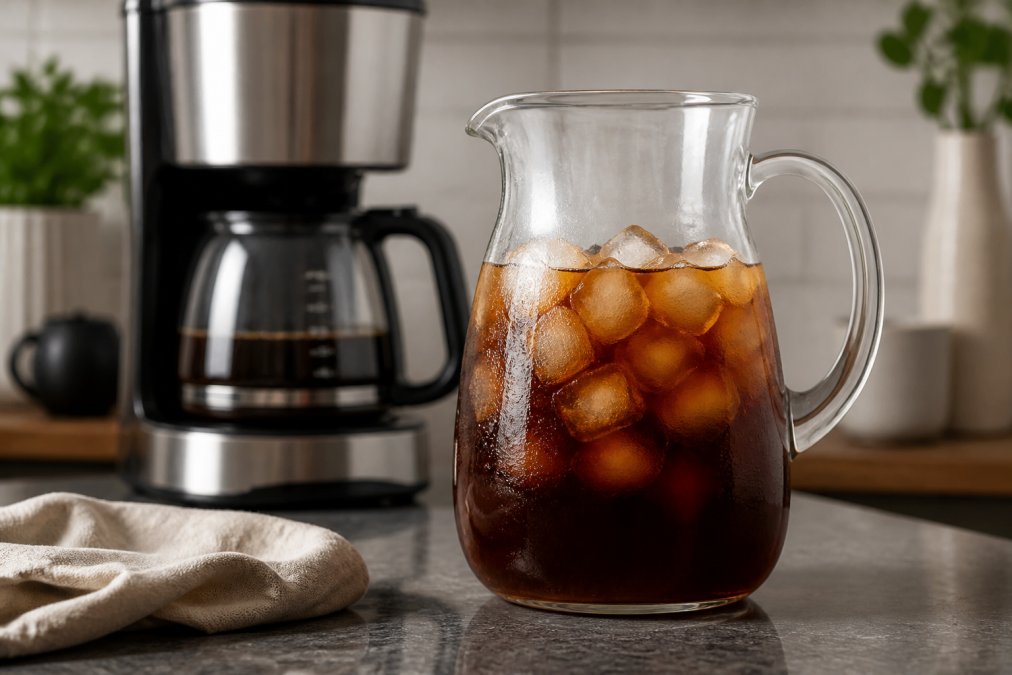
A note on timing: The entire process, from measuring beans to the first sip, should take under 10 minutes. For the brightest cup, pour within 2 minutes of the brew cycle ending.
If your machine brews a full carafe: You can scale this up. For a 12-cup carafe (which actually holds 60 fluid ounces), use 7.5 ounces (about 210 grams) of coffee. Brew, then pour immediately over a large pitcher of ice, about 4 cups of ice for the full carafe. This gives you a ready-to-serve batch that stays cold without further dilution.
How to Make Coffee Ice Cubes So Your Drink Never Waters Down
Coffee ice cubes are the single best upgrade you can make to your iced coffee routine. Instead of diluting your drink as they melt, they reinforce the coffee flavor. The process takes minimal effort and transforms your daily glass.
- Brew a small batch of regular-strength coffee using your usual method.
- Let it cool to room temperature to avoid cracking your ice tray.
- Pour the cooled coffee into ice cube trays and freeze for at least 4 hours, or overnight.
- Use the cubes within two weeks for the freshest taste, storing them in a sealed bag after frozen.
When you make coffee ice cubes, you can use your standard brewing ratio since they will melt slowly and blend with the concentrate. This technique is especially effective for slow sippers who find their drink turning watery before they finish it.
Iced Coffee vs Cold Brew: What's the Difference?
The debate between iced coffee vs cold brew comes down to extraction method and flavor profile. Iced coffee is hot-brewed and then chilled, producing a bright, complex cup with noticeable acidity. Cold brew steeps coarsely ground coffee in room temperature water for 12 to 24 hours, yielding a smooth, full-bodied concentrate with naturally lower acidity (PubMed).

Each method has its place. Iced coffee delivers the familiar flavor characteristics of your favorite beans, including the floral and fruity notes that make single-origin coffee exciting. Cold brew trades that complexity for a mellow, chocolate-forward smoothness that many drinkers find easier on the stomach.
For cold brew specifically, a coarse grind is essential to prevent over-extraction and bitterness during the long steeping time. Our Cold Brew Coffee blend, with its chocolate, toffee, and floral tones, is crafted to shine in both cold brew and iced coffee applications.
Troubleshooting: Bitter, Acidic, or Weak Iced Coffee
When your iced coffee misses the mark, the problem usually traces back to extraction. Weak coffee simply means your ratio was off.
- Too bitter: Use a slightly coarser grind or cooler water just off the boil. Your drip machine may also be running too hot.
- Too acidic: Extend the brew time slightly or switch to a darker roast profile.
- Too weak: Increase your coffee dose before adding more water. Fix the concentrate first, then adjust dilution.
Freshness matters too, which is why roasted-to-order beans from a source like Gospel and Grind give you a wider margin for error than grocery store bags that have sat on shelves for weeks.
Milk, Sweeteners, and Finishing Touches
The right additions elevate iced coffee without masking the beans. The goal is to complement the concentrate's strength, not drown it. Here is how to build a balanced glass, with specific ratios and techniques that work every time.
Milk and Creamers: The Base
Start with a 2:1 ratio of coffee concentrate to milk. For a standard 12-ounce glass with 8 ounces of concentrate, that means 4 ounces of milk. Adjust from there based on your taste.
- Whole milk (3.25% fat): The gold standard for body. Its fat content coats the palate and carries the coffee's aromatic oils, softening acidity without hiding origin notes. Use 3 to 4 ounces per 8 ounces of concentrate.
- Oat milk: The best dairy-free option for iced coffee because its beta-glucan content gives it a viscosity close to whole milk. Barista blends (like Oatly Barista Edition) contain added oils and stabilizers that prevent separation in cold drinks. Use 4 ounces per 8 ounces of concentrate.
- Almond milk: Thin and watery; it dilutes more than it complements. If you use it, choose an unsweetened variety and reduce to 2 to 3 ounces, or accept a lighter-bodied drink.
- Half-and-half or heavy cream: For an indulgent, dessert-like cup, use 2 ounces of half-and-half or 1 ounce of heavy cream. The higher fat content mutes bitterness, which is why this works well with darker roasts.
Sweeteners: Why Simple Syrup Wins
Granulated sugar does not dissolve in cold liquid, it sinks to the bottom and leaves you with a bitter first sip and a syrupy last one. Simple syrup (equal parts sugar and water, heated until dissolved) integrates instantly. Make a batch in 5 minutes: combine 1 cup of white sugar and 1 cup of water in a saucepan, heat gently while stirring until clear, then cool and bottle. It keeps for 2 weeks in the refrigerator.
- Classic simple syrup: 1 to 2 tablespoons per 8 ounces of concentrate. Start with 1, taste, then add more.
- Brown sugar syrup: Use dark brown sugar instead of white for a molasses note that pairs well with chocolate-forward beans. Same 1:1 ratio.
- Maple syrup: Use 1 to 2 teaspoons. Its flavor is more assertive than simple syrup, so it can mask delicate floral notes, save it for darker roasts.
- Honey: Dissolve 1 teaspoon in 1 tablespoon of hot water before adding to the cold drink, otherwise it will clump.
Flavor Additions That Work
- Vanilla extract: 1/4 teaspoon per glass adds a bakery-like sweetness without sugar. Use pure extract, not imitation, which can taste sharp when cold.
- Cinnamon: A pinch of ground cinnamon stirred into the concentrate before pouring over ice adds warmth. For a cleaner texture, steep a cinnamon stick in the hot coffee for 2 minutes during brewing, then remove.
- Salt: A single grain of flaky sea salt on top of the finished drink reduces perceived bitterness and brightens sweetness. This is a common barista trick that costs nothing.
The Order of Operations

Add your milk and sweetener to the glass before pouring the hot concentrate over the ice. This integrates everything evenly as the coffee cools. If you pour coffee first, the milk sits on top and requires aggressive stirring, which melts more ice.
A note on coffee ice cubes as a finishing touch: If you have pre-made coffee ice cubes, use them in place of half the regular ice. They melt slower and reinforce flavor instead of diluting it. For a truly elevated glass, freeze leftover concentrate in the cube tray, those cubes are twice as strong as regular coffee ice and will season the drink as they melt.
Frequently Asked Questions
Can I turn regular coffee into iced coffee?
Yes. Brew coffee using your regular drip machine, pour-over, or French press, then chill it and serve over ice. The key is brewing it roughly double strength, using a ratio around 2 tablespoons of ground coffee per 6 ounces of water, so the ice doesn't dilute the flavor too much.
How do you keep iced coffee from tasting watered down?
The most effective method is using coffee ice cubes. Pour leftover coffee into an ice cube tray and freeze it. When you make your next iced coffee, use these cubes instead of regular ice. You can also brew a stronger concentrate to account for dilution.
Does hot coffee need to be cooled before adding ice?
Yes. Let the brewed coffee cool at room temperature for 10-15 minutes, or refrigerate it for 30 minutes, before serving over ice.
What is the difference between iced coffee and cold brew?
Iced coffee is hot-brewed coffee that is chilled and poured over ice, which takes only minutes to prepare. Cold brew involves steeping coarse ground coffee in room-temperature or cold water for 12-24 hours. Cold brew is typically smoother and less acidic, while iced coffee retains the brighter, more complex flavors of hot brewing.