

Why Your Coffee Tastes Watery: 7 Fixes
Table of Contents
- Why Your Coffee Tastes Watery Even With Fresh Beans
- The Ideal Coffee to Water Ratio for Full Flavor
- How to Adjust Coffee Grind Size for Better Extraction
- Coffee Brewing Water Temperature and Extraction
- Brewing Time and Contact Time Matter More Than You Think
- Descaling and Equipment Maintenance to Prevent Weak Brews
- Check Your Water Quality and Filter Type
- Conclusion
- Frequently Asked Questions
Why Your Coffee Tastes Watery Even With Fresh Beans
If you're brewing with fresh beans and still getting a weak, watery cup, the problem isn't your coffee, it's your process. Watery coffee happens when extraction falls short, meaning the water passes through your grounds too quickly without pulling out enough flavor compounds. This isn't about bean quality or freshness alone. Even premium, carefully sourced beans will taste thin and disappointing if your brewing technique isn't dialed in.
The good news: fixing watery coffee is straightforward once you understand what's happening. Most of the culprits are easy to diagnose and correct at home. Whether it's your coffee-to-water ratio, grind size, water temperature, or equipment maintenance, we'll walk you through each variable so you can identify what's throwing off your brew and get back to the rich, full-bodied cup you're after.
The Ideal Coffee to Water Ratio for Full Flavor
The coffee-to-water ratio is your foundation. Too much water relative to coffee grounds, and extraction suffers immediately. A common starting point is the 1:16 ratio, one part coffee to sixteen parts water by weight (peer-reviewed research). This means if you're brewing 25 grams of coffee, you'd use 400 grams (about 13.5 ounces) of water.
Many coffee enthusiasts find that a 1:15 ratio produces noticeably fuller flavor than 1:16, especially if your current brew tastes thin. Some prefer going even tighter at 1:14 for darker, more concentrated results. The key is measuring by weight, not volume. A kitchen scale takes the guesswork out of the equation, scoops and cups are inconsistent and lead to variable results.
If you've been eyeballing your measurements, switching to weight-based ratios often solves watery coffee immediately. Start at 1:16, brew a pot, and assess. If it still tastes weak, drop to 1:15 and compare. You'll quickly find the ratio that matches your taste preference and equipment. Gospel and Grind's carefully sourced beans deserve this precision, they're roasted to order for maximum flavor, so proper extraction makes the difference between a mediocre cup and something genuinely exceptional.
| Ratio | Coffee | Water | Result | Best For |
|---|---|---|---|---|
| 1:14 | 25g | 350g | Strong, concentrated | Dark roasts, espresso-style |
| 1:15 | 25g | 375g | Full-bodied, rich | Medium roasts, most brewers |
| 1:16 | 25g | 400g | Balanced, clean | Light roasts, pour-overs |
| 1:17 | 25g | 425g | Lighter, more delicate | Specialty single-origins |
How to Adjust Coffee Grind Size for Better Extraction
Grind size controls how quickly water flows through your coffee bed and how much surface area the water contacts. Too coarse, and water rushes through without proper extraction, you get watery, under-extracted coffee. Too fine, and water moves too slowly, sometimes over-extracting and creating bitterness. Finding the right size for your brewing method is critical.
For drip brewers, aim for a medium grind, roughly the texture of granulated sugar. If your coffee tastes watery, your first adjustment should be grinding finer. A finer grind increases contact time and surface area, allowing more flavor compounds to dissolve into the water. Make small adjustments (quarter-turn increments on a burr grinder) and test after each change. Over-correcting often leads to the opposite problem: bitter, over-extracted coffee.
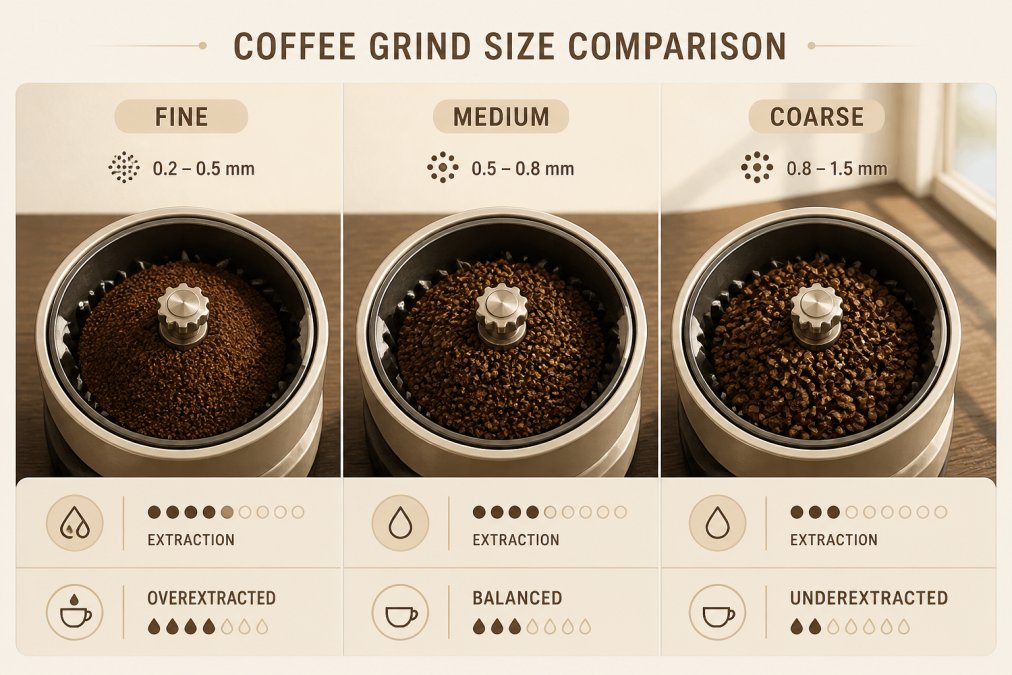
The type of grinder matters too. Burr grinders (either conical or flat burr) produce consistent particle size, which directly improves extraction. Blade grinders create uneven chunks and fines, leading to channeling, water finding paths of least resistance through the bed. If you're using a blade grinder and getting watery coffee, upgrading to a burr grinder often solves the problem entirely.
Different brewing methods need different grind sizes. French press requires a coarse grind to prevent sediment in your cup. Pour-over and drip machines need medium. Espresso needs fine. If you're switching between brewing methods, adjust your grind accordingly. Gospel and Grind's blends work across all these methods, but dialing in the right grind size for YOUR equipment ensures you're getting the full flavor profile intended.
Coffee Brewing Water Temperature and Extraction
Water temperature directly affects extraction speed and flavor compound solubility. Ideal brewing temperature is between 195°F and 205°F (peer-reviewed research). Water that's too cool (below 195°F) under-extracts, leaving your coffee watery and sour. Water that's too hot (above 205°F) over-extracts, creating bitter, harsh flavors.
Many home brewers don't realize their water isn't hot enough. If you're pouring water that just boiled (212°F), it cools as it travels from kettle to coffee bed. By the time it contacts your grounds, it may be below the ideal range. A simple fix: let boiled water sit for 30 seconds before pouring, then use a thermometer to verify you're in the 195-205°F window. Some brewers include thermostats; others require you to monitor manually.
The heating elements in automatic drip machines vary widely in thermal stability. Cheaper machines often produce inconsistent temperature, leading to under-extraction and watery results. If you've ruled out ratio and grind size, your machine's heating performance might be the culprit. Pour-over methods (Chemex, V60, Kalita Wave) give you direct control over water temperature, making them reliable for achieving proper extraction.
Thermal stability matters throughout the brew cycle. Water cools as it sits in contact with coffee grounds. Longer brew times (like French press) require starting at the higher end of the temperature range to maintain adequate extraction. Shorter brew times (like espresso) need precise temperature control. Understanding this relationship helps you adjust your process based on your specific brewing method.
Brewing Time and Contact Time Matter More Than You Think
Contact time is how long water sits in contact with coffee grounds. This variable determines how much flavor is extracted. Too short, and you get watery, under-extracted coffee. Too long, and you risk over-extraction and bitterness. The ideal contact time varies by brewing method and grind size.
For drip brewers, total brew time should be 4-6 minutes. If your brewer finishes in under 3 minutes, water is moving too fast through the grounds, likely because your grind is too coarse or your coffee bed isn't packed properly. If it takes over 8 minutes, your grind may be too fine or your filter clogged. Adjust grind size to hit the 4-6 minute window.
French press requires 4 minutes of steeping time. Pour-over typically takes 3-4 minutes. Espresso happens in 25-30 seconds under pressure. Each method has an optimal window. Staying within that window, combined with proper temperature and ratio, ensures consistent, full-flavored extraction.
A common mistake is assuming faster brewing is better. It's not. Rushing the process, using coarser grounds or cooler water to speed things up, sacrifices flavor. Proper extraction takes time. If you're in a hurry, it's better to brew smaller batches than to cut corners on contact time. Gospel and Grind's roasted-to-order beans deserve the full contact time they need to shine.
Descaling and Equipment Maintenance to Prevent Weak Brews
Mineral buildup inside your coffee maker reduces water flow and thermal efficiency. Over time, calcium and other minerals accumulate on heating elements and inside tubes, creating two problems: water takes longer to heat properly, and flow becomes uneven. Both lead to inconsistent, often watery extraction.
Descaling removes this mineral buildup. Most machines need descaling every 3-6 months, depending on your water hardness. The process is simple: fill the reservoir with a descaling solution (white vinegar works, or use a commercial descaler), run it through a brew cycle without coffee, then flush with fresh water 2-3 times. This restores thermal efficiency and ensures even water distribution through your grounds.
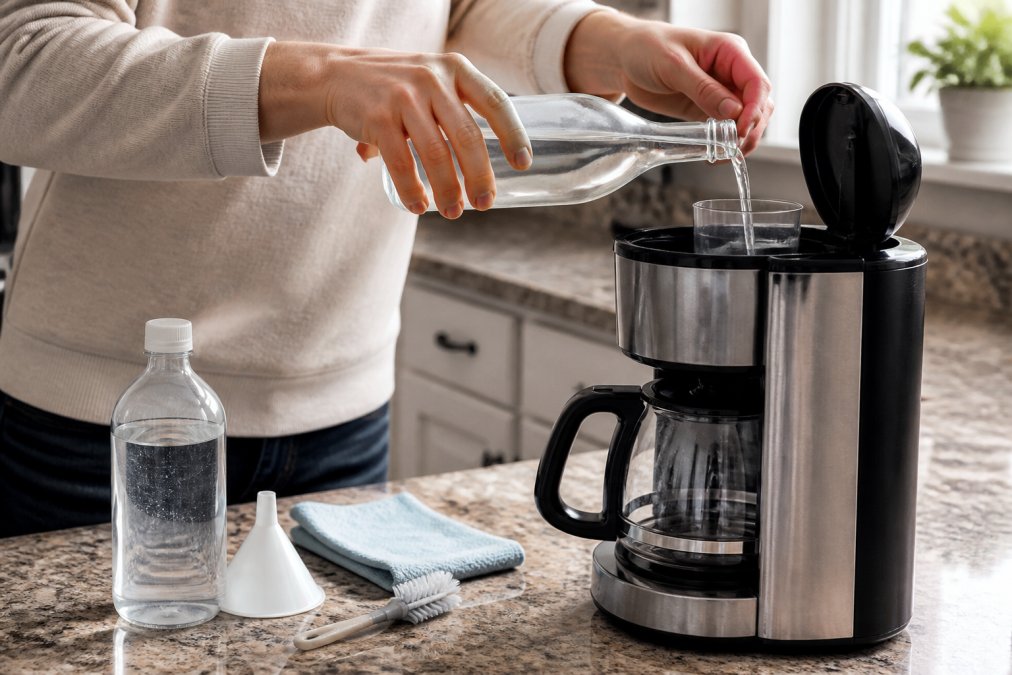
Beyond descaling, keep your equipment clean. Coffee oils and residue accumulate on filters, spray heads, and brew baskets. A buildup of old oils can impart stale, watery flavors to fresh coffee. Wash removable parts weekly with hot water. For automatic drip machines, run a cycle with just hot water (no coffee) weekly to flush the system.
Filter quality and condition matter too. A clogged or degraded filter forces water to find alternate paths through your grounds, channeling. This creates uneven extraction and weak, watery coffee. Replace paper filters with each brew. If using permanent metal filters, wash thoroughly and inspect for damage. A small tear in a filter can cause significant flavor loss.
Check your equipment's overall condition. Gospel and Grind's premium beans are wasted if your equipment isn't maintaining proper brewing conditions.
Check Your Water Quality and Filter Type
Water quality dramatically affects extraction and final flavor. Water with high mineral content (hard water) extracts differently than soft water. Total dissolved solids (TDS), a measure of mineral content, ideally falls between 75-250 ppm (parts per million) for coffee brewing (peer-reviewed research). Too soft, and extraction can be sluggish. Too hard, and mineral buildup accelerates.
If you're on a municipal water system, you can often find water hardness data online. If your water is very hard (over 250 ppm), consider using filtered water for brewing. A simple pitcher filter reduces mineral content and improves extraction consistency. If your water is very soft (under 75 ppm), you might need to add minerals back, though this is less common.
Chlorine and other chemicals in tap water can create off-flavors. If your tap water tastes heavily chlorinated, filtering it before brewing improves your coffee noticeably. Filtered water is one of the easiest upgrades to make and often solves watery coffee problems that stem from water quality rather than technique.
Filter type also matters. Paper filters trap oils and fine particles, producing cleaner, brighter coffee. Metal filters allow more oils through, creating fuller body but sometimes cloudier cup. If you're using a paper filter, ensure it's the right size and seated properly, gaps allow grounds to slip through, creating weak, gritty coffee. Cloth filters (like those in Chemex brewers) require proper care: they can retain old coffee oils if not cleaned thoroughly between brews, which creates stale flavors.
Conclusion
Watery coffee is almost always a fixable problem. Start by checking your coffee-to-water ratio using a scale, this single change solves many cases. If that doesn't work, adjust your grind size finer, verify your water temperature is between 195-205°F, and ensure your contact time matches your brewing method. Descale your equipment regularly and use filtered water if your tap water is hard. Gospel and Grind's premium, roasted-to-order beans deserve brewing technique that matches their quality. Once you've dialed in these variables, you'll taste the difference, rich, full-bodied coffee that actually reflects the care we put into sourcing and roasting. Find Your Perfect Roast and brew it right.
Frequently Asked Questions
Why is my coffee coming out like water even though the beans are fresh?
Watery coffee usually means under-extraction: the water isn't pulling enough flavor compounds from the grounds. This happens when your grind is too coarse, water temperature is too low, or brew time is too short. Fresh beans alone don't guarantee strong flavor if these brewing variables are off. Start by checking your brew ratio, most under-extracted coffee comes from too much water relative to grounds.
What is the ideal coffee to water ratio for a strong cup?
Use a 1:16 ratio as your baseline: 1 gram of coffee to 16 grams of water. For stronger coffee, move toward 1:15. For lighter coffee, try 1:17 or 1:18. This ratio works across most brewing methods. Measure by weight, not volume, for consistency. If you're eyeballing it, use roughly 1 to 2 tablespoons of grounds per 6 ounces of water, adjusting up if your brew tastes thin.
Does grind size really affect how strong my coffee tastes?
Yes, grind size directly controls extraction. Finer grounds expose more surface area to water, extracting more flavor compounds faster. Coarse grounds extract slowly and incompletely, leaving your coffee watery and bland. If your coffee tastes weak, try a finer grind first before adding more coffee. A burr grinder gives you precise control; blade grinders produce uneven particles that lead to inconsistent extraction.
What water temperature should I use for brewing coffee?
Brew between 195°F and 205°F for optimal extraction. Water cooler than 195°F under-extracts, leaving coffee watery and sour. Hotter water can over-extract and taste bitter. Most drip brewers heat water to around 200°F. If your brewer has a temperature setting, aim for 200°F. Let boiled water cool for 30 seconds before pouring if you're brewing manually. Temperature consistency matters as much as the number itself.
This article was written using GrandRanker