

How to Revive Stale Coffee Beans for Brewing
Table of Contents
- Why Coffee Beans Go Stale: Oxidation and Degassing Explained
- Signs of Stale Coffee Beans You Should Not Ignore
- Adjusting Grind Size and Dosage to Revive Stale Coffee Beans
- Best Brewing Methods for Old Coffee: Cold Brew and Beyond
- How to Store Coffee Beans for Maximum Freshness
- Beyond Brewing: Safe Reuses for Old Coffee Beans
- When Reviving Is Not Worth It: Shelf Life and Safety
- Frequently Asked Questions
Last Updated: September 19, 2026
Why Coffee Beans Go Stale: Oxidation and Degassing Explained
Stale coffee is chemistry, not mystery. This guide from Gospel and Grind breaks down how to revive stale coffee beans for brewing.
Two processes steal flavor from roasted beans.
Signs of Stale Coffee Beans You Should Not Ignore
Knowing the signs of stale coffee beans helps you decide whether to adjust your brew or toss the bag:
- No aroma when you open the bag. Fresh beans hit you immediately. Old beans smell like nothing.
- Beans look dry and matte. Fresh beans have a slight sheen from surface oils.
- The bloom is weak. Pour hot water on fresh grounds and they puff up. Stale grounds barely react.
- Taste is flat or papery. Good coffee has layers. Stale coffee tastes like one dull note.
- A faint rancid or rubbery smell. This means the oils have turned. No grind adjustment fixes this.
Adjusting Grind Size and Dosage to Revive Stale Coffee Beans
The most effective way to revive stale coffee is to change how you brew it, not the beans. Old beans have lost volatile compounds and dried out, so you compensate with grind and dose.
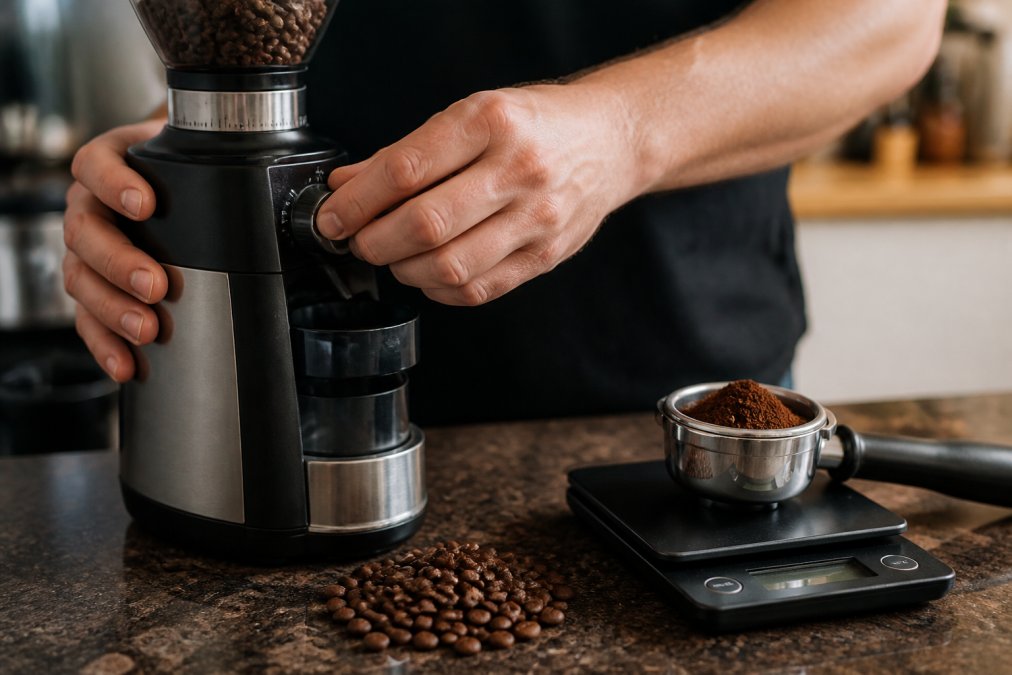
Coarse Grind for Faster Extraction
A coarse grind slows how fast water pulls flavor from the grounds. Stale beans are dry and porous, so a fine grind lets water rush through too fast, pulling bitterness without sweetness. Go coarser than normal for a more even extraction.
Increasing Dosage to Compensate for Lost Solubility
Solubility drops as beans age, so less dissolves into your cup and you need more coffee for the same strength. Add roughly 10 to 15 percent more grounds, if you normally use 18 grams, try 20 or 21. You can also nudge your brewing temperature up slightly, since hotter water pulls more from stubborn grounds.
Best Brewing Methods for Old Coffee: Cold Brew and Beyond
Cold brew is the most forgiving method for old coffee because low temperature and long contact time pull sweetness without dragging out bitter compounds. But each method needs its own adjustments, generic advice like "grind coarser" won't get you a drinkable cup. These adjustments assume beans that are stale but not rancid; if they smell like rubber, paint, or crayons, no recipe will save them.
Cold Brew Concentrate: The Most Forgiving Option
Cold brew is your strongest play for beans two to four months past their roast date. The long steep extracts body and sweetness while leaving harsh notes behind.
- Ratio: Start at 1:5 coffee to water by weight (for example, 100 g coffee to 500 g water). This is stronger than a typical 1:8 cold brew ratio because stale beans give up less solubles.
- Grind: Coarse, about the texture of raw sugar or sea salt. If you go finer, the long steep will pull bitterness you cannot undo.
- Steep time: 14 to 18 hours in the refrigerator. Room-temperature steeping works in 10 to 12 hours but produces a sharper cup.
- Dilution: Dilute 1:1 with water or milk for a standard-strength drink, or 1:2 for a lighter cup.
Pour-Over Adjustments for Stale Beans
Pour-over highlights flaws, making it the hardest method to rescue. Stale beans shed carbon dioxide poorly, so the bed collapses and water channels unevenly.
- Dose: Increase by 10 to 15 percent. If your normal recipe is 20 g coffee to 320 g water, try 22 to 23 g coffee.
- Grind: Go one to two clicks coarser than your fresh-bean setting on a stepped grinder, or about 10 percent coarser on a stepless grinder.
- Water temperature: 200 to 205 F. Slightly hotter than the 195 to 200 F you might use for fresh beans, because stale grounds resist extraction.
- Bloom: Use a longer bloom, 45 to 60 seconds instead of the usual 30. Stale beans release less gas, so the bloom looks flat, but the extra time still helps saturate the bed.
- Pour: Slow, gentle, and in more increments. A fast pour channels through stale grounds and produces a thin, bitter cup.
Espresso Adjustments for Stale Beans
Espresso is the least forgiving method because pressure amplifies every flaw. Stale beans channel badly, so water finds cracks in the puck and pulls uneven shots, some sour, some bitter, rarely balanced.
- Dose: Drop slightly, by about 1 to 2 g. A 20 g basket that normally holds 20 g might work better with 18 to 19 g of stale coffee.
- Grind: Coarser than your fresh-bean setting. Finer grinds increase channeling risk with stale beans.
- Ratio: Aim for a shorter yield, a 1:1.5 to 1:2 ratio instead of the 1:2 to 1:2.5 you might use for fresh beans. Longer shots with stale coffee taste hollow.
- Time: Target 25 to 30 seconds. If the shot runs faster, grind finer in small steps; if it runs slower, grind coarser.
French Press Adjustments for Stale Beans
French press sits between cold brew and pour-over in forgiveness. Full immersion extracts evenly, but the metal mesh lets fine particles through, adding grit and bitterness.
- Dose: Increase by 10 percent. A 30 g dose becomes 33 g.
- Grind: Coarse, similar to cold brew but slightly finer, about the texture of coarse sand.
- Water temperature: 200 F.
- Steep time: 4 minutes, then press slowly. Do not plunge hard; that stirs up fines.
- Skim and settle: After pressing, let the carafe sit for 2 to 3 minutes so sediment settles before you pour. This single step noticeably improves a stale-bean French press cup.
AeroPress Adjustments for Stale Beans
The AeroPress is the most adjustable method, making it a good test bed for stale beans. You can change dose, grind, temperature, and steep time independently.
- Dose: 15 to 17 g for a standard 8-ounce cup.
- Grind: Medium-fine, finer than drip but coarser than espresso.
- Water temperature: 195 to 200 F.
- Steep time: 1:30 to 2:00 for a standard recipe, or up to 3:00 for a fuller cup.
- Technique: Use a gentle stir at the start and a slow press. Stale beans are more prone to channeling, so aggressive agitation hurts.
What to Expect From Each Method
No method restores fresh-bean flavor. Cold brew and French press hide staleness best; AeroPress gives the most control; pour-over and espresso always reveal what the beans have lost. Brew stale beans with cold brew or French press and save pour-over and espresso for fresh coffee.
How to Store Coffee Beans for Maximum Freshness
Storing beans well is the only real cure. You can't revive stale coffee beans for brewing back to their original flavor, but you can slow the decline:
- Keep beans whole. Grinding exposes far more surface area to oxygen.
- Use an airtight container. A one-way valve bag works well. So does a sealed canister kept in a dark cabinet.
- Skip the fridge. Moisture and odors move in and out every time you open the door.
- Freeze for long storage. Portion into small bags, squeeze out air, and freeze. Grind from frozen.
- Buy smaller amounts, more often. This is the simplest fix of all.
Beyond Brewing: Safe Reuses for Old Coffee Beans
When the flavor is truly gone, don't throw the beans out. Old coffee has second lives.
When Reviving Is Not Worth It: Shelf Life and Safety
There is a point where no grind adjustment, dose increase, or cold brew steep will help. Knowing where that line sits saves time, money, and a genuinely unpleasant cup, and "stale" and "spoiled" are not the same thing.
A Sensory Checklist: Stale vs. Rancid vs. Moldy
Run through this list before you brew. If you hit any item in the "discard" column, stop.
Smell
- Stale: faint or no aroma; maybe a papery or cardboard note.
- Rancid: rubbery, paint-like, or like old cooking oil.
- Moldy: musty, damp-basement, or earthy in a bad way. Discard.
Appearance
- Stale: dry, matte surface; oils have faded.
- Rancid: dull, sometimes with a grayish cast.
- Moldy: visible fuzz, white or green patches, or clumping. Discard.
Texture
- Stale: hard and brittle; beans snap cleanly.
- Rancid: similar to stale, sometimes slightly soft.
- Moldy: soft, spongy, or sticky. Discard.
Taste (only if smell and appearance pass)
- Stale: flat, papery, one-dimensional.
- Rancid: sharp, soapy, or like licking a battery.
- Moldy: do not taste. Discard.
Bloom test
- Stale: weak or no bloom when hot water hits the grounds.
- Rancid: same weak bloom, plus an off smell rising with the steam.
- Moldy: do not brew. Discard.
Shelf Life Benchmarks
These are general patterns, not hard rules. Storage conditions matter as much as time.
- Whole beans, sealed bag with one-way valve, dark cabinet: best flavor within 2 to 4 weeks of the roast date; drinkable up to about 8 weeks.
- Whole beans, airtight container, opened daily: best within 1 to 2 weeks; noticeably stale by 4 to 6 weeks.
- Pre-ground coffee: best within a few days; noticeably stale within 1 to 2 weeks. Pre-ground coffee has far more surface area exposed to oxygen.
- Freezer-stored whole beans: can hold quality for 2 to 3 months if portioned and sealed properly. Beyond that, quality declines even frozen.
The One Rule That Overrides Everything
If the beans smell off, they are off. Your nose detects rancidity and mold long before your palate does and is more reliable than any timeline. When in doubt, throw them out or compost them.
When to Buy Fresh Instead
If you regularly find yourself trying to revive stale beans, the real fix is buying smaller amounts more often. Ordering beans roasted to order removes the guesswork, you know the roast date and can plan brewing around it. That is the whole idea behind Gospel and Grind: beans roasted fresh, shipped to your door, and delivered while they still have their best flavor.
Frequently Asked Questions
Can I still use 2-year-old coffee beans?
Two-year-old coffee beans are safe to brew if they have been stored dry and free of mold, but the flavor will be flat and papery. Oxidation and degassing have stripped most volatile compounds, so you will not get the original tasting notes back. Cold brew or a strong ratio can make them drinkable, but for a truly enjoyable cup, fresh roasted-to-order beans from Gospel and Grind are a better choice.
What are the signs of stale coffee beans?
Look for a dull, matte surface instead of an oily sheen, a weak aroma when you open the bag, and beans that feel lightweight or brittle. Brewed coffee from stale beans tastes flat, papery, or rancid with a hollow finish. If the roast date is more than 6 to 8 weeks past, those signs are almost guaranteed. Checking the roast date first is the fastest way to know.
Does freezing coffee beans actually keep them fresh?
Freezing can slow staling if you use an airtight container and avoid repeated thawing. Moisture and temperature swings are the enemies. Portion beans into single-use bags, squeeze out air, and only take out what you will grind immediately. Even then, frozen beans lose aroma over months. For maximum freshness, buying roasted-to-order beans and using them within a few weeks is simpler and more reliable.
Is it safe to brew old coffee beans that have been sitting out?
Yes, if the beans are dry and show no mold, off-smells, or clumping. Coffee beans do not support dangerous bacterial growth when kept dry. However, lipid degradation can make them taste rancid. If you see white fuzz, smell dampness, or notice a sour-milk odor, throw them out. For beans that are merely stale but safe, cold brew or a coarse grind with a higher dosage can salvage a decent cup.
Stale beans are a fact of home brewing. The real challenge is keeping fresh coffee in the house so you rarely face them.
Gospel and Grind roasts every order fresh and ships it straight to your door, so your beans arrive near their peak instead of weeks past it. Every bag is carefully sourced, and every purchase helps fight homelessness one cup at a time. Find your perfect roast and taste what fresh actually means.