

Best Airtight Containers for Coffee Bean Storage
Table of Contents
- Why Coffee Storage Matters
- How to Store Coffee Beans for Freshness
- Key Factors Affecting Coffee Freshness
- Vacuum Seal vs. Airtight Coffee Canisters
- Container Materials: Stainless Steel, Glass, and Ceramic
- Essential Features in a Coffee Storage Container
- Long-Term Storage vs. Daily Use Containers
- Frequently Asked Questions
Last Updated: August 31, 2026
Why Coffee Storage Matters
The moment coffee beans are roasted, they begin to oxidize. Exposure to air, light, moisture, and temperature fluctuations degrades their flavor compounds and aroma within days. A properly sealed container doesn't just preserve your coffee, it's the difference between a vibrant, complex cup and stale, flat brew.
Most coffee enthusiasts don't realize that freshness deteriorates faster after roasting than they expect. Within two weeks in a standard bag, even premium beans lose their nuanced flavor profile (peer-reviewed research). This is why storage becomes critical, especially if you're investing in high-quality, single-origin beans from specialty roasters like Gospel and Grind that are roasted to order specifically for maximum freshness.
The best airtight containers for coffee bean storage do three essential things: they block oxygen and light, they manage moisture and carbon dioxide, and they maintain a stable environment. Understanding these mechanisms helps you choose containers that actually preserve your coffee rather than simply looking the part.
How to Store Coffee Beans for Freshness
Proper storage starts with understanding what degrades coffee. Oxygen triggers oxidation, which breaks down the oils and compounds that create flavor and aroma. Light accelerates this process, particularly UV rays. Moisture introduces mold risk and dilutes flavor compounds. Temperature swings cause condensation inside containers, introducing unwanted moisture.
To store coffee beans for freshness, follow these steps:
-
Use an opaque, airtight container. Transparent containers expose beans to light even in dim rooms. Glass containers work only if they're tinted or kept in a dark cabinet.
-
Fill the container as full as possible. Less air space means less oxygen in contact with your beans. If using a large container, transfer beans to a smaller one once you've used half.
-
Keep the container in a cool, dark place. A pantry or cabinet away from direct sunlight is ideal. Avoid the refrigerator, temperature swings cause condensation that introduces moisture.
-
Avoid the freezer unless storing long-term. Freezing works for 3+ months of storage, but repeated thawing creates condensation that damages beans. Freeze in airtight portions you'll use all at once.
-
Store whole beans, not grounds. Ground coffee has exponentially more surface area exposed to oxygen. Grind immediately before brewing.
-
Keep beans away from heat sources. Don't store near the stove, oven, or direct sunlight. Temperature stability matters more than absolute coolness.
Following these steps preserves the freshness that roasters like Gospel and Grind work hard to deliver when they roast beans to order. Your storage method directly impacts whether you experience the full complexity of what you've purchased.
Key Factors Affecting Coffee Freshness
Oxidation and Moisture Control
Oxidation is the primary enemy of coffee freshness. When oxygen contacts the oils in roasted beans, it breaks down the volatile compounds responsible for flavor and aroma. This process accelerates as temperature increases, which is why cool storage extends freshness significantly.
Moisture introduces a secondary problem. It can promote mold growth and dilutes the concentrated flavors in beans. However, some moisture is necessary, beans that are too dry become brittle and lose flavor complexity. The ideal humidity level is between 50-65%, which most homes naturally maintain (usda.gov). An airtight container prevents both excessive moisture absorption and moisture loss.
Carbon dioxide plays a role too. Freshly roasted beans release CO2 through a process called degassing. Containers with one-way valves allow this gas to escape without letting oxygen in, which is why many quality coffee canisters feature this technology. Without degassing capability, pressure builds and can force the seal open slightly, compromising freshness.
Light Exposure and Temperature Stability
Light exposure, particularly UV rays, accelerates oxidation and degrades chlorogenic acid, a compound that contributes to coffee's acidity and brightness. Even ambient indoor light can damage beans over time if they're stored in transparent containers. Opaque materials block this damage entirely.
Temperature stability matters more than absolute temperature. Beans stored at a consistent 60°F will remain fresher longer than beans in a location that swings between 50°F and 75°F. Temperature fluctuations cause the air inside containers to expand and contract, forcing moisture in and out. This cycling introduces condensation and accelerates degradation.
Kitchens near ovens or stovetops experience temperature swings that damage stored coffee. A pantry or cabinet away from appliances provides the stable environment beans need. If your kitchen lacks cool storage, a bedroom closet or hallway cabinet works well, anywhere dark and temperature-stable.
Vacuum Seal vs. Airtight Coffee Canisters
The choice between vacuum sealing and traditional airtight canisters depends on your storage timeline and usage pattern. Understanding the trade-offs helps you select the right approach for how to store coffee beans for freshness based on your specific needs.
Vacuum seal storage removes air entirely, creating an oxygen-free environment. This method excels for long-term storage, beans remain viable for 3-6 months in vacuum-sealed bags. However, vacuum sealing requires equipment, and each time you open a sealed bag, you must reseal it, which is inconvenient for daily use. Vacuum sealing also removes the ability for CO2 to escape, which can affect flavor if beans haven't fully degassed.
Airtight canisters maintain a seal while allowing some gas exchange, particularly if they feature one-way valves. They're more convenient for daily use because you open and close them repeatedly without compromising the seal. Most quality canisters keep beans fresh for 2-4 weeks, which aligns well with typical consumption rates for home brewers. They also look better on countertops, which matters if aesthetics influence your storage choice.
For beans from roasters like Gospel and Grind that arrive roasted to order, an airtight canister with a silicone gasket and one-way valve provides the ideal balance. You get the convenience of daily access, the freshness preservation of an airtight seal, and the degassing benefit of a one-way valve. Vacuum sealing works better as a backup method for beans you won't use immediately.
| Storage Method | Best For | Freshness Window | Convenience | Equipment |
|---|---|---|---|---|
| Vacuum seal | Long-term storage (3+ months) | 3-6 months | Low (reseal each use) | Vacuum sealer required |
| Airtight canister | Daily use (2-4 weeks) | 2-4 weeks | High (open/close freely) | Canister with gasket |
| One-way valve canister | Active consumption | 3-4 weeks | High (degassing + seal) | Canister with valve |
Container Materials: Stainless Steel, Glass, and Ceramic
Each material offers distinct advantages and trade-offs for coffee storage. The best choice depends on your priorities, longevity, aesthetics, light blocking, or temperature regulation.
Stainless steel excels at blocking light completely and maintaining temperature stability. Steel doesn't conduct heat like glass, so it keeps beans insulated from kitchen temperature fluctuations. Stainless steel containers are durable, won't break if dropped, and often feature superior seal mechanisms. The downside is you can't see your bean inventory without opening the lid, and some stainless steel containers can develop odor retention over time. Food-grade stainless steel resists this better than lower grades.
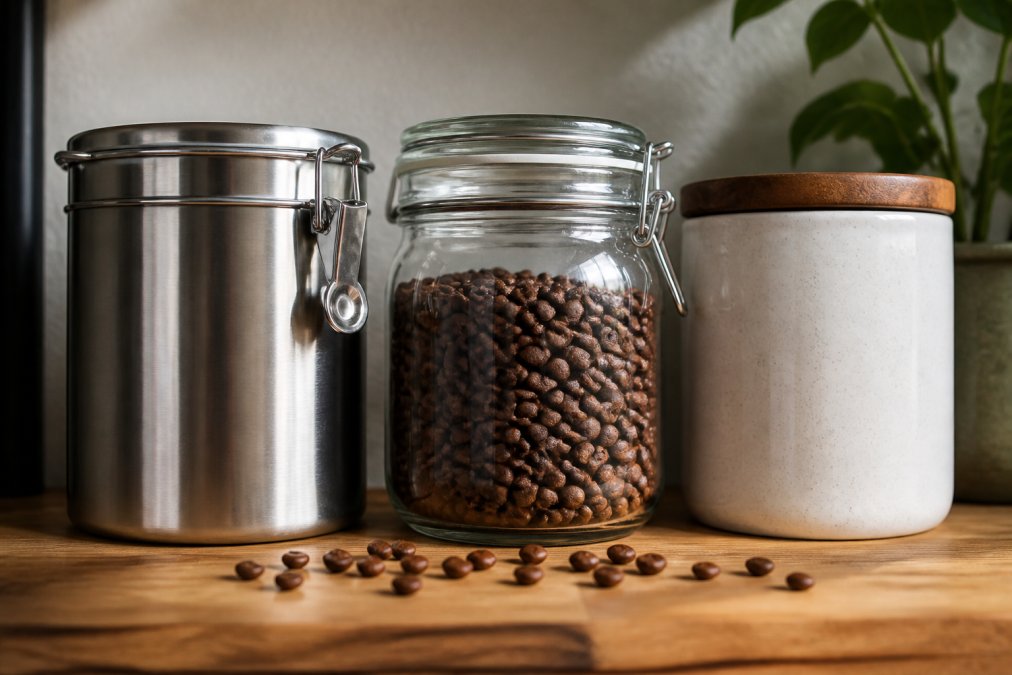
Borosilicate glass allows you to see bean levels and monitor freshness visually. Glass is inert and won't absorb odors or flavors. However, transparent glass exposes beans to light unless the container is stored in a dark cabinet. Borosilicate glass (not standard glass) resists thermal shock, so it won't crack from temperature changes. The main drawback is that glass conducts temperature, so it doesn't insulate beans from kitchen heat. Glass containers also break if dropped.
Ceramic combines aesthetics with decent light blocking. Many ceramic containers feature decorative glazes that appeal to coffee enthusiasts who display their storage on countertops. Ceramic is heavier and more fragile than stainless steel, and it can absorb odors over time if not properly sealed. The insulating properties fall between glass and stainless steel. Ceramic works well for daily-use containers that sit on visible shelves.
For serious freshness preservation, stainless steel with a silicone gasket and one-way valve offers the best protection. For visual monitoring and aesthetic appeal, borosilicate glass works if stored in a dark cabinet. Ceramic suits those prioritizing countertop appearance over maximum freshness.
Essential Features in a Coffee Storage Container
One-Way Valve Technology
A one-way valve is a small mechanism that allows carbon dioxide to escape from freshly roasted beans without allowing oxygen to enter. During the first 1-2 weeks after roasting, beans release significant CO2 through degassing. Without an escape route, pressure builds inside the container, potentially forcing the seal open or stressing the lid mechanism.
One-way valves solve this by using a simple pressure-relief design, usually a small plastic or rubber flap that opens when internal pressure exceeds external pressure, then seals again. This allows degassing to occur naturally while maintaining an oxygen barrier. Beans stored in containers with one-way valves stay fresher longer than those in sealed containers without this feature, because the seal remains intact throughout degassing.
The best airtight containers for coffee bean storage almost always include one-way valves. This single feature dramatically improves freshness preservation compared to simple sealed containers.
Seal Quality and Air Displacement
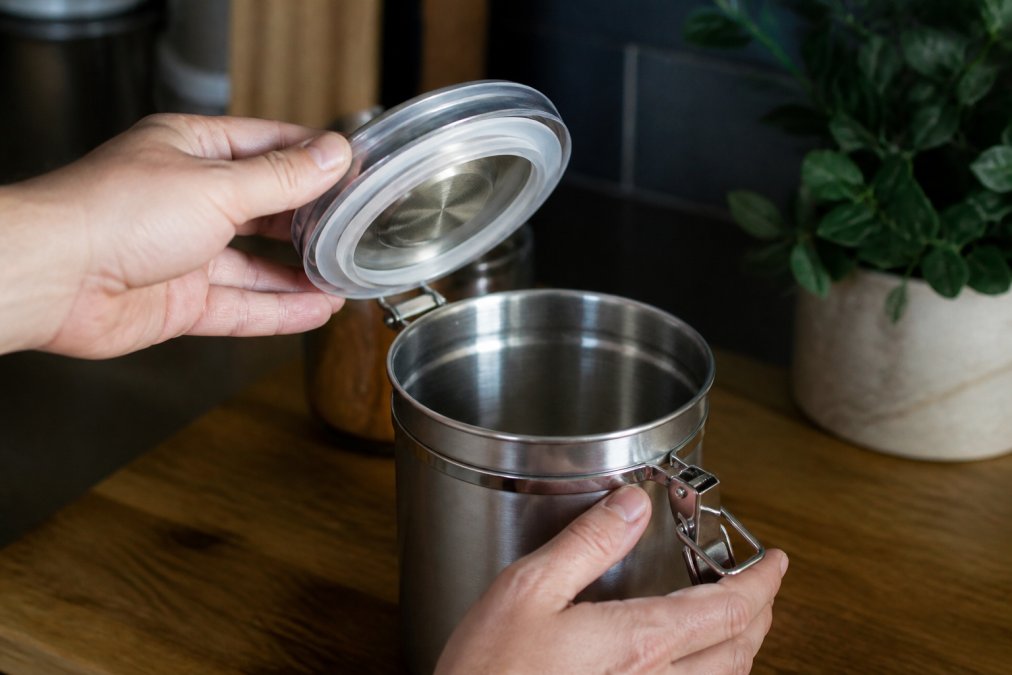
The seal mechanism determines how effectively a container blocks oxygen. A quality seal uses a silicone gasket, a rubber ring that compresses between the lid and container body, creating an airtight barrier. The gasket must be thick enough to maintain compression over time and resistant to degradation from coffee oils.
Clamping mechanisms or locking lids ensure consistent pressure on the gasket. Simple snap-on lids may not create uniform compression, leaving microscopic gaps where oxygen seeps in. Screw-top or lever-lock designs apply more consistent pressure, resulting in a tighter seal.
Air displacement refers to how effectively a container minimizes oxygen exposure when you remove and replace the lid. Containers designed with tight tolerances and smooth-operating lids reduce the amount of fresh air introduced each time you open them. Some premium containers feature a slight vacuum when sealed, which you can feel as resistance when opening the lid, this indicates an effective seal.
Test a container's seal quality before purchasing if possible. The lid should require firm pressure to open, and you should hear a slight hiss or feel resistance as air pressure equalizes. A lid that opens effortlessly suggests a poor seal.
Long-Term Storage vs. Daily Use Containers
The best storage approach depends on how quickly you consume your beans. Coffee enthusiasts who brew daily have different needs than those who buy in bulk and store for weeks.
Daily use containers prioritize convenience and moderate freshness preservation. These are typically 32-64 ounce canisters that hold 1-2 weeks' worth of beans. They sit on countertops or in accessible cabinets, making frequent opening practical. Features like easy-grip handles, clear measurement markings, and attractive designs matter for daily-use containers. Freshness preservation is important but secondary to accessibility. A quality daily-use canister with a silicone gasket and one-way valve keeps beans optimal for 2-4 weeks.
Long-term storage containers prioritize maximum freshness preservation over convenience. These are typically larger, 1-2 pound capacity canisters designed to be opened less frequently. They're stored in cool, dark locations and may include vacuum-sealing capability or especially strong seal mechanisms. When using a long-term container, transfer beans to a smaller daily-use canister and minimize opening the main storage container.
For Gospel and Grind customers who receive roasted-to-order beans, a hybrid approach works well: transfer beans to a smaller daily-use canister upon arrival, and store the remainder in a larger long-term container in a cool, dark location. This maximizes freshness of your active supply while preserving backup beans for later weeks.
The distinction matters because opening a container introduces oxygen. Daily-use containers are designed to withstand frequent opening while maintaining reasonable freshness. Long-term containers are designed to minimize opening frequency, prioritizing freshness over convenience.
The right storage container transforms how long your premium coffee stays fresh. Whether you prioritize the scientific precision of vacuum-sealed long-term storage or the daily convenience of an elegant countertop canister, the principles remain the same: block oxygen and light, manage moisture and carbon dioxide, and maintain temperature stability.
Gospel and Grind roasts beans to order specifically to deliver maximum freshness to your door. Completing that journey with proper storage ensures you experience the full complexity and flavor that fresh, carefully sourced beans provide. Invest in a quality airtight container with a reliable seal and one-way valve, it's the most cost-effective way to extend the life of your premium coffee and truly taste the difference that freshness makes.
Find Your Perfect Roast with Gospel and Grind, and store it right to experience the full potential of every single bean.
Frequently Asked Questions
How long do coffee beans stay fresh in an airtight container?
Properly stored whole beans in an airtight container maintain peak freshness for 2 to 4 weeks after roasting. Ground coffee degrades faster, typically staying fresh for 1 to 2 weeks. The exact timeframe depends on storage conditions, roast profile, and how often you open the container. Roast-to-order coffee like Gospel and Grind delivers maximum freshness because beans are roasted shortly before shipping, giving you the longest possible window of optimal flavor.
What type of container is best to store coffee beans in?
The best containers combine an airtight seal, opaque material for UV protection, and food-grade construction. Stainless steel offers durability and complete light blocking. Borosilicate glass with an opaque lid provides visibility while protecting from light exposure. Ceramic canisters work well for countertop storage if paired with an effective gasket seal. All should feature a one-way valve to release carbon dioxide without letting oxygen in, preserving aroma and preventing rancidity.
Do vacuum-sealed containers actually improve coffee flavor compared to regular airtight canisters?
Vacuum sealing removes more air than standard airtight containers, slowing oxidation and extending shelf life by several weeks. However, the practical difference depends on your usage. For daily coffee drinkers who finish beans within 2 to 3 weeks, a quality airtight canister with a one-way valve performs nearly as well at a lower cost. Vacuum sealing shines for long-term storage or if you buy in bulk. The key is eliminating oxygen and moisture exposure, which both methods achieve when properly sealed.
Should I store coffee beans in the original bag or transfer them to a canister?
Transfer beans to a dedicated airtight container if the original bag lacks an effective seal or one-way valve. Many specialty roasters, including Gospel and Grind, ship in bags designed for freshness with degassing valves, but once opened, these bags expose beans to air and humidity with each use. A sealed canister with a silicone gasket or clamping mechanism provides superior protection. If you finish beans quickly (within a week), the original bag works fine if resealed carefully. For longer storage, a dedicated container is worth the investment.
This article was written using GrandRanker