

Why Single Origin Coffee Tastes Better
Table of Contents
- What Makes Single Origin Coffee Stand Out
- Single Origin vs Blend Coffee: Understanding the Difference
- What Is Coffee Terroir and Why It Matters
- How to Taste Coffee Notes and Identify Flavor Profiles
- Freshness and Roast Profile: Why Timing Matters
- Traceability and Transparency in Single Origin Selection
- Budget-Friendly vs Premium Single Origin Options
- Conclusion
Last Updated: August 26, 2026
What Makes Single Origin Coffee Stand Out
Single origin coffee tastes better because it tells a complete story from a specific place. Unlike blends that combine beans from multiple regions, single origin coffee comes from one farm, one region, or one country, allowing you to experience the unique characteristics that terroir and processing create.
Gospel and Grind sources single origin beans directly from smallholder farmers who understand their land intimately. When you brew a cup of single origin coffee, you're tasting the elevation where those plants grew, the soil they drew nutrients from, and the hands that harvested and processed them. This transparency and specificity is what transforms a morning cup into something memorable.
The difference becomes obvious once you compare side by side. A single origin Ethiopian natural process coffee tastes nothing like a Colombian washed bean. One delivers fruity, floral notes with bright acidity. The other brings chocolate and caramel warmth with a fuller body. Blends average these characteristics to hit a middle ground. Single origin celebrates them.

Single Origin vs Blend Coffee: Understanding the Difference
Single origin and blend coffees serve different purposes, and understanding when each works best matters for your brewing routine.
Single origin coffee comes from one geographic location. This might be a specific farm, a microregion within a country, or an entire country depending on how the roaster sources. The advantage is clarity: you taste what that place produces. The disadvantage is consistency, harvest to harvest, crop to crop, the flavor profile shifts slightly because growing conditions change.
Blend coffee combines beans from multiple origins. Roasters blend specifically to achieve a target flavor profile that remains consistent year-round. If one origin's acidity is too bright one season, the roaster adjusts the blend ratio to compensate. Blends also balance flavor: a roaster might use a high-altitude African bean for acidity and a lower-altitude South American bean for body, creating complexity that neither could achieve alone.
The real distinction comes down to what you value. Single origin rewards curiosity, each bag teaches you something new about a place and its coffee culture. Blends reward consistency, you know exactly what you're getting every time you order. Gospel and Grind's approach honors both: we offer single origin selections like our Ethiopia Natural and Colombia for those exploring flavor, and blends for those who want a reliable daily cup.

| Characteristic | Single Origin | Blend |
|---|---|---|
| Flavor Profile | Distinct, place-specific | Balanced, consistent |
| Tasting Notes | Pronounced, unique | Harmonious, predictable |
| Acidity Level | Varies by origin | Engineered for balance |
| Body | Varies by elevation & process | Deliberately combined |
| Best For | Exploration, specialty brewing | Daily drinking, consistency |
What Is Coffee Terroir and Why It Matters
Terroir is the complete environment where coffee grows: elevation, soil composition, climate, rainfall, and seasonal patterns. The term comes from wine, but it applies equally to coffee. Terroir shapes flavor as much as the plant variety itself.
Two coffee plants of the same cultivar grown 500 meters apart in elevation will produce beans with noticeably different acidity and sweetness. The higher-altitude plant grows slower in cooler temperatures, developing more complex sugars and brighter acidity. The lower-altitude plant matures faster, producing fuller body and lower acidity. Neither is better, they're different because terroir made them different.
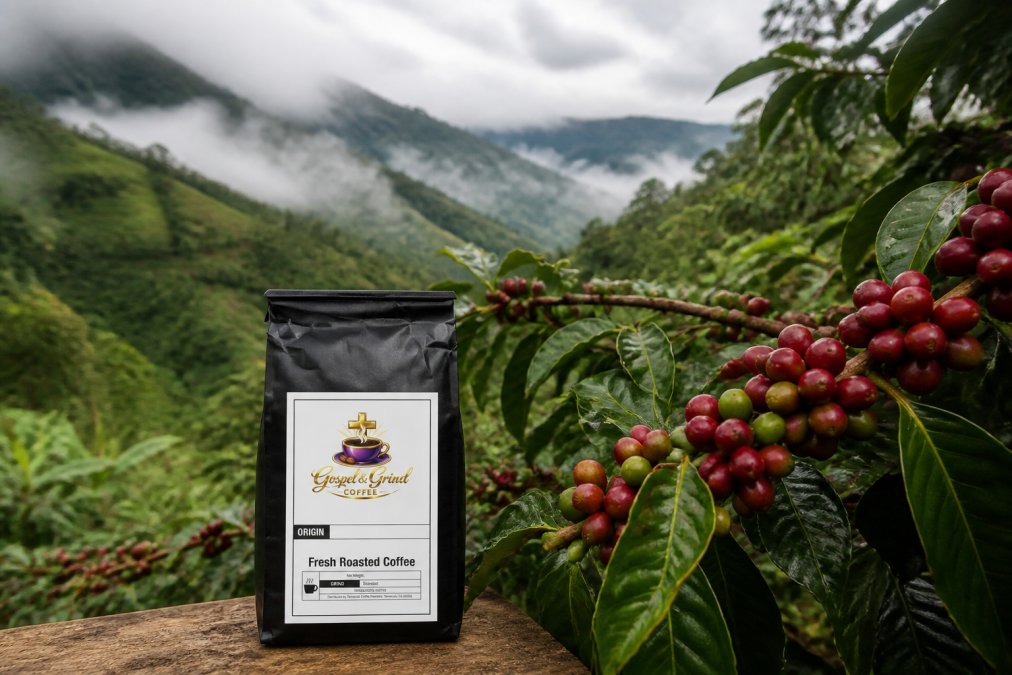
This is why single origin coffee tastes better to those who understand it. You're not just tasting coffee, you're tasting a place. Gospel and Grind's Kenya beans grow at 1,700-1,890 meters in Othaya, Nyeri County, where volcanic soil and afternoon cloud cover create conditions for bright, floral notes (peer-reviewed research). Our Colombia beans grow at 1,300-1,500 meters in volcanic loam soil around Medellin, producing warmer chocolate and berry characteristics.
Elevation, Soil, and Climate Impact
Elevation is the most visible terroir factor. High-altitude coffee (above 1,500 meters) grows in thinner air and cooler temperatures (usda.gov). The plant slows down, taking longer to mature. This extended growing season allows sugars to develop complexity. The result: higher acidity, more pronounced flavor notes, and greater clarity.
Low-altitude coffee (below 1,200 meters) grows faster. Warmer temperatures accelerate maturation. Beans develop less acidity but more body, that heavy, syrupy mouthfeel that feels satisfying on your tongue. Lower-altitude coffee tends toward chocolate, nuts, and earth notes rather than fruit and floral.
Soil composition matters as much as elevation. Volcanic soil, common in East Africa and Central America, adds mineral complexity and brightness. Laterite soil, found in parts of Indonesia, produces earthier, heavier-bodied coffees. The minerals the plant absorbs become flavor compounds in the final cup.
Climate patterns, especially rainfall timing, determine bean density and sugar development. A region with distinct wet and dry seasons produces different coffee than one with consistent rainfall year-round. Gospel and Grind's Sumatra beans grow in a tropical climate with high rainfall, creating the syrupy body and earthy notes that region is known for.

Processing Methods Shape the Final Cup
Processing is where terroir meets human decision-making. The same coffee cherry processed two different ways produces dramatically different flavors.
Washed process (also called wet process) removes the fruit before drying. The cherry is pulped, fermented briefly to remove mucilage, then washed and dried. This method emphasizes the bean's origin characteristics. Washed coffees tend toward clarity, brightness, and acidity. Gospel and Grind's Colombia uses washed processing, which highlights its berry and orange notes.
Natural process (also called dry process) dries the entire cherry intact, then removes the dried fruit. This method keeps the bean in contact with the fruit longer, allowing sugars to soak into the bean. Natural process coffees taste fruitier, sweeter, and fuller-bodied. Gospel and Grind's Ethiopia Natural uses this method, creating milk chocolate, fruity, and caramel flavors that wouldn't emerge from washing.
Honey process (also called pulped natural) splits the difference. The fruit is removed, but some mucilage stays on the bean during drying. This creates medium body with fruit-forward notes, less acidity than washed, more clarity than natural. Our Kenya uses fully washed processing to bring out its bright acidity and floral character.
The processing method you choose determines what you taste. A single origin coffee tastes better when the processing method amplifies rather than masks its terroir. Gospel and Grind matches processing to each origin's strengths.
How to Taste Coffee Notes and Identify Flavor Profiles
Learning to taste coffee notes is a skill, not a talent. It takes practice, but the rewards are immediate: suddenly you understand why single origin coffee tastes better, and you can articulate exactly what you're experiencing.
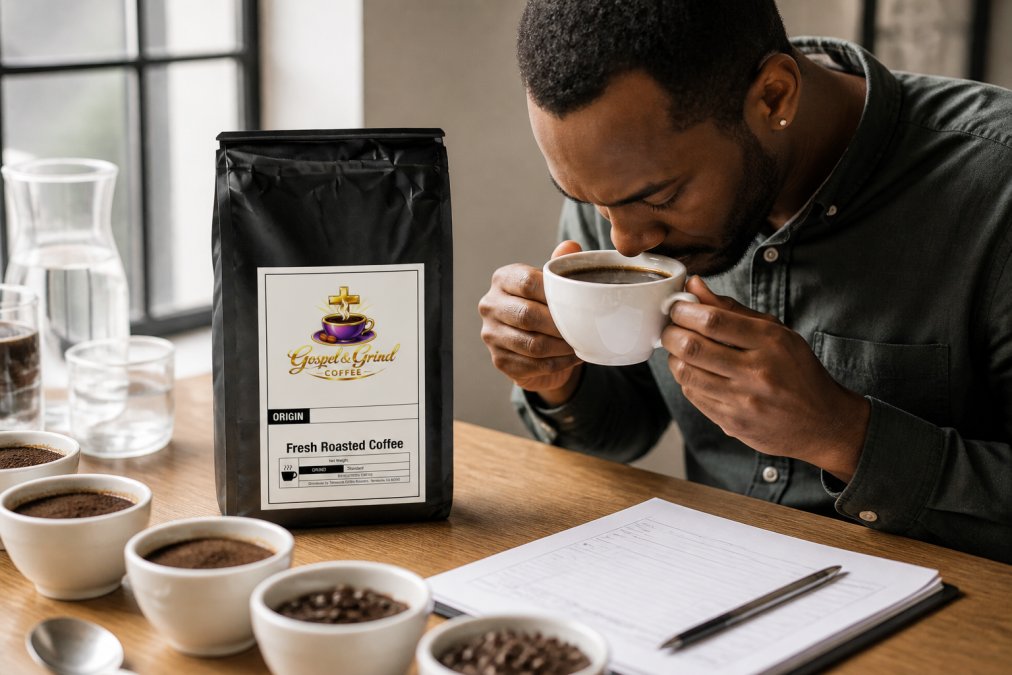
Start with aroma. Before you sip, smell the coffee. What comes first? Fruit? Chocolate? Earth? Your nose detects volatile compounds that your mouth will taste. Aroma gives you a preview.
Next, taste with intention. Take a small sip and hold it in your mouth for a moment. Don't swallow immediately. Notice the body, does it feel light and tea-like, or heavy and syrupy? Notice the acidity, does it feel bright and lively, or smooth and mellow? Acidity isn't sourness; it's the liveliness that makes coffee feel fresh.
Then swallow and notice the aftertaste. What lingers? Some coffees leave chocolate notes. Others leave fruit or floral impressions. The aftertaste tells you about the bean's complexity.
Compare notes with the roaster's tasting profile. Gospel and Grind includes tasting notes on every single origin: our Ethiopia Natural lists milk chocolate, fruity, and caramel. Our Kenya highlights bright acidity, orange, lemon, and floral notes. Use these as anchors. You might not taste "floral" the first time, but knowing it's there helps you search for it.
Freshness and Roast Profile: Why Timing Matters
The moment coffee is roasted, it begins losing flavor. Roasting unlocks aromatic compounds that make coffee taste good, but those compounds are volatile, they escape into the air over time. This is why single origin coffee tastes better when it's fresh.
Most grocery store coffee is roasted weeks or months before you buy it. By the time you brew it, the aromatic compounds have faded. You're left with a flat, one-dimensional cup. Gospel and Grind roasts to order, meaning your beans are roasted within days of your order and shipped immediately. This freshness is non-negotiable for single origin coffee, where you're paying for clarity and complexity that stale beans can't deliver.
Roast profile also shapes flavor. A light roast preserves origin characteristics, you taste more of the terroir. A medium roast balances origin flavor with roast flavor. A dark roast emphasizes roast flavor, sometimes overpowering the origin. Gospel and Grind's Ethiopia Natural is a medium-light roast to showcase its fruity, floral character. Our Colombia is a medium roast, which brings out chocolate and berry while adding roast sweetness.
The timing of your brew matters too. Freshly roasted coffee needs 5-7 days to degas before reaching peak flavor. Roasting releases CO2, which interferes with extraction (peer-reviewed research). Gospel and Grind's roast-to-order model means your coffee arrives at the right moment, roasted recently enough for freshness, rested enough for optimal extraction.
Traceability and Transparency in Single Origin Selection
When you buy single origin coffee, you're trusting the roaster to tell you the truth about where it comes from. Traceability matters because it's the only way to verify quality and support the farmers who grew your coffee.
Gospel and Grind lists the specific region, altitude, and farmer cooperative for every single origin. Our Kenya comes from Othaya, Nyeri County, grown by specific smallholder farmers at 1,700-1,890 meters. Our Colombia comes from Medellin, Antioquia, sourced from smallholder farmers in that region. Our Sumatra comes from Aceh, Takengon, through the Koperasi Baitul Qiradh Baburrayyan cooperative.
This transparency serves two purposes. First, it lets you understand the coffee's terroir, you can research the region, learn about its climate and altitude, and understand why the coffee tastes the way it does. Second, it ensures farmers are paid fairly. When you know exactly where your coffee comes from, you can verify that the supply chain is ethical.
The specialty coffee industry has moved toward direct trade relationships, where roasters work directly with farmer cooperatives rather than through middlemen. This cuts out layers of markup and ensures more money reaches the farmers. Gospel and Grind's approach reflects this commitment: we work with smallholder farmers and cooperatives, not commodity brokers.
Budget-Friendly vs Premium Single Origin Options
Single origin coffee doesn't have to be expensive, but price reflects quality and sourcing practices. Understanding the difference helps you choose what makes sense for your situation.
Budget single origins (typically $15-20 per bag) offer genuine terroir and flavor. Gospel and Grind's Kenya and Sumatra are priced at $19.99, delivering bright acidity and complex body without premium pricing. These coffees come from quality farms and use proper processing. The difference between budget and premium isn't always dramatic, sometimes it's a matter of microlot versus larger harvest, or newer relationships versus established partnerships.
Premium single origins (typically $24-35+ per bag) often represent microlots, small, specific harvests from a single farm or even a single block within a farm. Gospel and Grind's Ethiopia Natural and Colombia are both $23.99, representing carefully selected lots that showcase each origin's best characteristics. Premium pricing reflects direct relationships, smaller quantities, and often higher altitude or exceptional processing.
The best choice depends on your brewing method and frequency. If you brew coffee daily and go through a bag weekly, budget single origins make sense, you'll experience variety without breaking your budget. If you brew occasionally and want to explore deeply, premium single origins reward the attention you'll give them.
Conclusion
Single origin coffee tastes better because it captures a specific place, a specific harvest, and a specific moment in time. When you choose single origin over blends, you're choosing clarity over compromise, story over consistency, and terroir over average.
Gospel and Grind's roast-to-order approach ensures your single origin coffee arrives at peak freshness, with all those aromatic compounds intact. Whether you start with our Kenya's bright acidity, our Colombia's chocolate warmth, or our Ethiopia Natural's fruity complexity, you're tasting coffee that was roasted specifically for you, sourced directly from farmers we know, and shipped to your door within days. Find Your Perfect Roast and experience the difference that freshness and transparency make.
Frequently Asked Questions
What exactly defines single origin coffee?
Single origin coffee comes from one specific geographic location, farm, or micro-lot rather than a blend of beans from multiple regions. This traceability means you're tasting the unique characteristics of that specific place. The terroir, elevation, soil composition, climate, and processing method, creates distinct flavor profiles you won't find in blended coffees. Gospel and Grind's single origins, like our Ethiopia Natural from the Sidama zone and Colombia from Medellin, showcase these regional differences clearly in every cup.
Is single origin coffee always higher quality than blends?
Not necessarily. Quality depends on how the beans are grown, processed, and roasted, not whether they're single origin or blended. However, single origin coffees offer transparency and traceability that make quality easier to verify. You know exactly where your beans come from and can taste the distinct characteristics of that region. Blends can be excellent too, but single origins give you a direct connection to the origin's unique flavor story.
How does terroir influence the taste of coffee beans?
Terroir encompasses elevation, soil type, climate, and rainfall, all of which directly shape flavor development. Higher elevations produce brighter acidity and more complexity. Volcanic soil, like what you find in Colombia, contributes different mineral notes than other soil types. Temperature fluctuations and moisture affect how sugars develop in the cherry. Processing method amplifies these terroir characteristics. Our Kenya single origin, grown at 1,700-1,890 meters with fully washed processing, expresses bright acidity and floral notes that reflect its specific terroir.
What's the best brewing method for single origin coffee?
The best method depends on the coffee's profile and your preference. Pour-over and cupping highlight delicate notes and acidity in lighter roasts, making them ideal for single origins like our Kenya. French press brings out body and sweetness in medium roasts like our Colombia. Espresso works well for full-bodied coffees like our Sumatra, which features syrupy body and dark chocolate notes. Since Gospel and Grind roasts to order, your beans arrive at peak freshness, any brewing method will showcase the flavor profile better than stale grocery store coffee.
This article was written using GrandRanker