

Does Freezing Coffee Beans Keep Them Fresh?
Table of Contents
- The Science of Coffee Freshness and Freezing
- Pros and Cons of Freezing Coffee Beans
- How to Store Coffee Beans in the Freezer
- Freezing Coffee Beans Vacuum Sealed: The Best Method
- How Long Do Coffee Beans Last When Frozen?
- Thawing Coffee Beans: Best Practices and Condensation Management
- Does Freezing Affect Flavor Profile by Roast Level?
- Conclusion
Last Updated: August 29, 2026
The Science of Coffee Freshness and Freezing
Coffee freshness depends on volatile compounds and aromatic oils that degrade the moment beans are roasted. Oxidation is the primary culprit, when coffee is exposed to oxygen, moisture, and temperature fluctuations, the cell structure breaks down and aromatic compounds dissipate. This process accelerates at room temperature, which is why whole bean coffee loses peak freshness within 2-4 weeks of roasting (ncausa.org).
Freezing slows oxidation dramatically by reducing molecular activity. At sub-zero temperatures, the chemical reactions causing flavor degradation happen at a fraction of their normal rate, extending useful life to several months. However, freezing isn't perfect. Temperature fluctuation during thawing causes condensation, which introduces moisture and accelerates degradation once beans return to room temperature. Freezing merely slows oxidation; it doesn't stop it entirely.
At Gospel and Grind, we roast coffee to order because freshness matters. Our single-origin beans like Brazil Santos and Colombia are designed to be enjoyed at peak flavor within weeks of roasting. Understanding the freezing process becomes crucial if you're storing beans beyond that window.

Pros and Cons of Freezing Coffee Beans
Advantages of freezing coffee beans:
Freezing extends shelf life significantly, beans in airtight containers can maintain acceptable flavor for 3-4 months versus 2-4 weeks at room temperature (ncausa.org). It preserves aromatic compounds better than any room-temperature method, particularly for lighter roasts. Freezing is also passive; simply seal your beans and place them in the freezer.
Disadvantages of freezing coffee beans:
Condensation is the biggest risk. Every thaw cycle introduces moisture that penetrates beans and accelerates oxidation. Freezing can affect grind consistency, as cold beans become slightly more brittle, producing inconsistent particle sizes. Frozen beans look identical regardless of age, making it easy to forget storage duration. Light roasts benefit more from freezing than dark roasts, which have already lost many aromatic compounds during roasting.
How to Store Coffee Beans in the Freezer
Step 1: Start with fresh beans
Freezing preserves current state rather than improving stale coffee. Buy beans as close to the roast date as possible. Gospel and Grind's roast-to-order approach ensures your beans arrive within days of roasting.
Step 2: Choose airtight containers
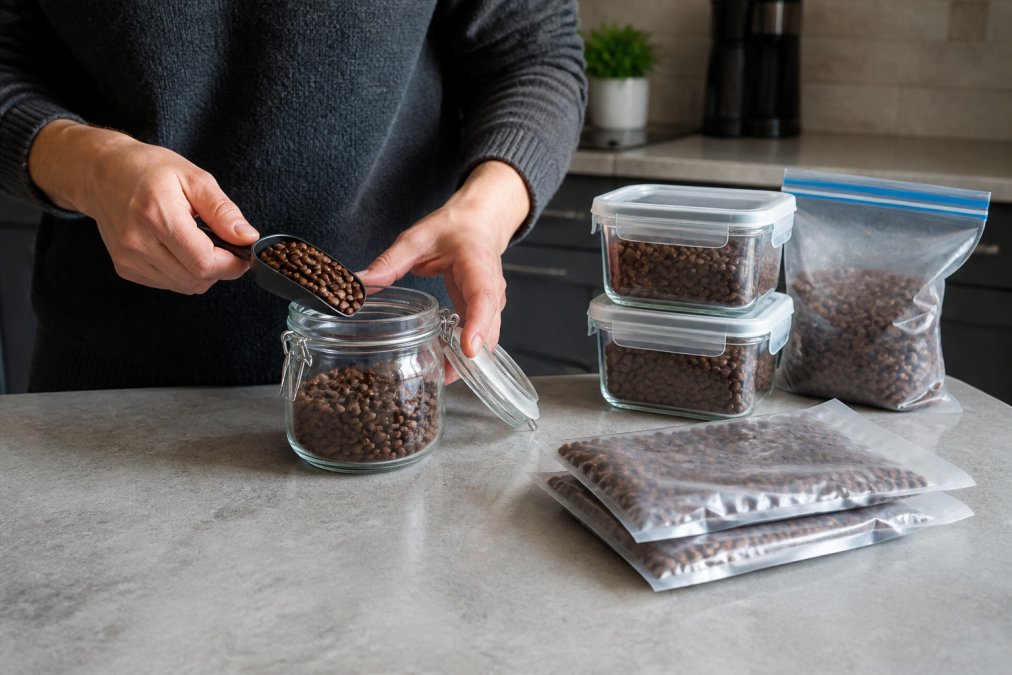
Airtight containers are non-negotiable. Use glass containers with rubber seals or high-quality freezer-safe plastic. Avoid standard plastic bags, which allow air exchange over time.
Step 3: Portion into smaller quantities
Divide beans into 2-week supplies before freezing. This minimizes how often you open containers and expose beans to temperature fluctuation.
Step 4: Remove excess air
Press out as much air as possible before sealing. Oxygen accelerates oxidation even in the freezer.
Step 5: Label clearly
Write the roast date and freezing date on each container to prevent confusion and ensure you use older stock first.
Step 6: Place in the coldest part of the freezer
Store containers toward the back, away from the door. The door is the warmest part due to frequent opening and experiences more temperature fluctuation.
Freezing Coffee Beans Vacuum Sealed: The Best Method
Vacuum sealing is the gold standard for freezer storage. It removes virtually all oxygen, the primary driver of oxidation. Vacuum-sealed beans can maintain quality for 4-6 months, longer than any other method.
How to vacuum seal coffee beans:
Use a home vacuum sealer. Portion beans into freezer bags designed for vacuum sealing, leaving about an inch of space at the top. Insert the bag's open end into the sealer and activate. Modern sealers apply gentle, consistent pressure, beans remain whole and intact.
Vacuum sealing reduces air contact but doesn't eliminate condensation during thawing. When sealed beans warm up, moisture condenses on the surface but stays sealed, preventing deep penetration. You still need to thaw carefully.
How Long Do Coffee Beans Last When Frozen?
Beans frozen in airtight containers typically remain at acceptable quality for 3-4 months. Vacuum-sealed beans last 4-6 months. After six months, frozen beans taste flat and one-dimensional.
Factors that shorten shelf life:
Temperature fluctuation is the biggest culprit. Every freezer opening causes ice crystals to form on bean surfaces, and refreezing ruptures cell walls, allowing volatile compounds to escape. Improper sealing allows oxygen in, accelerating oxidation. Thawing and refreezing multiplies damage.
How to maximize frozen bean shelf life:
Buy fresh beans and freeze immediately. Freeze in small portions so you thaw only what you need. Keep your freezer at consistent temperature. Use vacuum sealing for storage beyond three months.
Thawing Coffee Beans: Best Practices and Condensation Management
The condensation problem:
When cold beans warm up, moisture condenses on the surface, penetrating outer layers and accelerating oxidation. This can undo all freezing benefits.
The correct thawing method:
Leave beans sealed while they thaw. Do not open the bag or container until beans reach room temperature. Remove the sealed container from the freezer and place it on a shelf at room temperature. Wait 1-2 hours for full acclimation. Only open after beans reach room temperature and no temperature gradient exists.
Single-dose freezing for convenience:
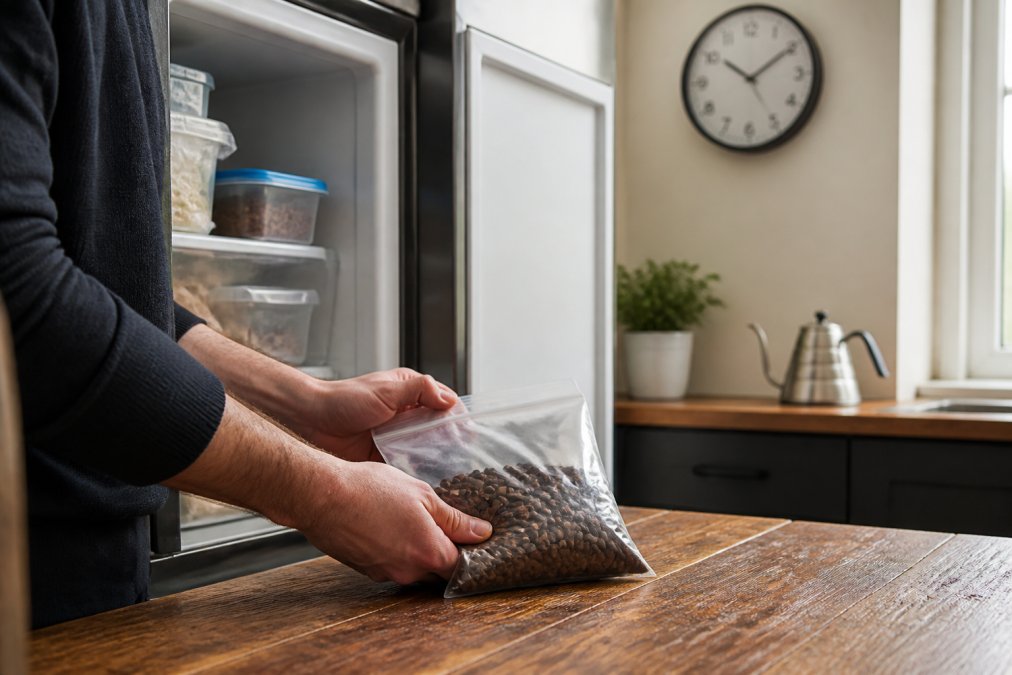
Portion beans into small bags for one brewing session (15-20 grams for a single cup). Freeze in vacuum-sealed bags. Thawing takes only 20-30 minutes, minimizing condensation risk. This approach is ideal for busy professionals wanting fresh coffee without complexity.
Never refreeze thawed beans:
Once thawed, don't refreeze. Use thawed beans within a week of thawing.
Does Freezing Affect Flavor Profile by Roast Level?
Light roasts and freezing:
Light roasts are most delicate, retaining origin characteristics like fruity and floral notes. These volatile compounds degrade quickly at room temperature but preserve well when frozen. Freezing light roasts is genuinely beneficial.
Medium roasts and freezing:
Medium roasts like Gospel and Grind's Brazil Santos and Colombia occupy middle ground. They've lost some delicate notes during roasting but retain enough complexity that preservation matters. Freezing helps noticeably.

Dark roasts and freezing:
Dark roasts have lost most origin characteristics during extended roasting. Flavor is dominated by roast-driven notes like chocolate and caramel, which are less volatile. Dark roasts don't degrade as quickly at room temperature, and freezing doesn't preserve them as dramatically.
Practical recommendation:
If you buy light or medium roasts and plan to store beyond three weeks, freezing is worth doing. For dark roasts or beans used within 2-3 weeks, room-temperature storage in an airtight container is adequate.
Conclusion
Freezing coffee beans keeps them fresh when done correctly. It slows oxidation and extends useful life from weeks at room temperature to months in the freezer. The key is minimizing condensation during thawing, using airtight or vacuum-sealed containers, and committing to a thawing schedule.
For coffee enthusiasts preserving quality beans, freezing is practical. It works best for light and medium roasts, where delicate aromatic compounds benefit most from preservation. Vacuum sealing is most effective, though airtight containers work well for shorter storage.
Gospel and Grind's roast-to-order beans arrive fresh and ready to enjoy. Whether you brew immediately or freeze for later, you'll experience the brightness and complexity distinguishing quality single-origin coffee. The National Coffee Association provides guidance on storage best practices. Start with fresh beans, store properly, and thaw with care for the best results.
Frequently Asked Questions
How long can coffee beans stay fresh in the freezer?
Whole bean coffee can maintain peak freshness for 3 to 4 months when frozen in an airtight container or vacuum-sealed bag. Beyond this window, the beans begin to lose volatile compounds and aroma, though they remain safe to consume. Freezing slows oxidation and moisture absorption, but does not stop them entirely. For the best flavor, use frozen beans within 1 to 2 months of the roast date.
Do I need to thaw coffee beans before grinding?
You can grind frozen coffee beans directly without thawing, which actually reduces condensation exposure and preserves grind consistency. However, if you do thaw them, allow the sealed bag to reach room temperature on the counter for 30 to 60 minutes before opening. This prevents moisture from condensing on the beans when warm air enters a cold container. Never thaw and refreeze the same batch.
Does freezing coffee beans affect the flavor profile?
Freezing preserves flavor better than room-temperature storage, but prolonged freezing can cause slight flavor degradation due to cell structure damage from ice crystal formation. Medium and dark roasts tolerate freezing better than light roasts because their oils provide additional protection. When frozen properly in an airtight container, most coffee drinkers notice minimal difference in taste within the first 2 months, especially with single-origin beans like Gospel and Grind's Brazil Santos or Colombia varieties.
What is the best way to prevent freezer burn on coffee beans?
Prevent freezer burn by storing beans in a vacuum-sealed bag or airtight container that minimizes air exposure and temperature fluctuation. Remove as much oxygen as possible before sealing. Keep your freezer at a consistent 0°F or below, and avoid opening the container repeatedly. Store beans in the coldest part of your freezer, away from the door. Single-dose freezing, portioning beans into small bags and freezing only what you need, reduces exposure and condensation risk.
Ready to experience coffee at peak freshness? Explore Gospel and Grind's carefully sourced, roast-to-order selections like Brazil Santos, Colombia, Costa Rica, and Ethiopia Natural. Each bag arrives fresh and ready to brew, with the option to freeze for extended enjoyment. Find your perfect roast and support our mission to fight homelessness with every cup.
This article was written using GrandRanker