

How to Store Coffee Beans for Freshness
Table of Contents
- Why Coffee Freshness Matters
- The Enemies of Coffee Freshness: Air, Light, Heat, and Moisture
- How to Tell If Coffee Beans Are Fresh
- Best Coffee Storage Containers for Long-Term Freshness
- Does Freezing Coffee Beans Ruin Them?
- Coffee Bean Shelf Life: What to Expect
- Step-by-Step: Your Coffee Storage Routine
- Common Mistakes to Avoid
Last Updated: August 18, 2026
Why Coffee Freshness Matters
Fresh coffee tastes dramatically different from stale coffee. The moment beans are roasted, they begin losing bright acidity, complex flavor notes, and aromatic oils that define specialty coffee. At Gospel and Grind, we roast to order because freshness is non-negotiable for the experience our customers expect.
Within days of roasting, coffee beans degrade. Volatile compounds fade, oils oxidize, and flavor flattens into something generic. Proper storage ensures you actually experience what you paid for.
The Enemies of Coffee Freshness: Air, Light, Heat, and Moisture
Four factors destroy coffee freshness.
Oxygen and oxidation are the primary threat. Once roasted, coffee reacts with air, breaking down aromatic compounds and oils. Vacuum-sealed and airtight containers minimize oxygen exposure and slow this process.
Light exposure accelerates degradation through photodegradation. UV rays and visible light break down chemical compounds in coffee. Clear containers are counterproductive; opaque storage is essential.
Heat speeds up every degradation process. Room temperature (around 70°F) is acceptable, but warmer kitchens or storage near heat-generating appliances significantly shortens freshness windows.
Moisture and humidity create multiple problems. Coffee is hygroscopic and absorbs moisture from air. When beans absorb moisture, they become more porous, allowing oxygen to penetrate deeper. Excess moisture also creates conditions for mold development and degrades flavor stability.
The one-way valve on coffee bags allows carbon dioxide (a roasting byproduct) to escape without letting oxygen back in. Once opened or transferred, that protection is gone, making your storage container choice critical.
How to Tell If Coffee Beans Are Fresh
Check the roast date first. This is the most reliable indicator. Reputable roasters always include it. Beans within 5 to 30 days of roasting are optimal; beyond 30 days, they're drinkable but losing complexity.
Visual appearance tells a story. Fresh beans have a rich, glossy appearance with visible oils (particularly darker roasts). Dull, matte, chalky-looking beans indicate age and oxidized oils.
Aroma is the quickest test. Fresh beans smell intensely aromatic and complex. Stale beans smell flat or musty. If you must lean in close to smell anything, the beans have lost significant freshness.
The bloom test during brewing reveals freshness. When hot water hits fresh grounds, they bubble and expand noticeably as carbon dioxide escapes. This bloom is vigorous with fresh beans and minimal with stale ones.
Best Coffee Storage Containers for Long-Term Freshness
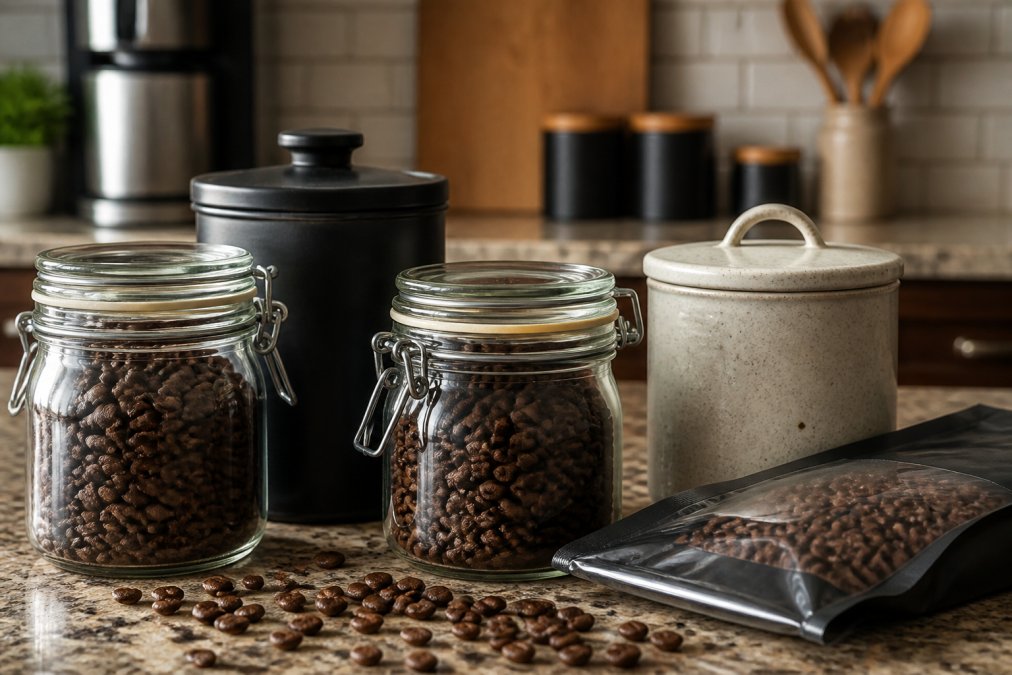
Glass containers with airtight seals are excellent for home storage. Glass doesn't interact with coffee and provides a complete oxygen barrier when properly sealed with rubber gaskets or snap-lock mechanisms. Store in a dark location since glass is transparent.
Ceramic or stainless steel canisters combine opacity with durability. These materials block light completely and don't absorb odors. Quality canisters with rubber seals create airtight environments and last indefinitely.
Vacuum-sealed bags are highly effective for long-term storage by removing air and creating an oxygen-free environment. However, once opened, they lose their advantage. These work best if you use the entire bag quickly or have a vacuum sealer to reseal them.
Avoid clear plastic containers. Plastic is porous at a molecular level, allowing slow oxygen permeation. Clear plastic also fails to block light, and some plastics absorb coffee oils.
Avoid the original bag after opening. While roaster bags have excellent one-way valves, once opened, that seal is compromised. Transfer to a proper storage container immediately.
Airtight vs. Vacuum-Sealed Options
Airtight containers prevent new oxygen from entering but don't remove oxygen already present in the headspace. They're sufficient for short-term storage (2-4 weeks) and are convenient for repeated opening without special equipment. Choose containers with rubber gaskets or snap locks that create genuine seals.
Vacuum-sealed storage removes most oxygen entirely, creating a much more hostile environment for oxidation and extending freshness significantly. Vacuum sealing is ideal for bulk purchases or several-month storage. The trade-off is needing a vacuum sealer and special equipment to reseal.
For most home enthusiasts, a quality airtight container is sufficient if buying fresh beans regularly and consuming within a month.
Why Opaque Materials Win
Transparent containers fail at light protection. Even occasional light exposure in a pantry causes photodegradation. The effect compounds over weeks.
Opaque materials block virtually all light. This single factor can extend freshness by days or weeks compared to clear storage. If using clear glass, store in a completely dark location.
Color matters less than opacity. A dark-colored clear container still allows light through. True opacity is the goal.
Does Freezing Coffee Beans Ruin Them?
Freezing does not ruin coffee beans, but it requires careful technique. If done correctly, freezing can extend freshness significantly, potentially doubling the useful lifespan. If done carelessly, freezing can damage beans through condensation and moisture absorption.
Freezing slows chemical reactions, including oxidation. At freezer temperatures (around 0°F), degradation processes are essentially paused. The catch: coffee beans are porous, and temperature fluctuations cause condensation. When frozen beans are removed and exposed to warmer air, condensation forms on the surface and is absorbed into the beans' porous structure, damaging integrity and introducing unwanted flavors.
The verdict: Freezing works best for long-term storage (3-6 months or longer) when done correctly. For short-term storage (under a month), an airtight container at room temperature is simpler and equally effective.
Post-Thaw Protocols to Prevent Condensation
Plan ahead. Remove only the amount you'll use within a week from the freezer. Keep the rest frozen to minimize thaw cycles.
Thaw in an airtight container. Don't open the bag immediately after removing from the freezer. Leave it sealed and let it sit at room temperature for 30 minutes to an hour. This allows gradual warming without condensation forming on the surface.
Use immediately after thawing. Once thawed and removed from the sealed container, grind and brew within a few hours. Don't return thawed beans to the freezer.
Consider portioning before freezing. Divide beans into smaller portions (enough for 1-2 weeks each) and freeze separately. This minimizes exposure to temperature fluctuations.
Coffee Bean Shelf Life: What to Expect
Peak freshness window: 5-30 days after roasting. Beans taste their best, bright, complex, and full of roast characteristics.
Acceptable freshness window: 30-60 days after roasting. Beans are still very good, though subtle brightness and complexity fade.
Diminished freshness: 60-90 days after roasting. Coffee is drinkable but noticeably flatter with muted aroma and lacking nuance.
Beyond 90 days: Coffee doesn't spoil but is essentially stale with flat, one-dimensional flavor.
Proper storage extends these timelines. Airtight room-temperature storage might add 2-4 weeks to the acceptable window. Freezing might extend it by months. However, nothing restores the vibrancy of peak-window beans; freshness always declines over time, just more slowly with good storage.
At Gospel and Grind, we roast to order to ensure you receive beans near their peak, eliminating guesswork about roast dates and guaranteeing optimal freshness.
Step-by-Step: Your Coffee Storage Routine
Step 1: Choose your container. Select an opaque, airtight container (ceramic, stainless steel, or dark glass with rubber gasket seal). Size it appropriately to minimize excess headspace with oxygen.
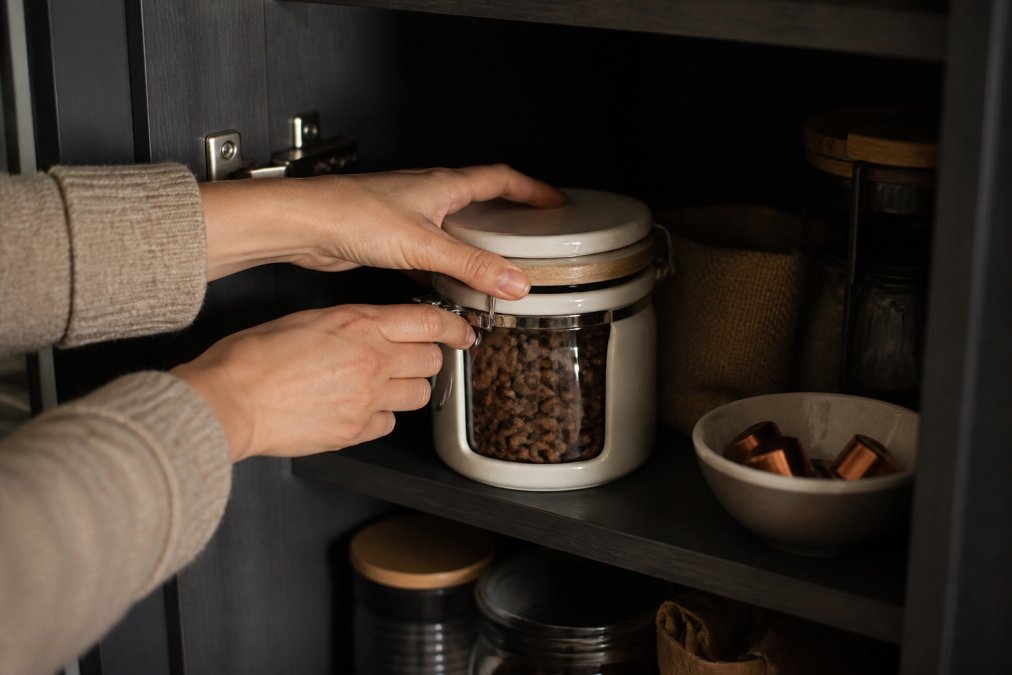
Step 2: Store in a cool, dark location. A pantry, cabinet, or closet away from direct sunlight and heat sources is ideal. Avoid kitchen counters near windows, stoves, or heat-generating appliances. Room temperature (65-75°F) is optimal.
Step 3: Label your container with the roast date. Transfer the roast date from the original bag to your storage container. This helps you track freshness and know when to use the beans.
Step 4: Grind just before brewing. Whole beans stay fresh longer than ground coffee. Ground coffee begins staling within minutes of grinding. Grind immediately before brewing for best flavor.
Step 5: Keep the original bag for reference. Even after transferring beans, keep the original roaster bag for tasting notes, roast date, origin information, and brewing recommendations.
Whole Beans vs. Pre-Ground: Storage Differences
Whole beans have minimal surface area exposed to oxygen. The bean's dense structure slows oxidation. Properly stored whole beans stay fresh for 60-90 days (or longer if frozen).
Pre-ground coffee has vastly more surface area. Every particle is exposed to oxygen. Degradation happens rapidly; within days, pre-ground coffee loses significant flavor complexity. Use within 1-2 weeks of grinding, even with perfect storage.
If you must buy pre-ground: Store in an airtight freezer container and use within 2 weeks.
The practical implication: Investing in a burr grinder is one of the highest-impact upgrades for home coffee quality. Grinding whole beans immediately before brewing is the single best storage practice.
Travel Storage Solutions
Small airtight containers. Transfer a week's worth of beans into a small, portable airtight container. Stainless steel travel containers are durable and compact.
Vacuum-sealed bags. For extended travel, vacuum-sealed bags protect beans better than loose containers and are lightweight.
Whole beans only. Never travel with pre-ground coffee. Bring a small hand grinder if particular about freshness.
Avoid hotel mini-fridges. These fluctuate in temperature and are often humid. Room temperature storage in an airtight container is better.
Source fresh beans at your destination. For trips longer than a week, consider buying fresh beans locally rather than bringing stale ones.
Common Mistakes to Avoid
Storing beans in the refrigerator. Refrigerators are humid and experience temperature fluctuations. Condensation forms on beans, and they absorb moisture. Freezing works (with proper thawing), but refrigeration is the worst of both worlds.
Using clear containers on open shelves. Light exposure compounds daily. Clear containers on kitchen shelves degrade beans faster than opaque containers in cabinets.
Leaving beans in the original bag after opening. Once opened, the one-way valve seal is compromised. Transfer to a proper container immediately.
Buying more than you can use in 2 months. You'll drink stale coffee for half of what you purchased. Buy smaller quantities more frequently.
Ignoring the roast date. Never buy beans without a roast date. This single practice eliminates most freshness problems.
Grinding beans and storing the grounds. Grind immediately before brewing. If you must grind ahead, use within hours and store in an airtight container.
Exposing beans to strong odors. Coffee absorbs odors from its environment. Store away from spices, onions, garlic, or anything with strong smell.
Storing coffee beans for freshness is straightforward once you understand the four enemies: oxygen, light, heat, and moisture. The right container, opaque and airtight, combined with cool, dark storage and intentional purchasing habits ensures you experience the coffee you paid for.
Gospel and Grind's roast-to-order approach eliminates the freshness guesswork entirely. When you order, beans are roasted specifically for you and shipped fresh, arriving within days of roasting. This guarantees you're starting with beans in their peak freshness window. Find Your Perfect Roast and experience the difference fresh coffee makes.
Frequently Asked Questions
What is the best way to keep coffee beans fresh?
Store whole beans in an airtight, opaque container in a cool, dark place away from heat, light, and moisture. Keep them at room temperature (around 70°F) rather than the refrigerator or freezer, which can expose beans to condensation and temperature swings. Use within 2-3 weeks of the roast date for peak flavor. If you've purchased from Gospel and Grind, our roast-to-order process ensures your beans arrive at their freshest, so proper storage from that point forward maximizes every sip.
How long do coffee beans stay fresh in a sealed bag?
Whole beans remain fresh for approximately 2-4 weeks after roasting, with the flavor window widest in the first 2-3 weeks. The original bag with a one-way valve is often the best storage option because it allows carbon dioxide (produced during degassing) to escape while preventing oxygen from entering. Once opened, transfer beans to an airtight container to extend shelf life. Pre-ground coffee degrades faster due to increased surface area exposed to oxygen, so grind beans just before brewing whenever possible.
Does freezing coffee beans ruin them?
Freezing doesn't ruin coffee beans, but it requires care to prevent freezer burn and condensation damage. If you freeze beans, use an airtight, vacuum-sealed container to protect against moisture and oxygen exposure. The biggest risk occurs during thawing: allow frozen beans to reach room temperature while still sealed to prevent condensation from forming on the surface. Once thawed, use the beans within a few days. For most home brewers, storing beans in a cool, dark pantry works better than freezing, which introduces unnecessary temperature fluctuations that can degrade flavor compounds.
Will a Ziploc bag keep coffee beans fresh?
A standard Ziploc bag offers some protection but isn't ideal for long-term storage. While it blocks light and moisture to some degree, it doesn't create a true airtight seal and allows oxygen to gradually enter, leading to oxidation and rancidity. The original roasted coffee bag with a one-way valve is superior because it lets carbon dioxide escape during degassing while preventing air movement into the bag. If you must use a Ziploc, squeeze out as much air as possible before sealing, and use the beans within 1-2 weeks for best results.
This article was written using GrandRanker