

Why Your Coffee Tastes Sour: Fixes That Work
Table of Contents
- Why Your Coffee Tastes Sour After Brewing
- Understanding Under-Extracted Coffee
- Water Temperature for Brewing Coffee: The Critical Factor
- Coffee Grind Size Chart and Its Impact on Sourness
- Brew Time, Contact Time, and Extraction Yield
- Bean Quality, Roast Level, and Water Chemistry
- Step-by-Step: How to Fix Sour Coffee
- Conclusion
Last Updated: August 28, 2026
Why Your Coffee Tastes Sour After Brewing
If your coffee tastes sour, the culprit is almost always under-extraction. This happens when hot water doesn't pull enough flavor compounds from the grounds, leaving behind bright, acidic notes instead of the balanced, smooth cup you're after. At Gospel and Grind, we offer premium, carefully sourced coffee beans roasted to order to ensure maximum flavor and aroma in every cup, and the fix usually comes down to a handful of controllable variables.
The good news: sourness in coffee is one of the easiest issues to diagnose and correct. Unlike some brewing problems that require expensive equipment upgrades, fixing sour coffee often means adjusting grind size, water temperature, or brew time, changes you can make with what you already have.
This guide walks you through the science of extraction, shows you exactly where your brewing method likely falls short, and gives you step-by-step fixes that work. Whether you're using a French press, pour-over, espresso machine, or automatic drip brewer, you'll find the specific adjustments that'll transform that sharp, tangy cup into something smooth and balanced.
Understanding Under-Extracted Coffee
Under-extraction is the technical term for what happens when water doesn't spend enough time in contact with coffee grounds, or moves through them too quickly. The result is a cup that tastes bright, acidic, sour, or thin, sometimes all at once.
Here's the chemistry: coffee grounds contain hundreds of soluble compounds. The ones that dissolve first (in the first 20-30 seconds of contact) tend to be acidic and sharp. The ones that follow are sweeter, more balanced, and more complex. If your water moves through the grounds too fast, you're pulling mostly those early, sour compounds and missing the good stuff that comes later.
The difference between acidity and sourness matters here. Acidity in coffee is natural and desirable, it's the bright, lively quality you get in a well-extracted cup of Kenya or Colombia coffee. Sourness is the unpleasant, vinegary sharpness you get when extraction is incomplete. A sour cup has acidity without the balancing sweetness and body that proper extraction brings.

The extraction yield tells you how much of the coffee's soluble material actually made it into your cup. Extraction yields between 18-22% are considered ideal for most brewing methods. Below 18%, the coffee tastes sour and thin. Above 22%, it starts tasting bitter and over-extracted. Your job is to hit that sweet spot.
Water Temperature for Brewing Coffee: The Critical Factor
Water temperature is one of the most underestimated variables in home brewing. Even a 5-degree difference can shift your cup from sour to balanced.
The ideal range for most brewing methods is 195-205°F. Below 195°F, water doesn't have enough energy to dissolve the compounds you need, you'll get under-extraction and sourness. Above 210°F, you risk pulling too many bitter compounds too quickly, though this is less common in home brewing than under-extraction.
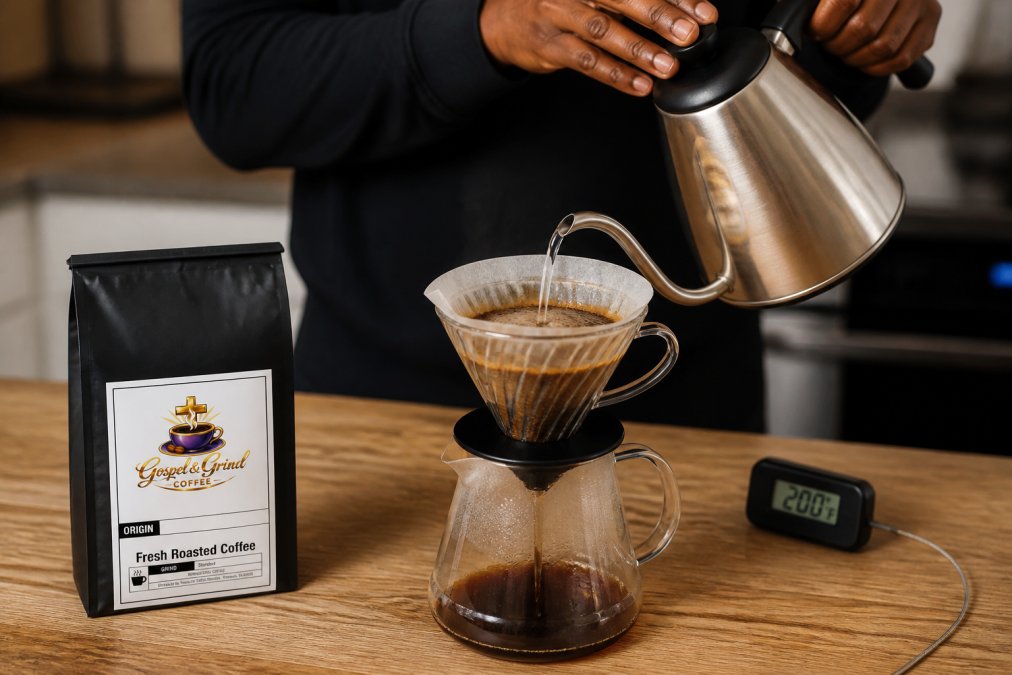
Here's the practical problem: if you're using water straight off a boil (212°F), you're usually fine. But if you're letting it cool for a minute or two before pouring, you might drop below 200°F without realizing it. This is especially true with pour-over methods, where the water temperature drops as it sits in the kettle and again as it passes through the grounds.
A simple fix is to use a thermometer. Measure your water temperature right before it hits the grounds, not when it leaves the kettle. For automatic drip machines, check the manufacturer specs, many brew at lower temperatures than ideal, which contributes to sourness.
Cold brew is the exception here. It uses room-temperature or cold water and relies on extended contact time (12-24 hours) instead of heat to extract. Because contact time is so long, cold brew often tastes smooth and sweet even though the water temperature is low.
Coffee Grind Size Chart and Its Impact on Sourness
Grind size controls how quickly water moves through the grounds. Finer grinds slow water down; coarser grinds let it rush through.
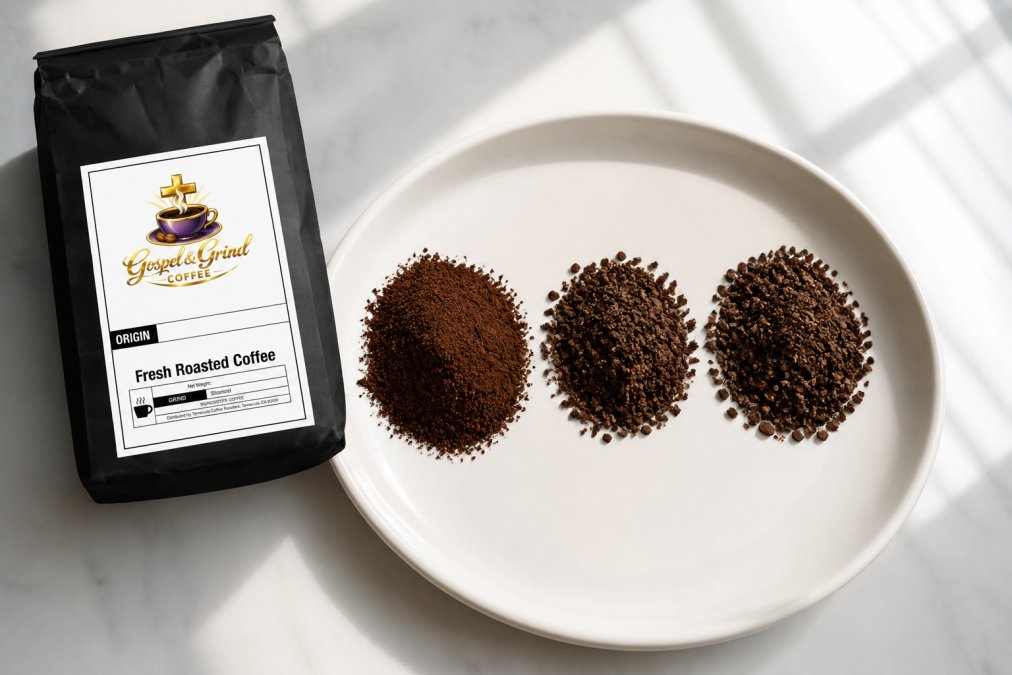
Here's the general relationship between grind and sourness:
- Too coarse: Water passes through too fast. You get under-extraction and sourness. This is the most common problem in home brewing.
- Too fine: Water moves too slowly. You risk over-extraction and bitterness, but you can also get sourness if the grind is inconsistent (a mix of fine and coarse particles).
- Just right: Water moves through at a steady pace, extracting evenly.
The ideal grind depends on your brewing method. French press needs a coarse grind (like sea salt). Pour-over needs medium-fine (like sand). Espresso needs very fine (like powder). Automatic drip machines usually work best with a medium grind.
If your coffee tastes sour, start by checking your grind size against your brewing method. If you're using a blade grinder, that's likely your problem, blade grinders produce wildly inconsistent particle sizes, which leads to uneven extraction and sourness. A burr grinder (either flat or conical) produces uniform particle size and makes a huge difference.
Gospel and Grind's single-origin beans are roasted to order and arrive fresh, which means they're more forgiving of minor grind inconsistencies than stale beans. But even with fresh beans, grind consistency matters. If sourness is your issue, upgrading to a burr grinder is often the single best investment you can make.
Brew Time, Contact Time, and Extraction Yield
Contact time is how long water actually touches the grounds. This is different from brew time, which includes the time water takes to drip through or the time you let a French press steep.
For most methods, contact time should be:
- French press: 4 minutes
- Pour-over: 3-4 minutes
- Automatic drip: 5-6 minutes
- AeroPress: 1-2 minutes
- Espresso: 25-30 seconds
If your contact time is too short, you're under-extracting and getting sourness. If it's too long, you risk over-extraction and bitterness.
The way to increase contact time without changing your brewing method is to slow down the water flow. This usually means adjusting grind size (finer grinds slow water down) or adjusting the amount of agitation (stirring or pouring technique in pour-over methods).
In pour-over brewing, the way you pour matters. A slow, steady pour keeps water in contact with the grounds longer than a fast pour. The bloom phase, the first 30-45 seconds when you wet the grounds and let them sit, is also critical. During the bloom, gases escape from the grounds, and water begins to penetrate. Skipping the bloom or rushing through it leads to uneven extraction and sourness.
With automatic drip machines, you have less control over contact time. If your machine brews too quickly (under 5 minutes), that's likely contributing to sourness. Some machines have a "brew strength" or "bold" setting that slows the flow, try that if your coffee tastes sour.
Bean Quality, Roast Level, and Water Chemistry
Not all sourness comes from your brewing technique. Sometimes it's the beans.
Stale beans are more prone to sourness because they've lost oils and volatiles that contribute to sweetness and body. If your coffee has been sitting in a bag for more than 3-4 weeks, or if it was roasted more than 6-8 weeks ago, staleness could be the problem. This is why roasted-to-order coffee makes such a difference. Gospel and Grind roasts your beans fresh and ships them immediately, so you're getting them at peak freshness.
Roast level also affects sourness. Light roasts have more acidity by nature, they're brighter and more complex, but they can taste sour if under-extracted. Medium and darker roasts have less acidity and more body, which masks sourness even if extraction isn't perfect. If you're new to specialty coffee or sensitive to acidity, starting with a medium roast is often easier than jumping into light roasts.
Bean origin and processing method matter too. Washed coffees (where the fruit is removed before drying) tend to have cleaner, brighter acidity. Natural-process coffees (where the fruit dries on the bean) tend to be fruitier and sweeter. If you're getting sourness with a washed coffee, it might be under-extraction. If it's a natural-process coffee tasting sour, check your technique first, the bean itself is probably fine.
Water chemistry is often overlooked. Tap water with very low mineral content (soft water) can lead to over-extraction and sourness because the water absorbs compounds too quickly. Tap water that's too hard can lead to under-extraction because minerals interfere with the dissolving process. Ideally, you want water with moderate mineral content, around 150 parts per million of total dissolved solids. If you're using distilled water or very soft tap water, that could be contributing to sourness. A simple fix is to use filtered water or add a small amount of mineral content if your water is very soft.
Step-by-Step: How to Fix Sour Coffee
Start with the easiest fixes first. Most sourness comes from one of three things: grind size, water temperature, or contact time.
Step 1: Check Your Grind Size
If you're using a blade grinder or if your grind looks inconsistent, that's likely your problem. Switch to a burr grinder and aim for a grind that matches your brewing method. For pour-over, it should look like sand. For French press, it should look like sea salt. Brew a test cup. If it still tastes sour, move to step 2.
Step 2: Measure Your Water Temperature
Use a thermometer to check the temperature of your water right before it hits the grounds. Aim for 200-202°F. If your water is cooler than 195°F, heat it hotter before brewing. If you're using an automatic drip machine, check the manual to see what temperature it brews at. Many machines brew at 160-180°F, which is too low. If that's the case, consider switching to a manual brewing method like pour-over.
Step 3: Increase Contact Time
If grind size and temperature are correct but the cup still tastes sour, increase how long water stays in contact with the grounds. For pour-over, slow down your pour. For French press, let it steep for a full 4 minutes instead of 3. For automatic drip, use the bold or strong setting if available. Brew a test cup and see if it tastes more balanced.
Step 4: Check Bean Freshness
Look at the roast date on your bag. If it's more than 8 weeks old, staleness is likely the problem. Switch to fresher beans. Gospel and Grind ships roasted-to-order beans, so you're getting them at peak freshness. Kenya and Peru single-origins both have bright acidity that shines when the beans are fresh but can taste sour if they're old.

Step 5: Adjust Your Brewing Method
If you've tried the above and the cup still tastes sour, consider switching methods. Automatic drip machines often brew at lower temperatures and faster speeds than ideal. Pour-over and French press give you more control. If you're using an espresso machine, under-extraction often shows up as sourness, pull your shots faster by adjusting the grind finer or tamping lighter.
| Fix | What to Check | Expected Result |
|---|---|---|
| Grind size | Use burr grinder, match to method | More balanced flavor |
| Water temperature | Aim for 200-202°F | Smoother, less sharp taste |
| Contact time | Increase brew time by 30-60 seconds | Fuller body, less sourness |
| Bean freshness | Use beans roasted within 2 weeks | Brighter, cleaner cup |
| Brewing method | Switch to manual pour-over or French press | More control, better extraction |
Conclusion
Sour coffee is under-extracted coffee, and it's fixable. Start with grind size, if you're using a blade grinder, upgrading to a burr grinder will solve the problem for many people. Next, check your water temperature and make sure it's between 200-202°F. Finally, give the water enough time to extract by increasing brew time or slowing your pour.
If you're still getting sourness after adjusting technique, the issue is likely bean freshness or water chemistry. Fresh beans make a measurable difference. Gospel and Grind roasts to order and ships immediately, so your beans arrive at peak freshness with maximum flavor and aroma. Our single-origin selections like Kenya and Colombia are designed to shine with proper brewing technique, dial in your grind, temperature, and timing, and you'll taste the difference that fresh, carefully sourced beans make.
The Specialty Coffee Association's brewing standards guide
Research on coffee extraction and flavor compounds
Water quality and mineral content guidelines for coffee brewing
Frequently Asked Questions
Q: How do I fix coffee that tastes sour?
A: Sour coffee usually means under-extraction. Start by increasing water temperature to 195-205°F, use a finer grind size, extend brew time by 30 seconds, or increase your coffee-to-water ratio. If your beans are older than 4 weeks post-roast, sourness may indicate stale beans. Fresh, roasted-to-order beans like Gospel and Grind's single-origin selections ensure you're starting with quality that extracts properly.
Q: What is the difference between sour and acidic coffee?
A: Acidity is a desirable flavor note, bright, tangy notes like citrus or floral tones that add complexity. Sourness is a sharp, unpleasant taste from under-extraction, where water hasn't dissolved enough soluble compounds from the grounds. High-altitude beans like our Kenya ($19.99) naturally have bright acidity, but poor brewing creates sourness. The distinction matters: acidic coffee tastes clean; sour coffee tastes harsh and thin.
Q: Why does my coffee suddenly taste sour when it didn't before?
A: Three common causes: your beans have aged past peak freshness (coffee peaks 5-30 days after roast), your water temperature has dropped (check your brewer's heating), or your grind size has shifted (burr wear or accidental adjustment). If you switched brewing methods or equipment recently, that change alone can cause sourness. Roasted-to-order coffee eliminates the staleness factor and arrives at peak flavor, reducing variables you can't control.
Q: Can I adjust my coffee-to-water ratio to fix sourness?
A: Yes. Increase the ratio of coffee to water, use more grounds for the same water volume. This boosts extraction yield and reduces sourness. Start with a 1:16 ratio (1 gram coffee to 16 grams water) and move toward 1:15 if sourness persists. However, ratio adjustments work best when combined with proper grind size and water temperature. Single-origin beans with known processing methods, like our Colombia ($23.99) or Peru ($19.99), respond predictably to ratio changes because their flavor profile is consistent from bag to bag.
This article was written using GrandRanker