

7 Signs of Rancid Coffee Beans to Avoid
Table of Contents
- Stale vs. Rancid Coffee Beans: Know the Difference
- 7 Signs of Rancid Coffee Beans to Avoid
- The Science of Rancidity: Oxidation and Lipid Breakdown
- Coffee Bean Shelf Life After Roasting: What to Expect
- How to Store Coffee Beans for Maximum Freshness
- Can Rancid Coffee Beans Make You Sick?
- Don't Toss Them: Smart Ways to Repurpose Old Beans
- Freshness Starts at the Roaster
- Frequently Asked Questions
Last Updated: September 5, 2026
Stale vs. Rancid Coffee Beans: Know the Difference
Most coffee drinkers assume old beans just taste bad, but the reality is more complex. Rancid coffee beans are a distinct category from stale beans, and knowing the difference protects both your palate and your health. Stale coffee has lost its volatile aromatic compounds, resulting in a flat, lifeless cup that is safe to drink. Rancid coffee, however, has undergone lipid oxidation, where the natural oils in the bean break down and turn sour.
At Gospel and Grind, we roast to order because freshness is the foundation of flavor. This guide walks through the sensory signs of rancid coffee beans to avoid, the science behind the degradation, and how proper storage extends the life of your roast.
7 Signs of Rancid Coffee Beans to Avoid
Rancid coffee beans reveal themselves through visual, olfactory, and taste cues. Learn these seven signs and you can diagnose a bad bag in under a minute.
The Visual Check: Oil, Discoloration, and Clumping
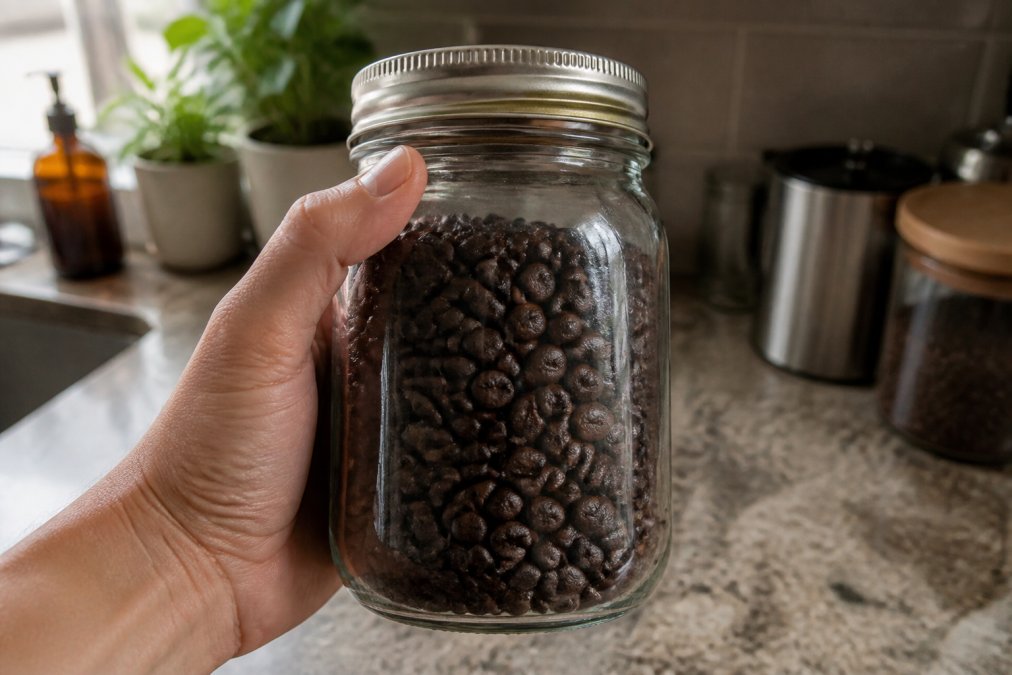
Freshly roasted beans have a dry, matte surface. As beans age, oils migrate to the exterior, creating a shiny, greasy appearance. While some dark roasts naturally show oil shortly after roasting, a sudden sheen on a medium roast signals age.
Look for uneven discoloration, a dull brown fading to grayish tones, and beans that stick together in clumps. The clumping happens when surface oils combine with moisture exposure, creating a tacky film. If the bag shows visible condensation or the beans feel sticky, rancidity is likely underway.
The Aroma Test: From Cardboard to Musty
Your nose is the most reliable tool for detecting rancid coffee beans. Grind a small amount and inhale deeply. Fresh coffee should smell vibrant, sweet, and complex. Rancid coffee smells distinctly like cardboard, wet paper, or a musty basement.
The aroma shift occurs because lipid oxidation produces compounds that mimic the smell of stale nuts or old cooking oil. If the scent triggers any association with a damp cellar or a recycled cardboard box, trust that instinct.
The Brew Test: Crema, Bloom, and Flavor
Brewing reveals the final verdict. Fresh coffee blooms dramatically when hot water hits the grounds, releasing carbon dioxide. Rancid beans have already degassed, so the bloom is minimal or absent entirely.
The crema on an espresso shot tells the same story. A thick, golden-brown crema indicates healthy oil structure. Rancid beans produce a thin, pale crema that dissipates quickly. The flavor profile collapses into flat bitterness with a hollow, papery finish.
| Sign | What You Notice | What It Means |
|---|---|---|
| Visual | Shiny, clumping, gray-brown beans | Oils migrated and oxidized |
| Aroma | Cardboard, musty, stale nuts | Lipid oxidation compounds formed |
| Brew | No bloom, thin crema, flat taste | Carbon dioxide gone, structure broken |
The Science of Rancidity: Oxidation and Lipid Breakdown
Most articles stop at 'it tastes bad,' but understanding the chemistry gives you a diagnostic edge. Coffee beans are roughly 10-15% lipids by weight, primarily triglycerides. These fats are the vehicle for many of the flavor compounds you love. When they break down, the flavor transforms into something new and unpleasant.
The primary culprit is autoxidation, a free-radical chain reaction. It begins when oxygen contacts the unsaturated fatty acids in the bean's oils. This reaction produces hydroperoxides, which are tasteless and odorless but unstable. They quickly decompose into a cascade of secondary products, including:
- Aldehydes (like hexanal and nonanal): These are the primary source of the 'cardboard' and 'paint-like' smells you detect in rancid beans. Your nose is incredibly sensitive to these compounds, often detecting them at parts-per-billion concentrations.
- Ketones: These contribute metallic and stale flavors.
- Free fatty acids: These increase the perceived sourness and bitterness, but in a hollow, unpleasant way.
This process is accelerated by three specific environmental factors:
- Heat: The reaction rate roughly doubles for every 10°C (18°F) increase in temperature (peer-reviewed research). Storing beans near a warm oven or in a hot car is a fast track to rancidity.
- Light: Ultraviolet and visible light act as a catalyst, providing the energy to initiate the free-radical chain reaction. This is why clear or even translucent bags are a poor choice for long-term storage.
- Moisture: Water facilitates the breakdown of hydroperoxides and can also promote the growth of mold, which introduces a separate set of musty off-flavors.
This chemical reality explains why the 'stale vs. rancid' distinction is not just semantics. Stale beans have lost their volatile aromatic compounds to evaporation; the oils are largely intact, and the cup is flat but harmless. Rancid beans, however, have undergone a structural transformation. No amount of grinding, brewing, or blending will reverse this. The degradation is permanent.
Light roasts, which are denser and have less surface oil, are more resistant to oxidation than dark roasts. The physical structure of a light roast bean acts as a barrier, slowing oxygen's ingress. Dark roasts, with their porous structure and surface oil, are effectively 'pre-exposed' and will go rancid much faster. This is why a dark roast can taste off within a week of opening, while a light roast might stay vibrant for a month.
Coffee Bean Shelf Life After Roasting: What to Expect
Coffee bean shelf life after roasting depends on several factors, but the general timeline is consistent across the industry. Whole beans stay at peak flavor for roughly two to four weeks after the roast date. Ground coffee degrades faster because grinding increases the surface area exposed to oxygen, cutting that window to days rather than weeks.
The roast level also plays a role. Darker roasts have more surface oils and oxidize faster than lighter roasts. A dark roast may show signs of staleness within a week, while a light roast can remain vibrant for a month or more when stored properly.
The critical variable is the roast date, not the best-by date printed on the bag. Many commercial coffees sit in warehouses for months before reaching store shelves. This is why purchasing from a roaster that prints the roast date and ships quickly makes a measurable difference in your cup.
How to Store Coffee Beans for Maximum Freshness
Learning how to store coffee beans for maximum freshness is straightforward once you understand the enemies: oxygen, light, heat, and moisture. Remove each one and you dramatically extend the life of your beans.
Start with an airtight container. The original bag with a one-way valve works well because the valve allows degassing without letting oxygen in. If you transfer beans to a canister, choose one with a tight seal and opaque walls to block light. According to storage recommendations from the National Coffee Association, beans should be kept in a cool, dark place, not the refrigerator or freezer.
The refrigerator is a common mistake. The temperature fluctuations cause condensation, which introduces moisture and accelerates degradation. The freezer works only for long-term storage of unopened, vacuum-sealed bags, and even then, beans should be used immediately after thawing without refreezing.
Can Rancid Coffee Beans Make You Sick?
The short answer is: it's complicated, but the risk is real enough to warrant caution. The primary concern isn't acute food poisoning from pathogens like salmonella or E. coli, which are killed during roasting. The issue is the oxidized oils themselves.
When the lipids in coffee beans oxidize, they form compounds that are not just unpalatable. Some of these secondary products, like certain aldehydes, are classified as potentially toxic. The FDA guidance on rancid oils and food safety notes that consuming oxidized fats can introduce free radicals into your system. Free radicals are unstable molecules that can damage cells, a process linked to chronic inflammation and other long-term health issues.
For most healthy adults, an occasional cup of coffee made from slightly stale beans will result in nothing more than a disappointing taste. However, consistently consuming coffee made from truly rancid beans means regularly ingesting a cocktail of degraded oils and free radicals. While the body has antioxidant defenses to handle a small load, there's no nutritional benefit to pushing that system.
More immediately, some people are sensitive to these oxidized compounds. The result can be a queasy stomach, acid reflux, or a headache shortly after drinking the coffee. If you notice a pattern where a particular bag of coffee leaves you feeling unwell, rancidity is a more likely culprit than the caffeine.
To help you make a clear decision, use this diagnostic checklist to separate the merely stale (safe) from the truly rancid (discard).
| Check | Stale (Safe but Flat) | Rancid (Discard) |
|---|---|---|
| Smell (Ground) | No aroma, or a faint, generic 'coffee' smell. | Overpowering smell of cardboard, old nuts, or a musty basement. |
| Taste | Flat, dull, lifeless. Lacks sweetness and acidity. | Bitter, sour, and 'hollow' with a lingering, unpleasant aftertaste that coats the mouth. |
| Bloom | Minimal or no bloom when hot water hits the grounds. | No bloom at all; the grounds may even appear to repel the water. |
| Body | Thin, watery mouthfeel. | Greasy or 'slick' mouthfeel that is distinctly unpleasant. |
| Post-Consumption | No physical effect. | A queasy stomach, heartburn, or a headache within 30-60 minutes. |
If you hit two or more markers in the 'Rancid' column, the beans are past the point of no return. The cost of a new bag is far less than the cost of a ruined day. When in doubt, discard the beans and start fresh.
Don't Toss Them: Smart Ways to Repurpose Old Beans
Before you throw that stale bag in the trash, know that old beans still have value, just not for brewing. Repurposing old beans keeps them out of the landfill and gives them a second life.
The most popular use is as a natural refrigerator deodorizer. Dry, stale grounds absorb odors effectively. Place them in an open bowl in the fridge for a week, then replace. The same trick works for removing garlic or onion smells from cutting boards; rub the grounds across the surface and rinse.
Gardeners can add coffee grounds to compost piles, where they contribute nitrogen and improve soil structure. Some gardeners also use grounds as a gentle abrasive scrub for cleaning pots and pans, though avoid this on nonstick surfaces. A body scrub is another option, mixing grounds with coconut oil for a natural exfoliant.
Freshness Starts at the Roaster
The single best way to avoid rancid coffee beans is to buy from a source that prioritizes freshness at every step. Beans that are roasted to order and shipped directly to your door arrive at peak flavor, with the full window of shelf life ahead of them.
At Gospel and Grind, every batch is roasted to order, meaning your beans are never sitting in a warehouse losing their aromatic compounds. Our carefully sourced beans from trusted farms arrive fresh, and our fast, reliable delivery gets them to you within days of roasting. Each bag carries the roast date, so you know exactly what you are brewing. Whether you choose the smooth House Blend or a single origin like Brazil Santos, you are getting beans at their peak.


Fresh coffee is a small daily luxury that transforms your morning routine. When you know the signs of rancid coffee beans to avoid, you protect that experience. And when you choose Gospel and Grind, every cup also supports our mission to fight homelessness, making your coffee habit a force for good.
Finding truly fresh coffee should not require a chemistry degree or a specialty shop visit. The challenge is knowing what to look for and buying from a roaster you can trust. Gospel and Grind delivers roasted-to-order beans with transparent roast dates, carefully sourced from farms we know, straight to your door. Every purchase supports our fight against homelessness, so your morning cup does more than taste good. Find Your Perfect Roast and taste the difference that freshness makes.
Frequently Asked Questions
Are rancid coffee beans bad for you?
Rancid coffee beans are not toxic, but the oxidized oils can cause stomach upset or a bitter, unpleasant taste. The real issue is that rancid beans signal a complete loss of flavor and aroma. More importantly, rancidity means the delicate oils have broken down, so you are drinking a flat, bitter brew with none of the flavor complexity you paid for. It is best to discard beans that show clear signs of rancidity.
How long do coffee beans last before going rancid?
Coffee bean shelf life after roasting depends on storage. Whole beans stay fresh for 1 to 2 months in an airtight container away from light and heat. Once you grind them, the clock speeds up dramatically because more surface area is exposed to oxygen. For the best flavor, buy beans roasted to order and use them within a few weeks.
What does rancid coffee smell like?
Rancid coffee loses its bright, floral, or chocolatey aroma. Instead, it smells musty, cardboard-like, or even faintly sour. If you notice a complete absence of that sweet, roasty smell when you open the bag, the beans have likely gone bad. Trust your nose: if the aroma seems off or flat, the flavor will be too.
Can you use coffee beans past the roast date?
Yes, but expect a significant drop in quality. Beans are best within 2 to 4 weeks of the roast date. After that, they go stale, losing carbon dioxide and aromatic compounds. To maximize freshness, buy from a roaster that prints the roast date and delivers quickly. Proper storage in an airtight container can extend their usable life.
This article was written using GrandRanker