

Buy Ethically Sourced Coffee Beans Online: A 2026 Guide
Table of Contents
- What Makes Coffee Ethically Sourced
- Fair Trade Coffee Brands vs. Other Ethical Options
- How to Identify Sustainable Coffee Labels and Certifications
- Direct Trade Coffee Benefits and How It Works
- Roasted-to-Order vs. Pre-Roasted: Why Freshness Matters
- What to Expect When Ordering Ethically Sourced Coffee Online
- Conclusion: Making Your First Ethical Coffee Purchase
Last Updated: August 27, 2026
What Makes Coffee Ethically Sourced
Ethically sourced coffee beans are grown and traded to prioritize fair compensation for farmers, environmental stewardship, and transparent supply chains. Unlike mass-market coffee that obscures origins and farmer earnings, ethical options place the farmer's livelihood and land health at the center of the business model.
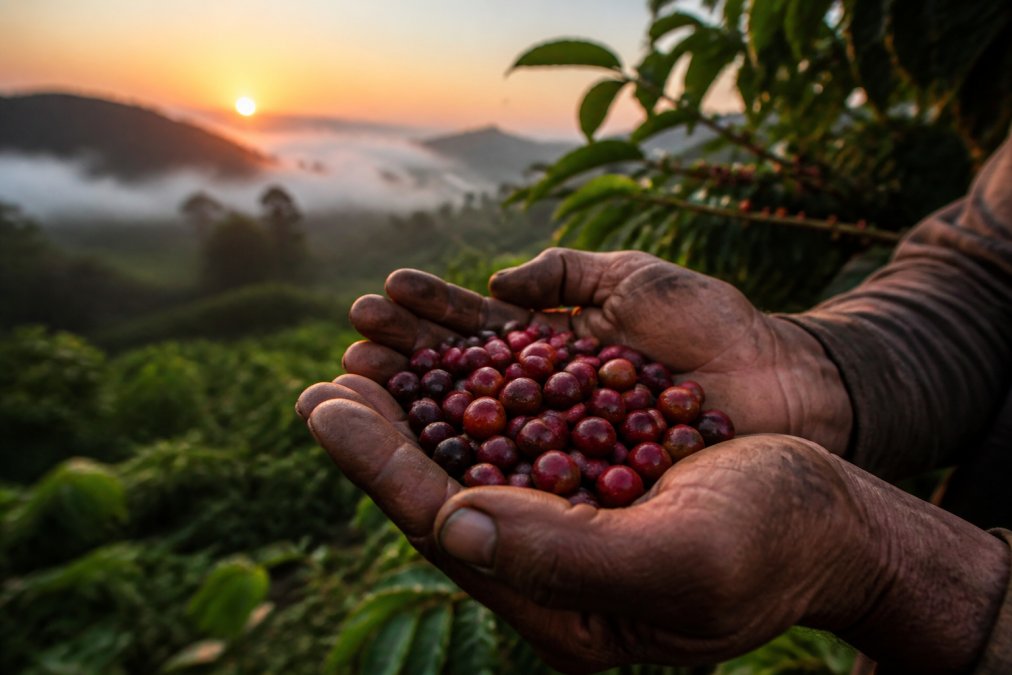
Coffee farming is difficult work. Farmers in developing regions face price volatility, exploitative middlemen, and pressure to maximize yield at the expense of soil health. When you buy ethically sourced coffee beans online, you're purchasing from operations committed to paying living wages, maintaining environmental practices, and proving it through third-party verification or direct relationships.
Gospel and Grind sources coffee from farms prioritizing these principles, then roasts to order so you receive beans at peak freshness. What separates ethical sourcing from greenwashing is specificity: genuine ethical sourcing includes third-party certification (Fair Trade, Rainforest Alliance, Bird-Friendly), direct trade relationships with named farms, published transparency reports showing farmer payments, or commitment to organic and shade-grown practices protecting biodiversity.
Fair Trade Coffee Brands vs. Other Ethical Options
Fair Trade certification is the most recognized ethical standard, but it's not the only path to responsible coffee.
Fair Trade coffee guarantees a minimum price floor for farmers regardless of market fluctuations. Fair Trade USA and Fair Trade Certified labels require compliance with labor standards, environmental practices, and democratic governance. The certification is rigorous and independently audited. However, the minimum price doesn't always reflect the true cost of sustainable farming, and some smaller farms can't afford certification fees.
Direct trade coffee eliminates middlemen entirely. Roasters buy directly from specific farms at prices significantly higher than Fair Trade minimums. You know the exact farm, farmer's name, elevation, varietal, and harvest date. Direct trade coffees tend to be single-origin, specialty-grade beans with distinct flavor profiles. The trade-off: direct trade costs more because the farmer is genuinely paid more, and supply is limited.
Organic farming focuses on environmental stewardship. Organic coffee is grown without synthetic pesticides or fertilizers, protecting soil health, water systems, and farm worker safety. Organic certification requires third-party verification and ongoing compliance.
Shade-grown coffee is cultivated under a canopy of native trees, preserving biodiversity and creating habitat for migratory birds. This method produces lower yields but supports ecosystem health and often goes hand-in-hand with small-scale farming and direct trade relationships.
Most ethical coffee operations combine multiple approaches. Gospel and Grind sources carefully from trusted farms, roasts to order for freshness, and maintains supply chain transparency.
If you're new to ethical coffee, Fair Trade is a solid entry point. For deeper traceability and willing to pay more, direct trade offers the most control. If environmental impact drives your choice, prioritize organic and shade-grown certifications.
| Certification Type | Primary Focus | Price Impact | Traceability | Best For |
|---|---|---|---|---|
| Fair Trade | Living wage guarantee | Moderate premium | Cooperative-level | Budget-conscious ethical buyers |
| Direct Trade | Farmer relationship | Higher premium | Farm-specific | Quality-focused specialty drinkers |
| Organic | Environmental health | Moderate premium | Certification verified | Health and ecosystem-conscious buyers |
| Shade-Grown | Biodiversity | Moderate premium | Farm-specific | Bird and habitat protection advocates |
| Rainforest Alliance | Ecosystem + farmer welfare | Low to moderate | Farm/cooperative | Balanced approach seekers |
How to Identify Sustainable Coffee Labels and Certifications
Walking through the coffee aisle or scrolling online means decoding dozens of claims. Learning to distinguish legitimate certifications from marketing language is essential.
Third-Party Certifications to Trust
Fair Trade USA and Fair Trade Certified verify minimum prices, labor standards, and environmental compliance through independent audits. The seal is difficult to fake because verification is ongoing.
Rainforest Alliance Certified focuses on environmental stewardship, farmer livelihoods, and community development. The green frog seal indicates the farm meets standards for biodiversity, water protection, and worker welfare.
Bird-Friendly Certified by the Smithsonian Institution is the gold standard for shade-grown coffee, ensuring native tree canopy provides habitat for migratory birds.
USDA Organic certification means coffee was grown without synthetic pesticides, fertilizers, or GMOs, supporting soil health and farm worker safety.
Single-Origin and Direct Trade labels indicate beans from a specific farm or region. Roasters should provide the farm name, farmer name, elevation, and harvest date. If a roaster claims direct trade but can't name the farm, that's a red flag.
Red Flags and Greenwashing Checklist
-
No certification seal visible. Legitimate roasters proudly display certifications.
-
Vague language like "responsibly sourced" or "sustainable." These words mean nothing without specifics and measurable standards.
-
No farm or farmer information provided. You should find at minimum the country of origin; direct trade should include farm and farmer names.
-
Suspiciously low prices for "ethical" coffee. Ethical sourcing costs more because farmers are paid fairly.
-
Certification from unknown organizations. Stick with recognized third-party certifiers like Fair Trade USA, Rainforest Alliance, and the Smithsonian Institution.
-
No transparency report or farmer payment disclosure. Truly ethical roasters publish how much they pay farmers.
-
Carbon offset claims without detail. Offsetting shouldn't replace actual sustainable farming practices.
Direct Trade Coffee Benefits and How It Works
Direct trade eliminates supply chain middlemen that extract margin between farmer and roaster. The roaster buys directly from the farm instead of through exporters and importers.
Farmers earn significantly more per pound under direct trade than Fair Trade minimums. A specialty-grade single-origin bean might fetch $4-6 per pound to the farmer under direct trade, compared to $1.40-1.60 under Fair Trade (fairtrade.net).
The roaster gains direct knowledge of the coffee's characteristics. They visit farms, understand terroir, meet the farmer, and sometimes influence harvest timing or processing methods. This relationship produces beans with distinct flavor profiles that specialty roasters can describe with precision.
Traceability becomes complete. You know the farm's name, location, elevation, varietal, and harvest date. Some roasters share the farmer's story and photos.
The trade-off is cost and supply constraints. Direct trade coffee is more expensive because the farmer is genuinely paid more, and supply is limited to what the specific farm produces. Roasters can't guarantee consistent availability if a farm has a poor harvest.
Gospel and Grind sources beans through direct relationships with trusted farms, offering single-origin selections with complete traceability and roasting to order for maximum freshness.
Roasted-to-Order vs. Pre-Roasted: Why Freshness Matters
Coffee begins to degrade immediately after roasting. Exposure to oxygen, light, and heat causes the oils and aromatic compounds that create flavor to oxidize and fade.
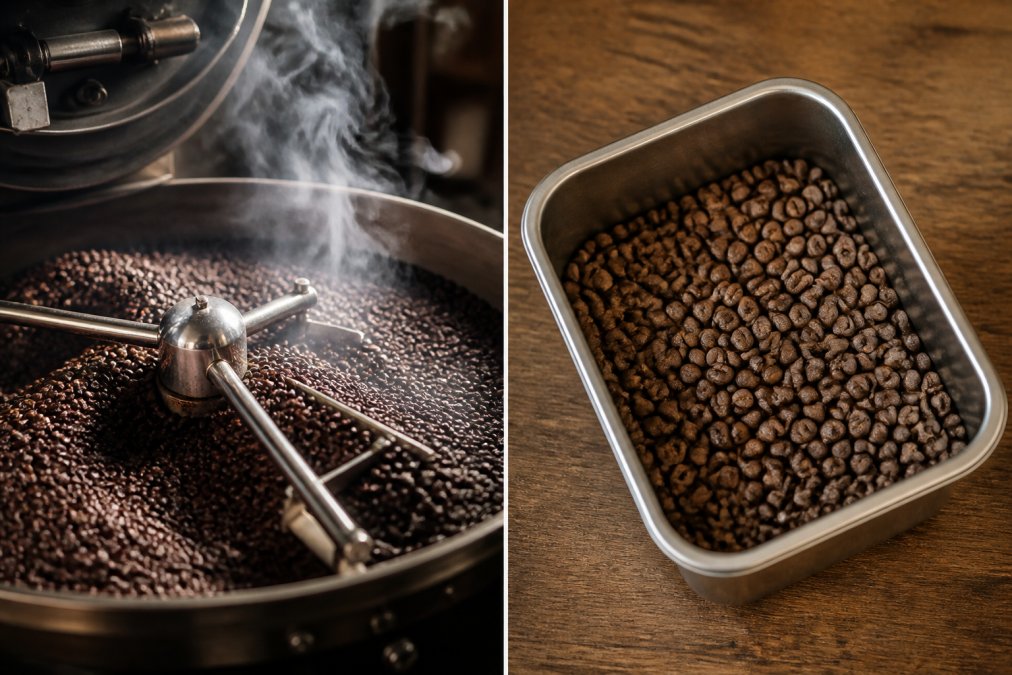
Roasted-to-order coffee arrives 3-7 days after roasting. The beans are still in their flavor peak. You taste the roaster's intended profile: brightness, body, and complexity. Home brewers consistently report that freshly roasted coffee tastes noticeably richer and more complex than grocery store beans.
Pre-roasted coffee from retail stores has often been roasted weeks or months prior. By the time you brew it, much flavor has faded. You're drinking coffee that tastes flat and muted compared to fresh-roasted alternatives.
Specialty coffee organizations recognize a "sweet spot" of 3-14 days post-roast as optimal for brewing (peer-reviewed research). Beans roasted less than 3 days ago are still off-gassing CO2, making extraction unpredictable. After 14 days, flavor degradation accelerates noticeably. Pre-roasted coffee from retail typically falls outside this window.
Roasted-to-order also means the roaster controls the roast profile for your beans and brewing method. Gospel and Grind roasts to order and offers roast profiles suited to different brewing methods, pour-over, espresso, French press, so you get the intended flavor regardless of how you brew.
The convenience trade-off is minimal. Roasted-to-order typically ships within 1-2 business days and arrives within a week.
What to Expect When Ordering Ethically Sourced Coffee Online
Ordering ethically sourced coffee beans online differs from buying grocery store coffee in timing, cost, and experience.
Sourcing and roasting take time. A roaster sources beans from specific farms, waiting for harvest and shipment. Once you order, the roaster roasts your beans, adding another 1-3 days. Total timeline from order to delivery is typically 5-10 business days. This is why your coffee arrives fresh.
Pricing is higher than conventional coffee. Ethically sourced, specialty-grade coffee costs more because farmers are paid fairly and beans are roasted fresh. Expect to pay more per pound than grocery store coffee, but you're receiving a genuinely superior product.
Packaging prioritizes freshness. Quality roasters ship in opaque bags with one-way valves that let CO2 escape without letting oxygen in. Gospel and Grind ships in packaging optimized for freshness and includes clear brewing instructions.
Subscription options offer convenience and savings. Many roasters offer subscriptions where coffee arrives on a schedule you set. Subscriptions often include a small discount and eliminate the need to remember to reorder. You can pause or adjust frequency anytime.
Brewing method matters. Different roast profiles and bean origins perform better with specific brewing methods. A light roast single-origin shines in a pour-over. A darker roast works well in espresso. Quality roasters provide brewing recommendations.
Flavor will be noticeably different. If you're accustomed to grocery store coffee, freshly roasted ethically sourced beans will taste more complex, brighter, and more nuanced.
Return policies vary. Reputable roasters stand behind their coffee. Gospel and Grind prioritizes customer satisfaction because we believe in the product we send.
The objection that often surfaces is speed. The answer is that freshness is the trade-off for speed. You can have coffee in two days from a warehouse, or you can have coffee roasted last week from a roaster committed to quality. Most specialty coffee drinkers choose freshness. Many roasters also offer flexible subscriptions where you can pause, skip, or adjust frequency anytime.
Conclusion: Making Your First Ethical Coffee Purchase
Buying ethically sourced coffee beans online means choosing a roaster that proves their commitment through verifiable certifications, transparent sourcing, and roasting practices that prioritize freshness. The difference in flavor and the knowledge that your purchase supports fair farmer compensation and environmental stewardship creates a coffee experience that transcends the morning cup.
Gospel and Grind combines all of these elements: carefully sourced beans from trusted farms, roasted to order to ensure maximum flavor and aroma, and a mission to fight homelessness with every purchase. Our simple ordering process and reliable direct-to-door delivery mean you get premium, fresh coffee without complexity.
Frequently Asked Questions
What certifications should I look for when buying ethically sourced coffee?
Look for third-party certifications like Fair Trade Certified, Rainforest Alliance, Bird Friendly, or Fair for Life. These verify that beans meet specific standards for farmer wages, environmental stewardship, and supply chain transparency. Single-origin coffees with traceability to specific farms or cooperatives also signal genuine ethical sourcing. Avoid vague claims like 'responsibly sourced' without certification backing them up.
What is the difference between Fair Trade and direct trade coffee?
Fair Trade operates through certification bodies that set minimum prices and standards across large supply networks. Direct trade eliminates intermediaries, allowing roasters to buy straight from small-scale farmers or cooperatives at negotiated prices, often higher than Fair Trade minimums. Direct trade offers greater traceability and direct farmer relationships, but lacks third-party oversight. Both prioritize farmer livelihoods; choose based on whether you value certification assurance or direct relationship transparency.
How does roasted-to-order coffee stay fresher than pre-roasted beans?
Coffee begins losing flavor and aroma within days of roasting as oils oxidize and CO2 escapes. Roasted-to-order means beans are roasted only after you order, arriving at peak freshness within days rather than weeks or months. Pre-roasted coffee shipped from warehouses has already lost volatile aromatics and complexity by the time it reaches you. For maximum flavor, brew roasted-to-order beans within 2-4 weeks of the roast date.
How can I verify if a coffee brand is truly sustainable and not just greenwashing?
Check for specific, verifiable claims: third-party certifications, transparency reports showing farmer payments, carbon footprint disclosures, and named farms or cooperatives. Greenwashing uses vague language like 'ethically sourced' or 'sustainably grown' without evidence. Visit the brand's website for supply chain details, farmer stories with real names, and audit results. Avoid brands that claim sustainability without certification or traceability, or that charge premium prices without explaining what makes them different.
Does buying ethically sourced coffee really make a difference to farming communities?
Yes. Fair Trade and direct trade models ensure farmers receive living wages, enabling investment in climate resilience, crop diversification, and education. Ethical sourcing also funds cooperative infrastructure and community projects. When you buy from brands committed to supply chain transparency and farmer empowerment, your purchase directly supports economic stability in coffee-growing regions. Brands that publish transparency reports show exactly how much reaches farmers and what it funds.
What is the environmental impact of ethically sourced coffee?
Ethical sourcing typically includes organic farming, shade-grown practices, and agroforestry that preserve biodiversity and reduce pesticide use. These methods build soil health and carbon sequestration, lowering the coffee's overall carbon footprint. However, shipping adds emissions; buying from roasters that offset carbon or use efficient delivery reduces this impact. Single-origin, sustainably farmed coffee grown with environmental stewardship practices minimizes ecological damage compared to conventional monoculture farming.
How quickly will my roasted-to-order coffee arrive, and is it guaranteed fresh?
Most roasted-to-order roasters roast within 24-48 hours of your order and ship immediately, with delivery typically within 3-7 business days depending on location. Beans reach peak flavor 3-5 days after roasting, so arrival timing matters. Reputable brands include roast dates on packaging so you can verify freshness. Check the brand's shipping policy and roast-to-order timeline before ordering; if delivery takes longer than 2 weeks, beans may have passed their flavor peak.
Start with a single-origin, direct trade option if you want complete traceability. Choose Fair Trade if you prefer established certification standards. Either way, prioritize freshness by choosing a roaster that roasts to order. The flavor difference is immediate and worth every penny.
Find Your Perfect Roast with Gospel and Grind and discover how ethically sourced coffee, roasted fresh and delivered directly to your door, transforms your daily brew into something genuinely exceptional.
This article was written using GrandRanker