

Premium Coffee Subscription for Beginners
Table of Contents
- What Makes a Premium Coffee Subscription Right for Beginners
- How We Tested and Selected These Subscriptions
- Fresh Roasted Coffee Beans Subscription: What Sets Them Apart
- How to Choose Coffee Beans for Beginners
- Coffee Subscription Frequency Guide: Finding Your Delivery Sweet Spot
- Comparing Your Options: Single-Origin vs. Blends for New Coffee Drinkers
- Cost-Per-Cup Breakdown and What You're Actually Paying For
- Troubleshooting Your First Month: Common Beginner Mistakes
Last Updated: August 22, 2026
What Makes a Premium Coffee Subscription Right for Beginners
Starting a premium coffee subscription for beginners doesn't require expertise or expensive equipment. What matters is understanding that fresh coffee, roasted to order and shipped within days, tastes dramatically different from stale beans sitting on grocery store shelves for months.
Gospel and Grind specializes in this approach: roasting beans after you order, then delivering them fresh to your door. For someone new to specialty coffee, this removes the biggest barrier to entry. You don't have to guess whether you're buying old stock or understand complex supply chains. The coffee arrives fresh, the process is straightforward, and the quality speaks for itself.
Most beginners assume premium coffee requires knowledge they don't have yet. That's wrong. What actually matters is freshness, brewing method compatibility, and choosing between single-origin beans and blends.
How We Tested and Selected These Subscriptions
Evaluating a premium coffee subscription for beginners means looking beyond marketing claims to what actually lands in your cup. We examined freshness (roast date versus delivery date), variety options, flexibility (can you pause or change frequency), and value relative to what you're receiving.
We prioritized services that explain their sourcing transparently. Where beans come from matters. Whether they're single-origin or blended matters. Whether the roaster uses washed, natural, or honey processing matters because it directly affects flavor.
We also assessed how well each service supports first-time buyers. Do they offer sample packs? Can you start with small quantities? Is the grind size customizable for different brewing methods? We calculated actual cost-per-cup across different subscription tiers to show what you're actually paying.
Fresh Roasted Coffee Beans Subscription: What Sets Them Apart
Freshness is the defining feature of any legitimate premium coffee subscription. Coffee peaks in flavor 5-14 days after roasting (peer-reviewed research). After that, it begins losing aromatics and complexity. Most commercial coffee has been roasted weeks or months earlier, which is why it tastes flat compared to fresh-roasted alternatives.
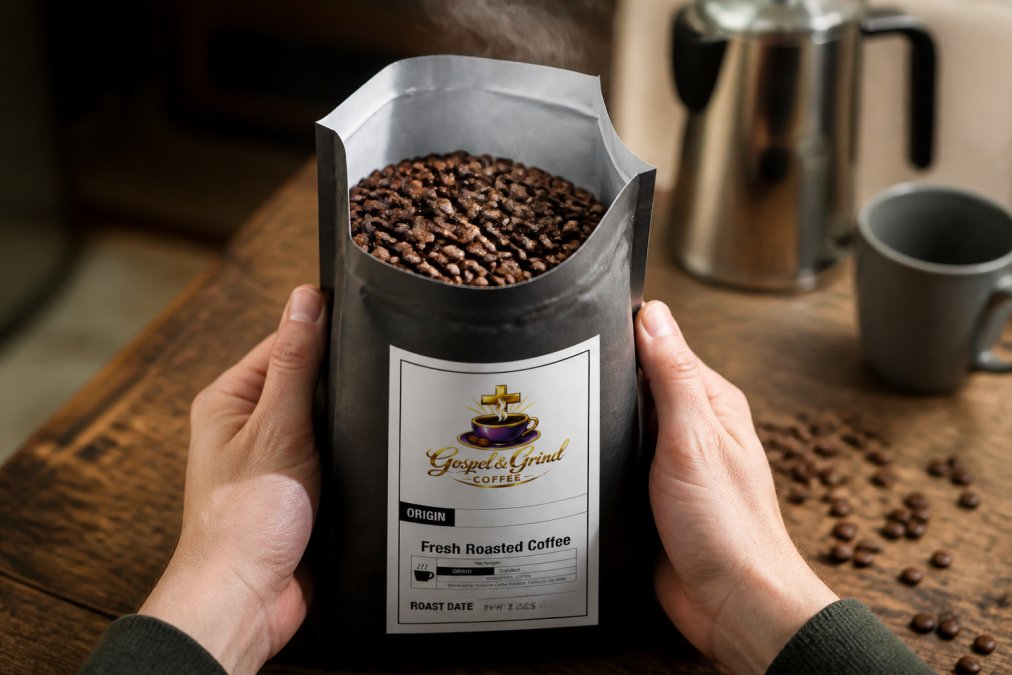
Roast-to-order services like Gospel and Grind roast your beans after you place an order, then ship within 1-2 days. You receive coffee that's typically 3-5 days old, still in the peak flavor window. This is the fundamental difference between a premium subscription and standard retail coffee.
The sourcing matters equally. Premium roasters source from specific farms or cooperatives, often paying direct-trade or fair-trade prices. Gospel and Grind sources from trusted farms with detailed information about altitude, processing method, and tasting notes. You're buying Peru single-origin from Cooperativa Agricola de Servicios Norandino at 1100-1700 meters altitude with salted caramel and citrus notes, not generic "Colombian coffee."
Whole bean versus ground is another critical distinction. Whole beans stay fresh longer because grinding exposes more surface area to oxygen. For a beginner, whole bean is the better choice unless you have no grinder. A basic burr grinder costs as little as $20-30 and dramatically improves flavor compared to pre-ground coffee.
How to Choose Coffee Beans for Beginners
Choosing between single-origin and blended coffees is your first real decision. Neither is objectively better; they serve different purposes.
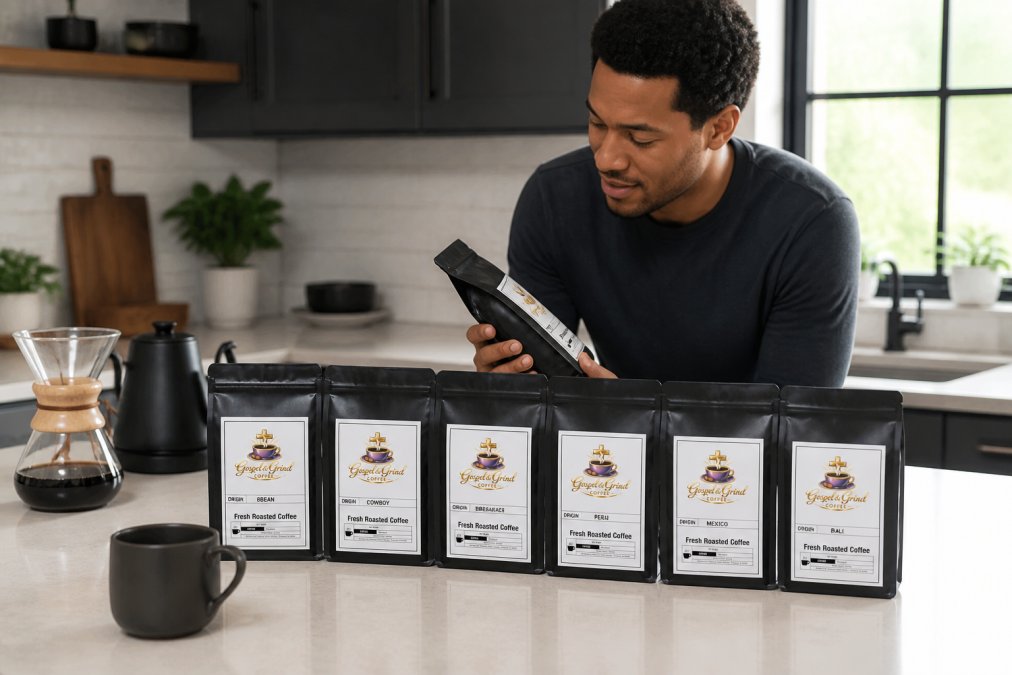
Single-origin coffees come from one country or region and highlight what that specific terroir produces. A Peru single-origin tastes different from an Ethiopia single-origin because the altitude, soil, climate, and processing method are all different. For beginners, single-origin coffees teach you what coffee can taste like and are more interesting to explore.
Blended coffees combine beans from multiple origins to create a consistent flavor profile. Blends are often smoother and more forgiving of brewing imprecision. A house blend might combine South American beans (chocolate, caramel notes) with Central American beans (citrus brightness) to create balance.
For a true beginner, starting with a sample pack makes sense. Gospel and Grind offers the Best Sellers Sample Pack with six 2-ounce packs for $20.89, letting you try both blends and single-origins without committing to full-size bags.

The choice between medium and dark roast is simpler than most people think. Medium roasts preserve more origin-specific flavors and acidity. Dark roasts taste bolder, more bitter, with less acidity. If you're exploring single-origin coffees, medium roast lets you taste what the origin actually tastes like.
Coffee Subscription Frequency Guide: Finding Your Delivery Sweet Spot
How often you receive coffee depends on consumption rate and storage capacity. A typical cup uses 0.5-0.6 ounces of whole beans. A 12-ounce bag makes roughly 20-24 cups (ncausa.org). If you drink one cup daily, a 12-ounce bag lasts about three weeks. Two cups daily means it lasts 10-12 days.
Most subscription services offer weekly, biweekly, or monthly delivery cycles. Monthly is standard and works for single-cup drinkers. Biweekly splits the difference if you drink 1-2 cups daily.
The key variable is freshness window. Coffee stays optimal for 3-4 weeks after roasting if stored properly (airtight container, cool dark place, away from sunlight). You want to consume it within that window.
Most services let you pause subscriptions or adjust frequency anytime. Gospel and Grind emphasizes flexibility; you're not locked into a plan.
Storage matters more than frequency. A sealed bag in a cool cupboard stays fresh much longer than an open bag on the counter. Buy an airtight container and keep coffee away from heat and light.
Comparing Your Options: Single-Origin vs. Blends for New Coffee Drinkers
The choice between single-origin and blended coffees shapes your entire subscription experience.
| Aspect | Single-Origin | Blended |
|---|---|---|
| Flavor Profile | Distinct, origin-specific characteristics | Balanced, consistent, intentional blending |
| Tasting Notes | Highlight terroir (Peru: salted caramel, citrus) | Created by roaster (chocolate, caramel, smoothness) |
| Brewing Forgiveness | Less forgiving of imperfect technique | More forgiving, harder to mess up |
| Learning Value | Teaches you what different regions taste like | Teaches you blending philosophy |
| Consistency | Varies slightly batch to batch | Designed to be consistent |
| Best For | Exploration, understanding coffee origins | Reliable daily drinking, ease of use |
| Price Range | $23.99-$24.99 per 12oz at Gospel and Grind | $23.99-$24.99 per 12oz at Gospel and Grind |
Single-origin coffees reward attention. If you brew them consistently and pay attention to flavor, you'll notice differences between a Peru and an Ethiopia. Blended coffees prioritize reliability. Gospel and Grind's House Blend combines Central and South American coffees for a smooth, consistent cup with nutty and chocolate notes.
For beginners, starting with a single-origin sample pack teaches you more. You'll understand flavor variation and develop preferences. Once you know what you like, you can either explore more single-origins or find a blend that matches your preference.
Cost-Per-Cup Breakdown and What You're Actually Paying For
Premium coffee subscriptions cost more per cup than grocery store coffee, but the comparison is misleading because you're not comparing the same product.
Gospel and Grind's pricing starts at $20.89 for sample packs (six 2-ounce bags) and $23.99 for full 12-ounce bags. A 12-ounce bag contains roughly 20-24 cups, making it $1.00-$1.20 per cup for whole bean coffee.
Grocery store coffee costs $0.30-$0.60 per cup. That's technically accurate but misleading.
What you're paying for with Gospel and Grind:
Freshness. Roasted to order, shipped within days. Grocery store coffee was roasted weeks or months ago.
Sourcing transparency. You know which farm grew your coffee, what altitude it was grown at, how it was processed, and what it's supposed to taste like.
Small-batch roasting. Gospel and Grind roasts in small quantities to maintain quality.
Mission alignment. Gospel and Grind commits to fighting homelessness with every purchase.
Convenience. Direct-to-door delivery on your schedule beats shopping and carrying bags home.
If you're comparing purely on price per cup, grocery store coffee wins. If you're comparing on flavor, freshness, and sourcing, the premium subscription is better value. Most beginners find that once they taste genuinely fresh coffee, the price difference feels reasonable because the quality difference is obvious.
Troubleshooting Your First Month: Common Beginner Mistakes
The first month with a premium coffee subscription reveals how much brewing method matters. Most beginner frustration comes from technique, not from the coffee itself.
The coffee tastes weak or watery. You're using too much water or too little coffee. The standard ratio is 1:16 (coffee to water by weight). If you don't have a scale, aim for 1 tablespoon of ground coffee per 6 ounces of water.
The coffee tastes bitter or burnt. Water temperature is too high or brew time is too long. Optimal water temperature is 195-205°F (sca.coffee). For drip coffee, brew time should be 4-6 minutes. For pour-over, 3-4 minutes.
The coffee tastes sour or acidic. Water temperature is too low or brew time is too short. If your water is below 195°F, the extraction is incomplete and you get sour flavors.
The grind size is wrong for my brewing method. Grind size matters enormously. Espresso requires very fine grind. Pour-over requires medium-fine. Drip coffee makers work best with medium grind. French press needs coarse grind.
The coffee goes stale before I finish the bag. Keep whole beans in an airtight container in a cool, dark cupboard. Don't refrigerate or freeze unless storing for months. An open bag on the counter will stale in 2-3 weeks.
I ordered and it arrived stale or took forever. Gospel and Grind roasts to order and ships within 1-2 days. You should receive coffee 3-5 days after ordering. Roast date should be printed on the bag; check it when it arrives.
I don't like the flavor I received. Single-origin coffees have distinct flavor profiles. Flavor preferences are personal. Try a different origin or switch to a blend. Gospel and Grind's sample packs let you experiment without committing to full bags.
Most beginner problems resolve once you dial in your brewing method. Invest in a basic burr grinder if you don't have one. Learn your brewing equipment's quirks. Check roast dates. Store properly. The coffee will taste dramatically better.
A premium coffee subscription for beginners removes the biggest barrier to better coffee: not having to source it yourself. Gospel and Grind handles the hard part, finding quality beans, roasting them fresh, and delivering them reliably. You focus on learning what good coffee tastes like and developing your preferences.
Start with a sample pack. Try different origins and roast profiles. Notice what flavors you actually enjoy. Then commit to a subscription that matches your consumption rate and budget. The investment in better coffee pays dividends every morning, and the mission-driven approach means your money supports real impact on homelessness alongside your caffeine habit.
Find Your Perfect Roast with Gospel and Grind and experience how fresh roasted coffee beans subscription services transform your daily brew.
Frequently Asked Questions
Is a coffee subscription worth it for beginners?
Yes, if you value freshness and convenience. Premium coffee subscriptions deliver roasted-to-order beans directly to your door, ensuring maximum flavor compared to grocery store coffee that may have sat on shelves for weeks. The cost-per-cup is higher than mass-market options, but you get specialty-grade beans, curated selections, and the ability to explore different origins and roast profiles. For someone serious about improving their daily coffee experience, the investment typically pays off in taste quality and brewing satisfaction.
What should I look for in a fresh roasted coffee beans subscription?
Look for roast dates printed on the bag, ideally within 1-2 weeks of delivery. Check that beans are roasted to order rather than stockpiled. Verify the subscription offers flexibility to pause or skip shipments without penalty. Read the tasting notes and origin information to understand what you're getting. Choose a service that provides clear brewing recommendations and allows you to customize roast profiles or origins based on your preferences. Gospel and Grind's roasted-to-order process ensures maximum aroma and flavor in every batch.
How often should I receive a coffee subscription delivery?
Most beginners start with bi-weekly or monthly deliveries. If you brew one cup daily, a 12-ounce bag lasts about 2 weeks. Monthly delivery works well for casual drinkers or those experimenting with different origins. Choose a subscription that lets you adjust frequency based on consumption and travel. If you travel frequently for work, look for services that allow you to pause deliveries without losing your subscription. Gospel and Grind offers customizable delivery cycles so you control when beans arrive.
What's the difference between whole bean and ground coffee for beginners?
Whole beans stay fresh longer and let you grind just before brewing for maximum flavor and aroma. Ground coffee begins losing flavor immediately after grinding, typically within days. For beginners, whole beans are worth the small investment in a grinder because the taste difference is noticeable. If you don't have a grinder yet, some subscriptions offer ground options, but whole beans are the standard for specialty coffee. Gospel and Grind provides both options, with whole bean being the default for best results.
Can I return coffee if it doesn't taste good or doesn't work with my brewing method?
Most premium subscriptions stand behind their product quality. Gospel and Grind is committed to customer satisfaction, so if your coffee doesn't meet expectations, contact them directly about your experience. Provide details about your brewing method and what didn't work, this helps them recommend better options for future shipments. Many subscriptions also offer sample packs (like Gospel and Grind's Best Sellers Sample Pack at $20.89) so you can try multiple origins before committing to full-size bags, reducing the risk of ordering something that won't suit your taste.
This article was written using GrandRanker